

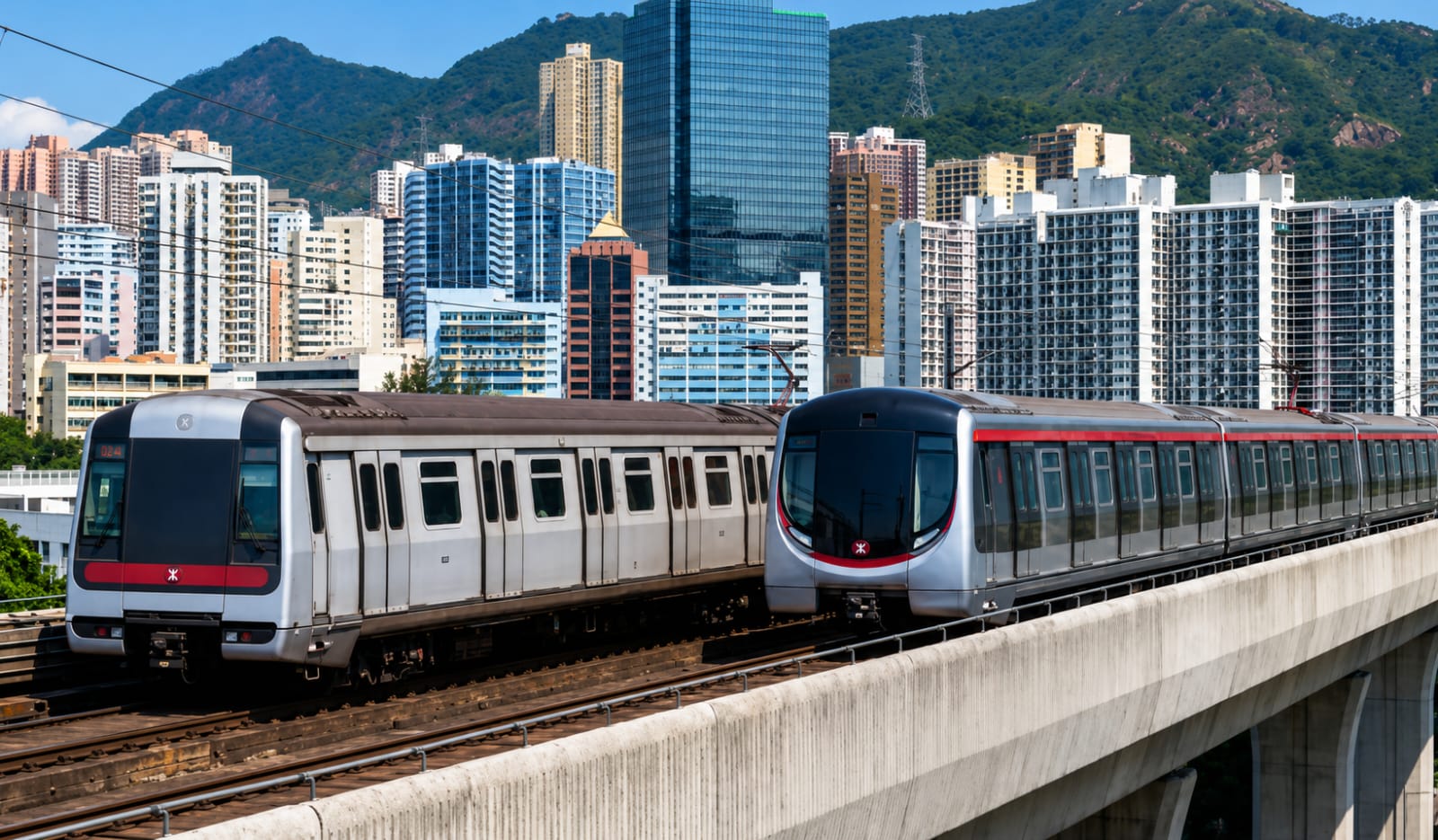
MTR Corporation on Thursday published detailed engineering and financial plans for three new rail lines that will form the backbone of public transport connectivity across the Northern Metropolis, the government's flagship 300-square-kilometre urban development zone along the border with Shenzhen. The project, valued at HK$148 billion, represents the single largest rail investment in Hong Kong's history and is expected to be fully operational by 2033.
Three Lines, One Connected Metropolis
The three proposed lines, designated the Northern Link Extension, the Tung Chung East Line, and the San Tin Technopole Rail, will collectively add 53 kilometres of track and 28 new stations to the MTR network. When combined with existing lines, they will ensure that 95 percent of Northern Metropolis residents live within 800 metres of a rail station, a connectivity standard currently achieved only in the most densely served urban areas of Kowloon and Hong Kong Island.
The Northern Link Extension will run 22 kilometres from its existing terminus at Kwu Tung through new residential districts at Fanling North, Hung Shui Kiu and San Tin before connecting to a new cross-boundary station at Lok Ma Chau Loop, providing direct rail access to Shenzhen's Futian Central Business District.
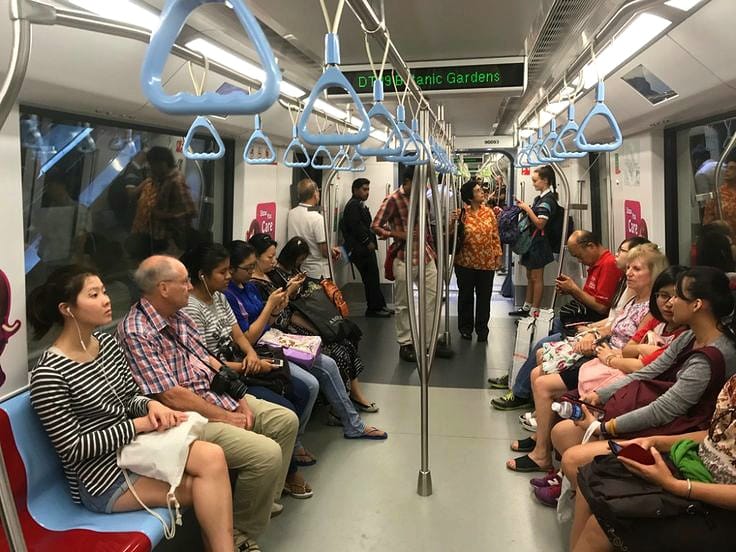
The three new lines will extend MTR coverage to the Northern Metropolis, where over 900,000 new residents are expected to live by 2035.
Engineering Innovations and Green Rail
MTR Corporation Chief Executive Rex Auyeung described the project as an opportunity to deploy rail technologies unavailable when the existing network was constructed. All three lines will use Communications-Based Train Control (CBTC) systems operating on 90-second headways during peak periods, a frequency 40 percent greater than the current network average. Driverless operations will be standard across all new lines, reducing operational costs and enabling continuous 24-hour service on weekends.
In line with the government's Climate Action Plan, the new infrastructure has been designed to minimise embodied carbon, using low-carbon concrete mixes, recycled steel reinforcement and pre-fabricated modular station components manufactured at a new facility in Tuen Mun. Solar canopies above elevated sections of the San Tin Technopole Rail will generate electricity equivalent to the annual power consumption of 3,200 Hong Kong households.
Property Development Component
MTR Corporation's signature Rail plus Property development model, which has funded previous network expansions, will be applied across 14 of the 28 new stations. Property rights above station sites have been tendered to six residential and commercial developers, generating upfront premium payments of approximately HK$52 billion that will partially offset the public investment required.
Analysts at CLSA estimate that the total residential development potential above and around new MTR stations in the Northern Metropolis represents between 280,000 and 320,000 new dwelling units, which, if fully built, would represent a supply injection equivalent to 15 percent of Hong Kong's total existing housing stock.
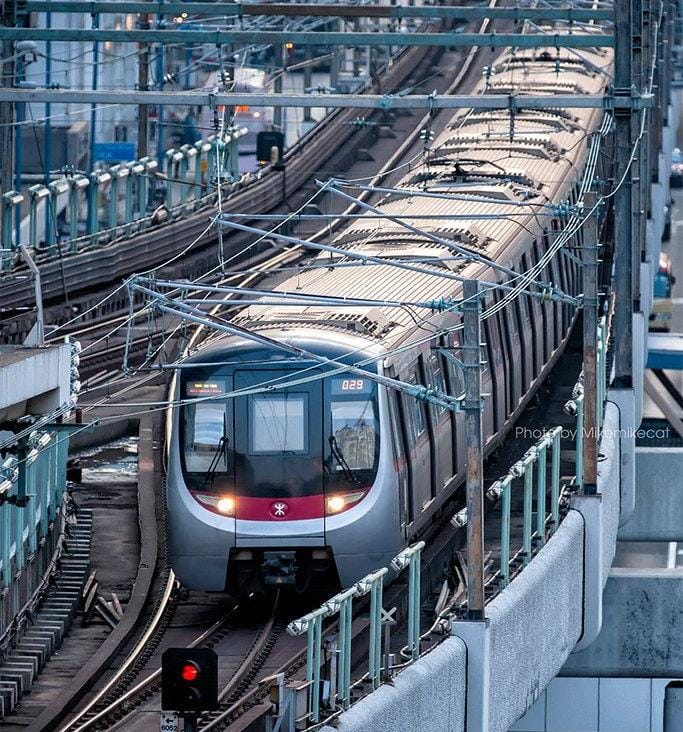
The Rail plus Property model will fund station developments through residential and commercial premiums, offsetting public investment requirements.
Addressing Long-Standing Connectivity Deficits
For residents of new towns including Hung Shui Kiu and Kwu Tung North, currently dependent on buses and light rail for connections to urban employment centres, the new lines offer transformative reductions in commuting time. Journey time modelling by the Transport Department projects that the average door-to-door commute from Hung Shui Kiu to Central will fall from the current 78 minutes to 38 minutes once the network is operational.
Environmental groups have expressed cautious support for the rail expansion, noting that modal shift from private cars and cross-boundary coaches to rail will reduce nitrogen oxide and particulate matter emissions in the Northern New Territories significantly. However, several conservation organisations have raised concerns about the routing of the San Tin Technopole Rail through a section of the Wetland Conservation Area, calling for further environmental impact assessment before construction tenders are issued.
Public Consultation and Timeline
A formal public consultation period on the rail plans will run until October 31, with six rounds of district-level briefings scheduled across the Northern New Territories. Subject to Legco funding approval, site enabling works are expected to begin in the second quarter of 2028, with phased commissioning of individual lines between 2031 and 2033.
Transport analysts broadly concur that the investment represents a sound long-term commitment to sustainable urban mobility. The International Association of Public Transport has cited Hong Kong's existing MTR network as a global benchmark, noting that the system carries over 5.5 million passenger trips daily at on-time performance rates consistently above 99.9 percent.