

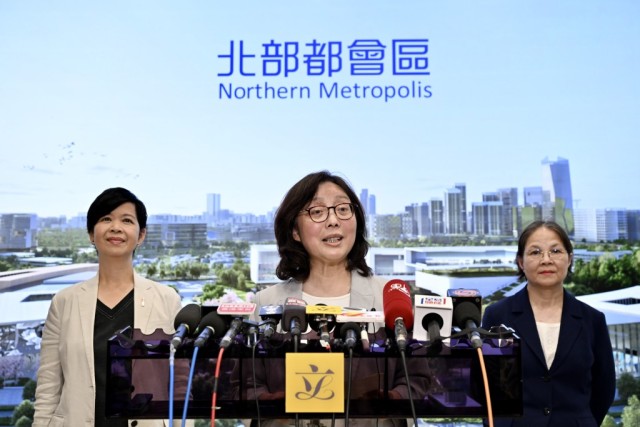
A new exhibition centre presenting the master plan for Hong Kong’s Northern Metropolis is expected to open in the first half of next year, as the government accelerates housing construction and transport investment in Kwu Tung North.
Secretary for Development Bernadette Linn Hon ho announced the timetable on Thursday after a Legislative Council delegation toured several major development and conservation sites in Kwu Tung North. The visit marked the legislature’s third official inspection of the Northern Metropolis project and offered lawmakers a closer look at the area’s expanding housing estates, planned public facilities, heritage projects and environmental protection measures.
The scale of construction is already becoming visible. About 12,000 homes in Kwu Tung North are expected to be completed and handed over to residents this year and next, covering public rental housing, dedicated rehousing projects and private residential developments.
Kwu Tung North takes the lead
Kwu Tung North is being developed as one of the first major hubs of the wider Northern Metropolis scheme, which is planned to accommodate around 50,000 public and private housing units in the area.
The government has placed housing delivery at the centre of the early development programme. Thousands of flats are moving towards completion as authorities prepare the infrastructure needed to support a growing population.
The first residents will arrive alongside new transport and community facilities. The Kwu Tung railway station on the East Rail Line is scheduled to open next year, providing a direct rail connection for people living and working in the new district.
The station is expected to become an important part of daily life in Kwu Tung North as more housing projects are completed. Transport links will also influence how quickly the new district connects with established urban areas and how easily residents can reach employment centres, schools and other services.
Construction has also begun on the district’s first government joint user complex after the Legislative Council approved the necessary funding. The facility is expected to be completed in phases from late 2029, adding public services and community facilities as the population grows.
The government has also reserved land for a museum focused on national development and achievements. A competition standard aquatic centre capable of hosting international sporting events is planned as another major facility for the district.
Housing plans extend beyond Kwu Tung
The development programme extends well beyond the first wave of homes now nearing completion.
Secretary for Housing Winnie Ho said the Northern Metropolis is expected to provide 150,000 public housing flats over the next decade. Kwu Tung alone is planned to receive about 30,000 of those units.
The first phase of Ku Chun Estate is scheduled to begin key handovers late this year, adding another significant block of public housing to the area.
The government is also developing a broader planning approach that divides the Northern Metropolis into interconnected clusters built around rivers, mountains, urban centres and rural areas. The aim is to create districts where housing, transport, employment, community facilities and environmental areas can operate as part of a coordinated plan rather than as isolated projects.
Modern construction methods will form part of that programme. Ho pointed to the use of Modular Integrated Construction, which allows building components to be manufactured in controlled environments before being transported to construction sites for assembly.
Smart estate management systems are also being incorporated into developments, particularly in emerging technology and business hubs such as San Tin and Hung Shui Kiu.
Heritage remains part of the plan
The government is attempting to expand the northern New Territories without removing the rural and historical features that already define parts of the region.
During Thursday’s tour, lawmakers visited the Lady Ho Tung Welfare Centre Eco Learn Institute and the Long Valley Nature Park to examine efforts to combine urban development with environmental and rural conservation.
Linn said the Northern Metropolis contains more than 380 monuments and graded historical structures. Those sites form part of the region’s existing cultural heritage and present both planning challenges and opportunities as new communities are built around them.
The government has begun testing new ways to give some historic villages a greater economic role.
In Yin Kong Village, authorities have launched a pilot programme that relaxes certain land use restrictions, allowing indigenous village houses to be converted into boutique hotels, restaurants and retail businesses.
The idea is to give village buildings new uses while creating opportunities for local businesses and tourism. Instead of treating historic structures solely as protected sites, the pilot seeks to connect preservation with economic activity and community participation.
The government plans to use the experience from the Yin Kong trial when preparing a wider support programme.
HK$200 million fund proposed
Authorities intend to seek approval from the Legislative Council’s Finance Committee later this year for a HK$200 million Northern Metropolis Urban Rural Integration Fund pilot scheme.
The proposed fund would support community led projects involving historical and cultural tourism. Such projects could provide financial assistance for initiatives that make better use of village heritage, traditional buildings and local cultural resources.
The programme would also give communities a more direct role in deciding how some rural areas develop as the Northern Metropolis expands.
That approach is particularly relevant in places where new residential districts are being built close to long established villages. Large scale construction can bring new residents, roads and facilities, but it can also place pressure on existing communities and their surroundings.
The government’s proposed fund is intended to help bridge those two sides of the Northern Metropolis plan.

Long Valley draws more than 140,000 visitors
Environmental protection is another major component of the development strategy.
The 37 hectare Long Valley Nature Park opened in 2024 and combines wetland conservation with environmentally friendly farming and education programmes.
Acting Secretary for Environment and Ecology Diane Wong said the park had attracted more than 140,000 visitors since opening. At the same time, the site has continued to protect local biodiversity while development takes place in nearby areas.
Long Valley provides a practical example of how the government is attempting to place conservation areas alongside new urban districts.
Wetlands, farmland and wildlife habitats occupy land that could otherwise face pressure from construction. Protecting those areas requires long term management, particularly as the surrounding population increases and more visitors arrive.
The government’s approach seeks to retain those natural areas while allowing the Northern Metropolis to accommodate a much larger population.
Lawmakers monitor progress
Legislative Council President Starry Lee welcomed the progress on housing delivery in Kwu Tung North, particularly as thousands of families continue to wait for public housing.
Lee said the steady supply of new homes was positive news for families on public housing waiting lists and expressed confidence that lawmakers would continue working with the administration to monitor implementation.
The timing is significant because the government is preparing for the upcoming Policy Address, when further details on housing, infrastructure and development priorities are expected to receive public and legislative attention.
The Northern Metropolis is one of Hong Kong’s largest development programmes, involving housing, transport, employment, environmental conservation and the redevelopment of rural areas across the northern New Territories.
Kwu Tung North is now moving from planning into a more visible construction and population phase. The arrival of the first large group of residents, the opening of the railway station next year and the planned exhibition centre will give the public a clearer picture of how the government intends to turn the long term Northern Metropolis plan into functioning communities.
The immediate test will be whether homes, transport and public facilities arrive in step with one another. As 12,000 flats approach completion, residents and lawmakers will be watching not only how quickly the homes are delivered, but whether the new district is ready with the transport, services, community facilities and environmental protections needed to support the people moving in.
What should Hong Kong prioritise next in Kwu Tung North: faster housing delivery, stronger transport links or greater protection for its rural heritage and natural areas?