

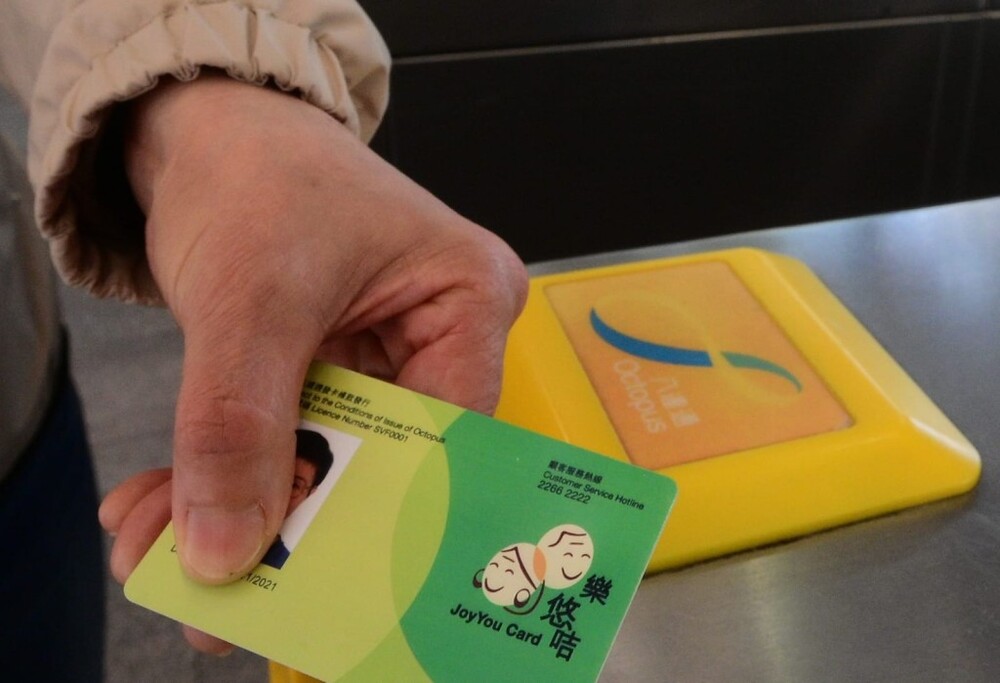
Hong Kong will keep physical JoyYou Cards in circulation even after the government introduces a mobile version of the public transport concession scheme, Secretary for Labour and Welfare Chris Sun Yuk han said, as authorities seek to ensure older residents are not excluded by the shift towards digital services.
The planned mobile option will operate alongside the existing physical cards rather than replace them, recognising that a significant number of elderly passengers may not be comfortable using smartphones or managing digital fare systems.
Physical cards to remain available
Speaking to reporters after a radio programme, Sun said the JoyYou system currently serves about 2.7 million cardholders across Hong Kong. The government is working on several changes to the system, but officials are treating the existing physical card as an important part of the arrangement.
Sun said the administration's immediate priority is completing real name registration for cardholders and adding photographs to the physical cards. Further technical development, including work connected with the proposed mobile version, will follow.
The approach reflects a broader issue facing public services as more transactions move online. While smartphone based services can make access faster and more convenient for many people, they can also create difficulties for residents who have limited experience with mobile applications, digital payments or identity verification.
For elderly JoyYou users, particularly those who rely on the concession for regular journeys, retaining a physical card means they can continue using a familiar system without having to purchase a smartphone or learn a new digital process.
The mobile version is therefore expected to function as an additional option. People who prefer using their phones may eventually be able to access the concession digitally, while existing users can continue relying on a physical card.

Registration and photographs remain a government priority
Sun's comments indicate that the government is taking a phased approach to changes to the JoyYou system.
Real name registration is being prioritised as part of efforts to strengthen the administration of the scheme. The addition of photographs to physical cards is also intended to link the card more directly with its registered holder.
With millions of cards in use, changes to the system involve a substantial number of passengers and require coordination between the government, transport operators and the wider payment infrastructure.
The scale of the programme also means that technical changes cannot simply be introduced without considering how they will affect passengers who are less familiar with digital technology.
Keeping the physical card available gives the authorities a way to introduce a new mobile option without forcing all users to make the transition at the same time.
For older residents, that distinction matters. A digital alternative can provide convenience, but it does not necessarily offer the same ease of use as a card that passengers already know how to use when boarding public transport.
Carer allowance to rise by 10 per cent
Sun also discussed another measure announced in the Policy Address, involving an increase in the monthly allowance for carers from HK$3,000 to HK$3,300.
The 10 per cent increase is intended to provide additional financial support to low income carers, who may face regular costs while providing assistance to family members or other people who require care.
Although the increase amounts to HK$300 a month, Sun said the additional support would provide practical financial assistance to eligible carers.
At the same time, he stressed that the government has to consider its available financial resources when introducing or expanding support programmes.
The issue reflects the balance authorities must strike between providing assistance to households facing financial pressure and managing public expenditure within the resources available to the government.
For carers already receiving the allowance, the increase would provide a modest additional amount each month that could be used towards household expenses, transport, food or other costs associated with caring responsibilities.
The measure also comes as the government continues to consider how community and welfare services can support people who need care while helping families manage the associated financial burden.
Two more community living rooms planned
Sun also provided an update on the government's Community Living Room programme, which is aimed at supporting households living in subdivided units.
At least two additional community living rooms are expected to open by the end of the year. Their opening would increase the number of such facilities across Hong Kong to 18.
The government estimates that the expanded network could benefit about 10,000 households living in subdivided units.
Community living rooms provide shared spaces and services intended to give residents access to facilities that may not be available inside small subdivided homes. For households living in limited space, access to a larger community facility can provide an alternative place for children to study, residents to carry out everyday activities and families to use shared amenities.
The expansion is part of wider efforts to improve support for people living in subdivided accommodation, where limited living space can create practical difficulties for families.
More facilities could follow
Sun indicated that the planned increase to 18 facilities is unlikely to mark the end of the programme.
He said discussions are continuing with charities, community organisations and private sector partners interested in helping expand the network. If those discussions lead to further commitments, additional community living rooms could be established beyond the 18 facilities currently expected.
The involvement of different organisations is significant because the programme depends not only on government policy but also on suitable premises, funding, community participation and organisations willing to operate or support facilities.
The government is therefore looking beyond a fixed number of sites and is considering how partnerships can help extend services to more households.
For residents in subdivided units, the location of facilities will also matter. A community living room is most useful when households can reach it without having to make a long journey, particularly for children, elderly residents and people with limited mobility.
The government's next steps will consequently involve both expanding the number of facilities and determining where additional services can provide the greatest practical benefit.
Digital services must not leave older residents behind
The three measures discussed by Sun cover different areas of government policy, but they share a common question: how public services can become more accessible without creating new barriers for people who need them.
The JoyYou decision is the clearest example. Digital access can offer greater convenience, but maintaining a physical option gives elderly passengers a way to continue using the transport concession without being pushed into a system they may find difficult.
With around 2.7 million JoyYou cardholders, the government is dealing with a large and diverse user base. The decision to retain physical cards means the proposed mobile service can be introduced as an additional choice rather than a mandatory replacement.
Meanwhile, the carer allowance increase and the planned expansion of community living rooms show the government's focus on direct household support, particularly for lower income families and people living in subdivided accommodation.
The next stage will be to see how these measures are implemented in practice, from the completion of JoyYou registration and photographs to the opening of the additional community facilities.
As Hong Kong expands digital public services, should more government schemes continue offering physical alternatives for elderly and less digitally experienced residents?