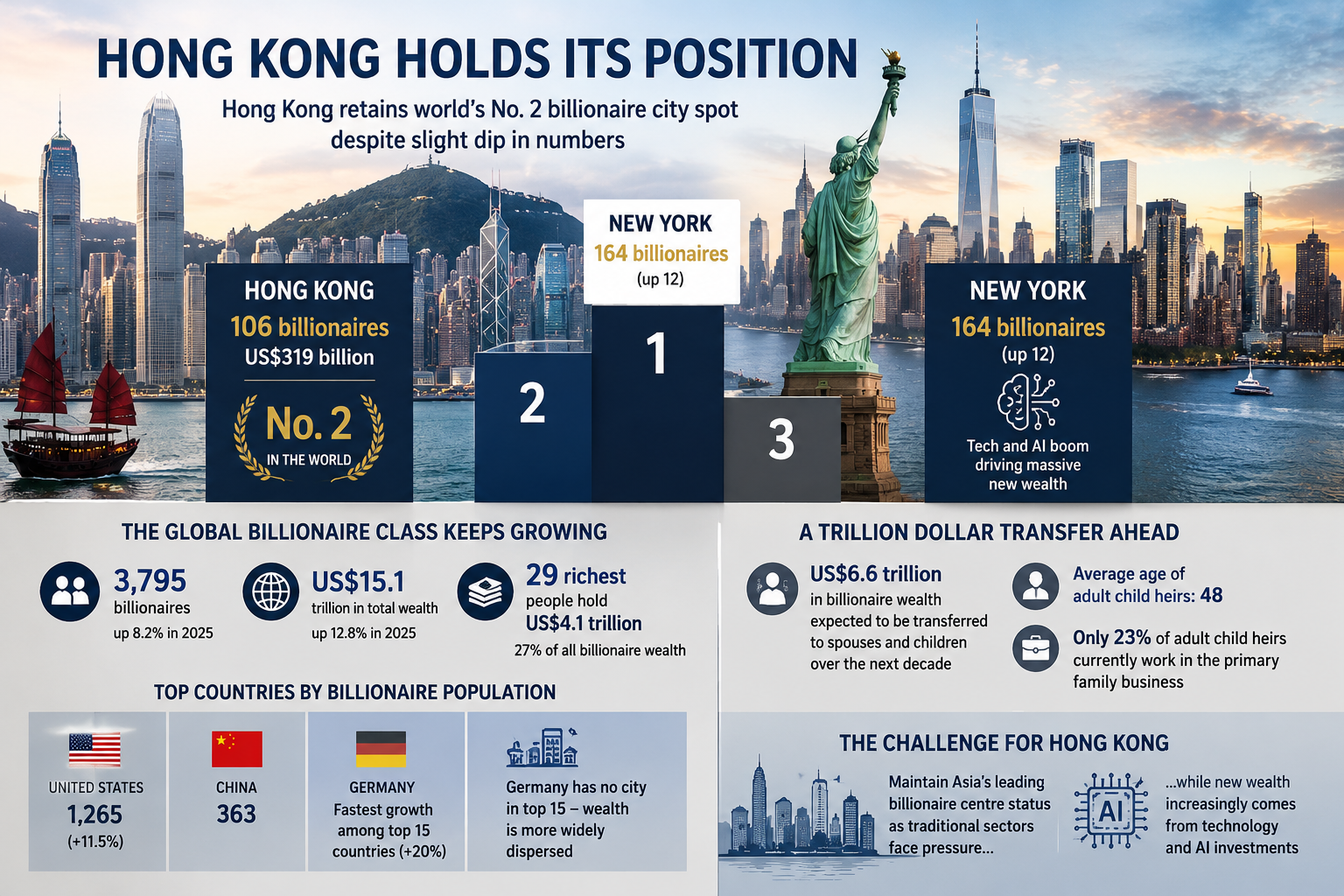

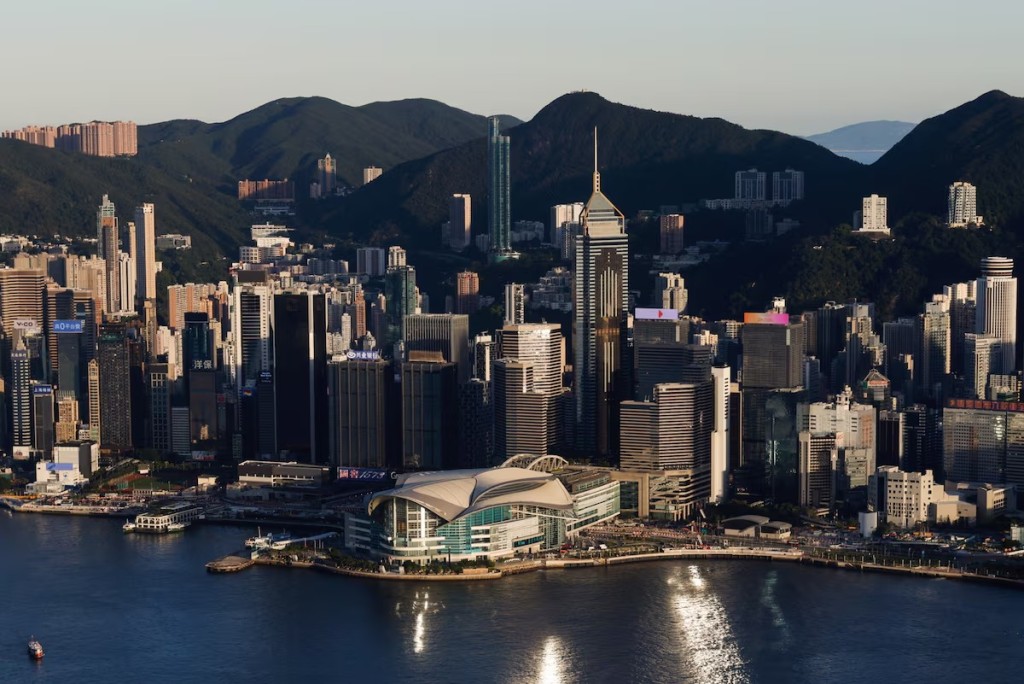
Hong Kong lost two billionaires in 2025, but the decline was not enough to dislodge the city from its position behind New York. The financial centre also remained Asia’s leading billionaire city, ahead of Singapore, Beijing and Shenzhen, according to the Billionaire Census 2026.
The figures show a mixed picture for Hong Kong’s wealth economy. While the number of billionaires slipped from the previous year, the combined wealth of those remaining in the city continued to rise, reaching US$319 billion, equivalent to about HK$2.49 trillion.
Altrata attributed the decline in billionaire numbers partly to continued weakness in Hong Kong’s property market. The city’s relatively limited exposure to the extraordinary gains generated by artificial intelligence related investments also affected its performance compared with some of the world’s other major wealth centres.
The contrast with New York was particularly pronounced.
New York added 12 billionaires during the year, bringing its total to 164. That figure is greater than the billionaire population of every country in the world except the United States, China and Germany, according to the report.
The US financial capital has benefited from a surge of private wealth linked to the artificial intelligence investment boom. Technology companies and AI related stocks have generated enormous gains for investors and founders, helping to expand fortunes among the city’s wealthiest residents.
Altrata said AI related wealth was also driving activity across New York’s private capital markets, family offices and ultra prime property sector. Billionaires and other wealthy investors have increasingly directed capital towards technology companies and assets associated with the AI boom, creating additional demand for high value financial and real estate opportunities.
That trend is likely to produce further swings in billionaire fortunes, however. Altrata noted that sharp movements in technology stocks with significant AI exposure can quickly alter individual wealth rankings. As a result, billionaire fortunes tied closely to the technology sector are expected to remain particularly sensitive to market movements in the years ahead.
For Hong Kong, the latest figures reflect the different structure of its billionaire economy.
The city has long been associated with property, finance, retail and traditional conglomerates. Real estate has played an especially important role in the fortunes of many of Hong Kong’s wealthiest families. A prolonged period of pressure on the property sector has therefore had a direct effect on the wealth held by some of the city’s richest residents.
At the same time, Hong Kong has not benefited to the same extent as some US wealth centres from the rapid rise in companies and investments connected to artificial intelligence.
Despite those challenges, the city retained a significant concentration of private wealth. Its 106 billionaires controlled a combined US$319 billion, keeping Hong Kong comfortably ahead of its major Asian competitors.
Global billionaire wealth reaches record level
The broader global figures were considerably stronger.
The worldwide billionaire population increased by 8.2 percent in 2025, reaching a record 3,795 individuals. Their combined wealth climbed even faster, rising 12.8 percent to US$15.1 trillion, also a new high.
The figures point to a growing concentration of wealth among a relatively small group of individuals. Altrata reported that the 29 richest people in the world, each with fortunes exceeding US$50 billion, collectively controlled US$4.1 trillion.
That amount represented about 27 percent of all billionaire wealth worldwide.
The United States continued to dominate the global billionaire rankings. The country added 11.5 percent to its billionaire population during 2025, taking the total to 1,265. That means roughly one in every three billionaires worldwide was based in the US.
China ranked second among countries, with 363 billionaires, although its total remained less than one third of the US figure.
The gap between the two countries also reflects differences in the distribution of private wealth and the performance of major asset markets. US technology companies, financial markets and private businesses have produced substantial gains for wealthy investors, while China’s billionaire population has faced a more difficult period amid pressure in parts of the property sector and changes affecting several major industries.
Germany records fastest billionaire growth
Germany recorded the fastest growth in billionaire numbers among the 15 leading countries included in the report. Its billionaire population increased by 20 percent in 2025, reflecting strong wealth creation across the country.
Yet Germany did not have a city represented among the world’s top 15 billionaire cities.
Altrata said this absence reflected the more dispersed nature of private wealth across Germany’s urban centres. Unlike cities such as New York and Hong Kong, where large fortunes are heavily concentrated, German wealth is spread among several cities and regions.
Trillions expected to change hands
The report also looks beyond current billionaire rankings to what will happen to these fortunes over the coming decade.
Altrata estimates that US$6.6 trillion in billionaire wealth will be transferred to spouses and children during the next 10 years. The scale of that expected transfer could reshape the ownership of major businesses, investment portfolios, property holdings and other private assets.
The age of the next generation of heirs is notable. The average expected adult child heir is currently 48 years old, meaning much of the wealth transfer will involve adults who are already established in their careers and, in some cases, have experience running businesses or managing family assets.
However, relatively few heirs are already directly involved in their family’s main business.
According to Altrata, about 23 percent of expected adult child heirs currently work alongside their billionaire parent in the primary family enterprise. That suggests succession planning remains an important issue for wealthy families as ownership passes from one generation to the next.
For Hong Kong, where many large fortunes remain linked to family controlled conglomerates and property interests, the coming transfer of wealth could have particular significance. Changes in ownership and management could influence investment decisions, corporate structures and the direction of major family businesses.
Hong Kong holds its position
The latest rankings therefore tell a story that goes beyond the simple number of billionaires in each city. Hong Kong may have lost two members of its billionaire class, but its remaining billionaires collectively became wealthier, allowing the city to retain its second position globally.
New York, meanwhile, continues to pull further ahead, powered in part by the enormous fortunes created around technology and artificial intelligence.
The wider figures show how quickly the global billionaire class is expanding. With 3,795 billionaires now controlling US$15.1 trillion, wealth remains heavily concentrated among a small number of individuals, while the next decade could bring one of the largest intergenerational transfers of private wealth ever recorded.
For Hong Kong, the immediate challenge is maintaining its position as Asia’s leading billionaire centre while its traditional sources of wealth face pressure and newer fortunes increasingly emerge from technology and AI related investment.