

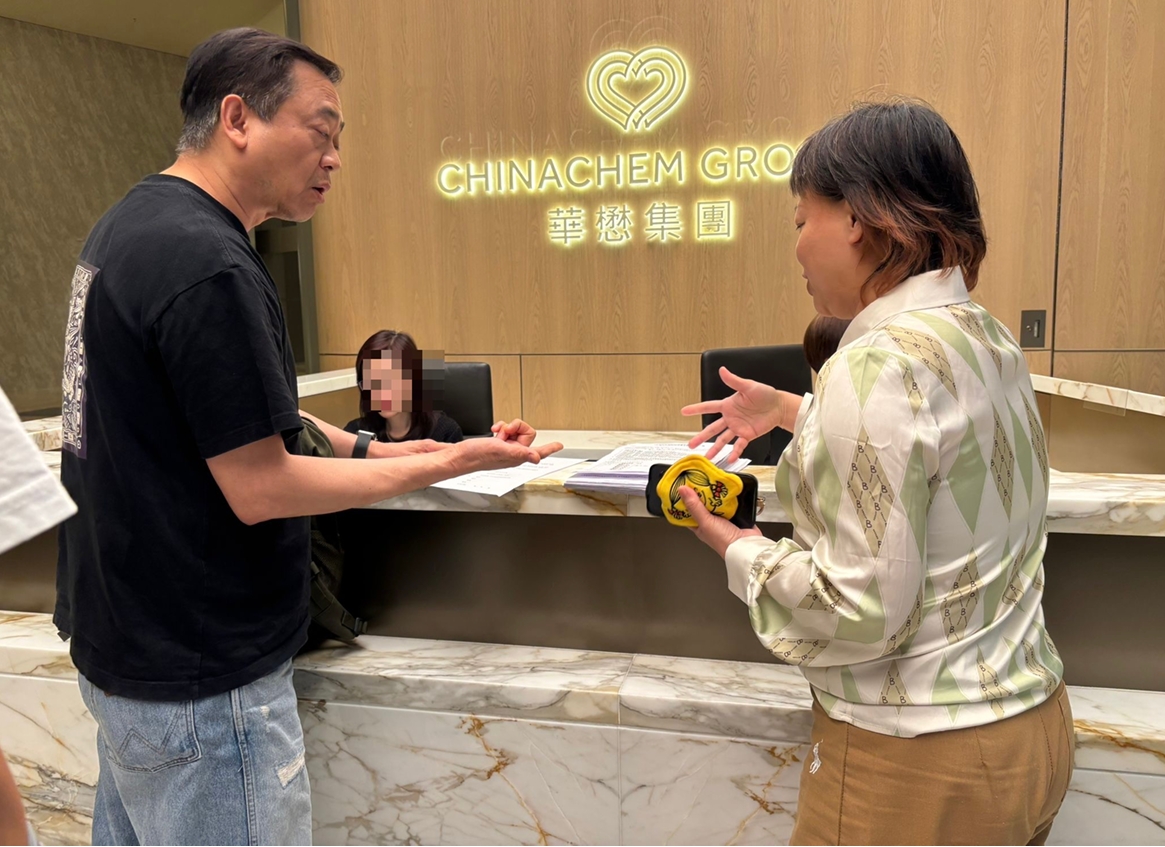
Jason Kong, one of the more outspoken survivors of the Wang Fuk Court fire, has been charged with fraud and money laundering alongside his wife, Rosanna Cheung, more than three months after the couple were arrested.
Hong Kong police said on Sunday that Kong and Cheung will appear at Sha Tin Magistrates’ Courts on Tuesday. The couple face two counts of conspiracy to defraud and one count of dealing with property known or believed to represent the proceeds of an indictable offence, an offence commonly described as money laundering.
The charges stem from allegations that the couple used fraudulent means to obtain several hundred thousand dollars in loans under the government’s Special 100% Loan Guarantee scheme.
Both Kong and Cheung are directors of an interior design company. Police arrested the pair in May in connection with the suspected loan fraud. Their arrests came about two weeks after Kong publicly petitioned for a meeting between Wang Fuk Court homeowners and the estate’s government appointed administrator.
The charges are separate from Kong’s activities as a fire survivor and residents’ advocate. They relate to alleged financial offences concerning loans obtained through a government backed scheme.
Arrest came after petition by fire survivors
Kong had become a familiar figure in the aftermath of the Wang Fuk Court blaze, which tore through the Tai Po residential estate in November last year and killed 168 people.
Thousands of residents were displaced after the fire, which became one of Hong Kong’s deadliest residential disasters in decades. The scale of the tragedy prompted questions about the estate’s renovation work, fire safety arrangements and the actions of government departments and contractors before the blaze.
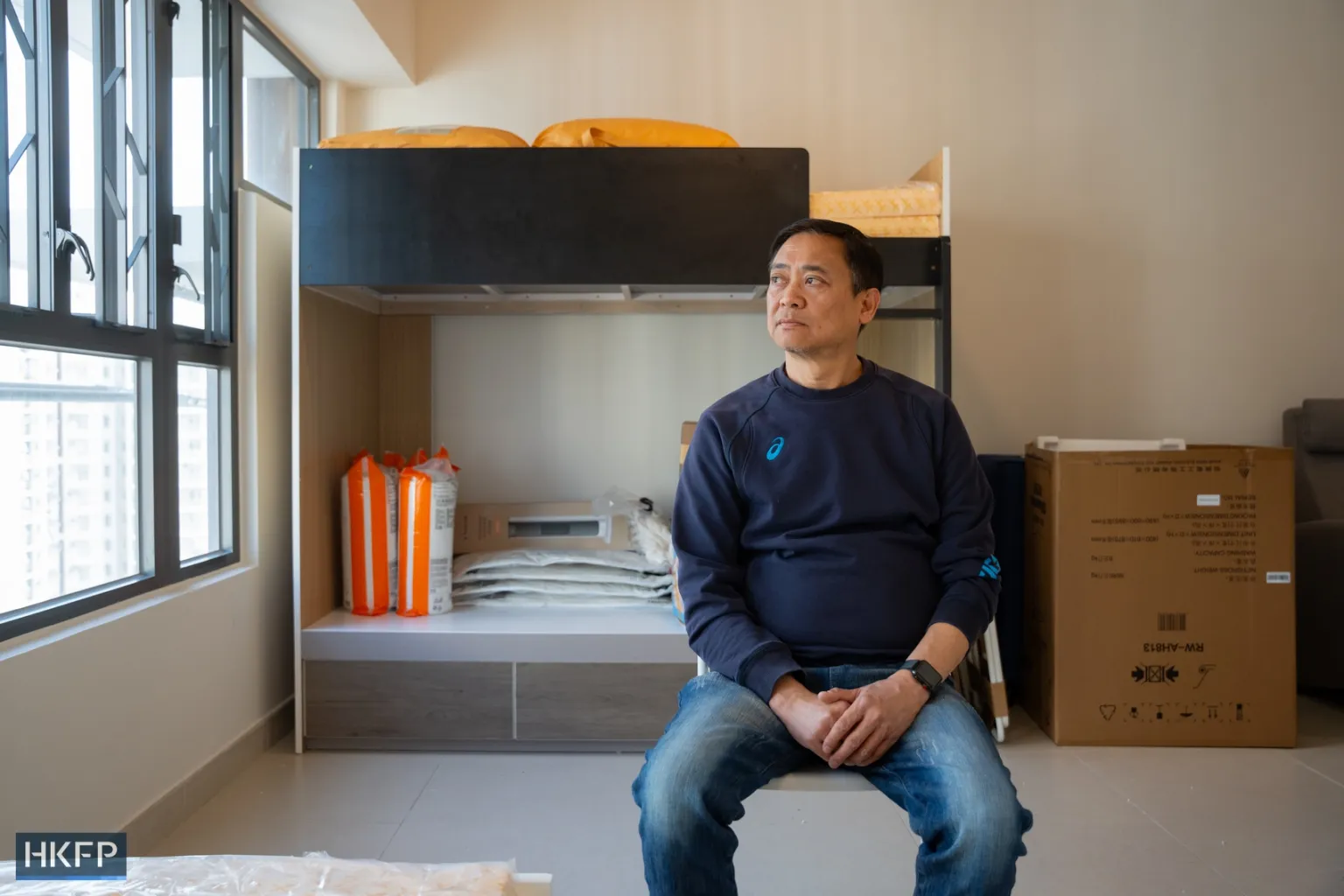
At the time of the fire, Kong was a member of the management committee of the Wang Fuk Court owners’ corporation. In the months that followed, he spoke publicly about the concerns of residents and called for greater scrutiny of the circumstances surrounding the disaster.
He also backed the idea of rebuilding homes at the original site, a proposal that gained support among some residents but was rejected by the authorities.
Kong appeared before an independent committee investigating the fire in April. During his testimony, he accused government agencies of having “failed in their duties” despite complaints concerning renovation work at the estate.
His public role continued in late April when he submitted a petition containing 247 handwritten signatures to Hop On Management, the government appointed administrator of Wang Fuk Court.
The petition called for a general meeting with homeowners to discuss long term resettlement arrangements and financial issues facing residents following the fire.
The petition was delivered on April 29. Kong was arrested in May, roughly two weeks later.
Police allege government loan fraud
The investigation concerns the government’s Special 100% Loan Guarantee scheme, which was introduced in early 2020 as part of efforts to support businesses affected by the Covid 19 pandemic.
Under the scheme, eligible businesses could obtain financing with the government providing a full guarantee to participating lenders, subject to the programme’s requirements and conditions.
Police allege that Kong and Cheung used fraudulent means to secure several hundred thousand dollars through the scheme.
The charges now before the court include two counts of conspiracy to defraud. The couple also face a charge relating to property that was known or believed to represent proceeds from an indictable offence.
The filing of charges means the allegations will now be tested through the criminal justice process. A charge is not a finding of guilt, and the couple are entitled to the presumption of innocence unless and until a court determines otherwise.
The case is scheduled to come before Sha Tin Magistrates’ Courts on Tuesday.
Kong and Cheung were released from Tsuen Wan Police Station two days after their arrests in May. Following his release, Kong said that he would no longer speak to the media.
His decision marked a sharp change from the months immediately following the Wang Fuk Court fire, when he regularly spoke to journalists and publicly raised concerns about the treatment of residents.
Kong had pushed for homeowners’ meeting
The timing of Kong’s arrest attracted attention because of his role in organising the April petition, although the alleged loan offences concern a separate matter.
The petition had sought a formal meeting between homeowners and Hop On Management at a time when residents were facing uncertainty over their homes, compensation and future living arrangements.
Hop On subsequently sought an extension of the statutory deadline for holding an owners’ meeting. The administrator said it needed additional time to verify homeowners’ signatures and locate an appropriate venue.
The Lands Tribunal, which handles certain disputes involving land and property matters, rejected the application in June.
A general meeting eventually took place in late July, several months after the fire and after the petition had been submitted.
The meeting was held across four different venues. Some homeowners later told HKFP that they were dissatisfied with the proceedings and accused representatives of failing to provide answers to their questions.
Residents had been seeking clarity over issues including the future of the estate, financial arrangements and the government’s plans for dealing with the properties following the disaster.
The meeting came as the government’s deadline for homeowners to decide whether to sell their properties approached, adding pressure to residents who remained divided over what should happen to Wang Fuk Court.
Fire survivors face continuing uncertainty
The legal case involving Kong comes as former residents of Wang Fuk Court continue to deal with the consequences of the November blaze.
The disaster displaced thousands of people and left many families facing difficult decisions about where they would live permanently and what would happen to their damaged or destroyed homes.
For some homeowners, the question has been whether to accept government buyback arrangements or continue seeking the possibility of rebuilding on the existing site.
The disagreement has exposed different priorities among residents. Some have supported selling their properties and moving on, while others have argued that rebuilding would allow homeowners to retain a connection to the estate where they had lived before the fire.
Kong had publicly supported the latter position before his arrest.
His testimony to the independent committee also placed him among residents who wanted closer examination of the events and decisions preceding the blaze. He said authorities had received complaints about renovation work but failed to carry out what he described as their proper responsibilities.
Those issues remain part of the broader public discussion surrounding the fire, while the criminal proceedings against Kong and Cheung concern alleged financial misconduct involving government backed loans.
The distinction is important as the court case begins. Kong’s previous public role as a fire survivor and residents’ representative does not itself form part of the fraud allegations described by police.
The immediate next step will be the couple’s appearance at Sha Tin Magistrates’ Courts, where the charges will enter the judicial process and the allegations against them will be addressed in court.