

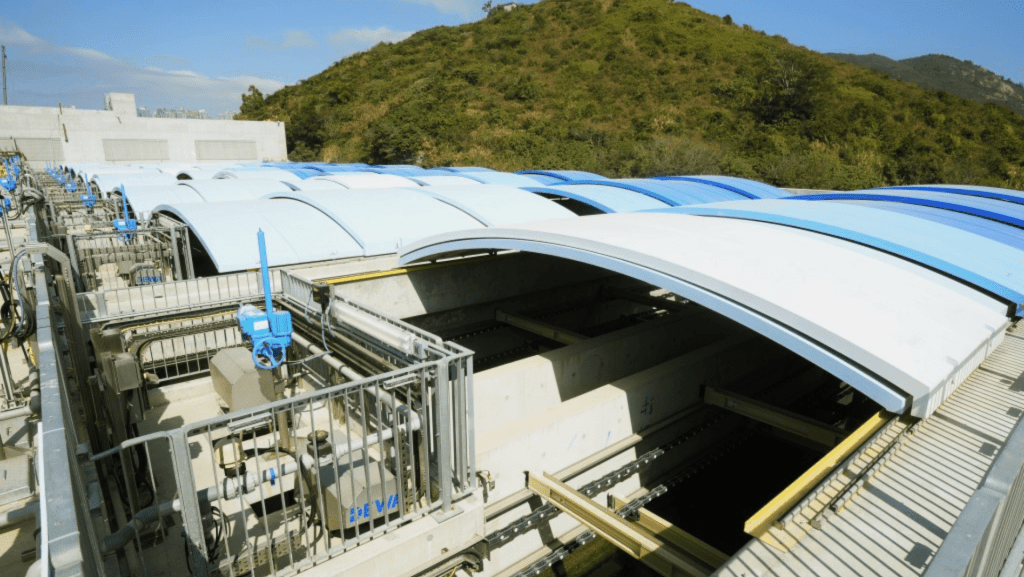
Three firefighters were injured at Hong Kong's Tseung Kwan O desalination plant on Tuesday night after a component from an overheated pump suddenly broke loose and struck them while they were trying to cool the equipment.
Police received a report at about 8.45pm about a suspected fire at the plant on Wan Po Road. Initial investigations indicated that a pump had overheated, generating a large amount of steam inside the facility.
Firefighters were called to the site and began using water hoses to cool the equipment. During the operation, part of the pump suddenly detached and flew into the area where the firefighters were working. Three officers were hit before they could move out of the way.
All three remained conscious after the incident and were taken to hospital for treatment.
Three Firefighters Taken to Hospital
One of the injured firefighters suffered a contusion to the abdomen. Emergency personnel took the firefighter to Queen Elizabeth Hospital while the officer remained conscious.
Two other firefighters also suffered injuries.
One sustained an injury to the left shoulder and right thigh and was taken to Tseung Kwan O Hospital for medical attention. The third suffered an injury to the left hand and was also transported to Tseung Kwan O Hospital.
There were no reports of anyone else being injured in the incident.
The injuries occurred while firefighters were responding to what police initially described as a suspected fire at the water treatment facility. The large amount of steam produced by the overheated pump appears to have been a significant part of the incident, although investigators have not yet established the full sequence of events.
The sudden release of the pump component added an unexpected hazard to an operation that was already taking place around overheated industrial equipment.
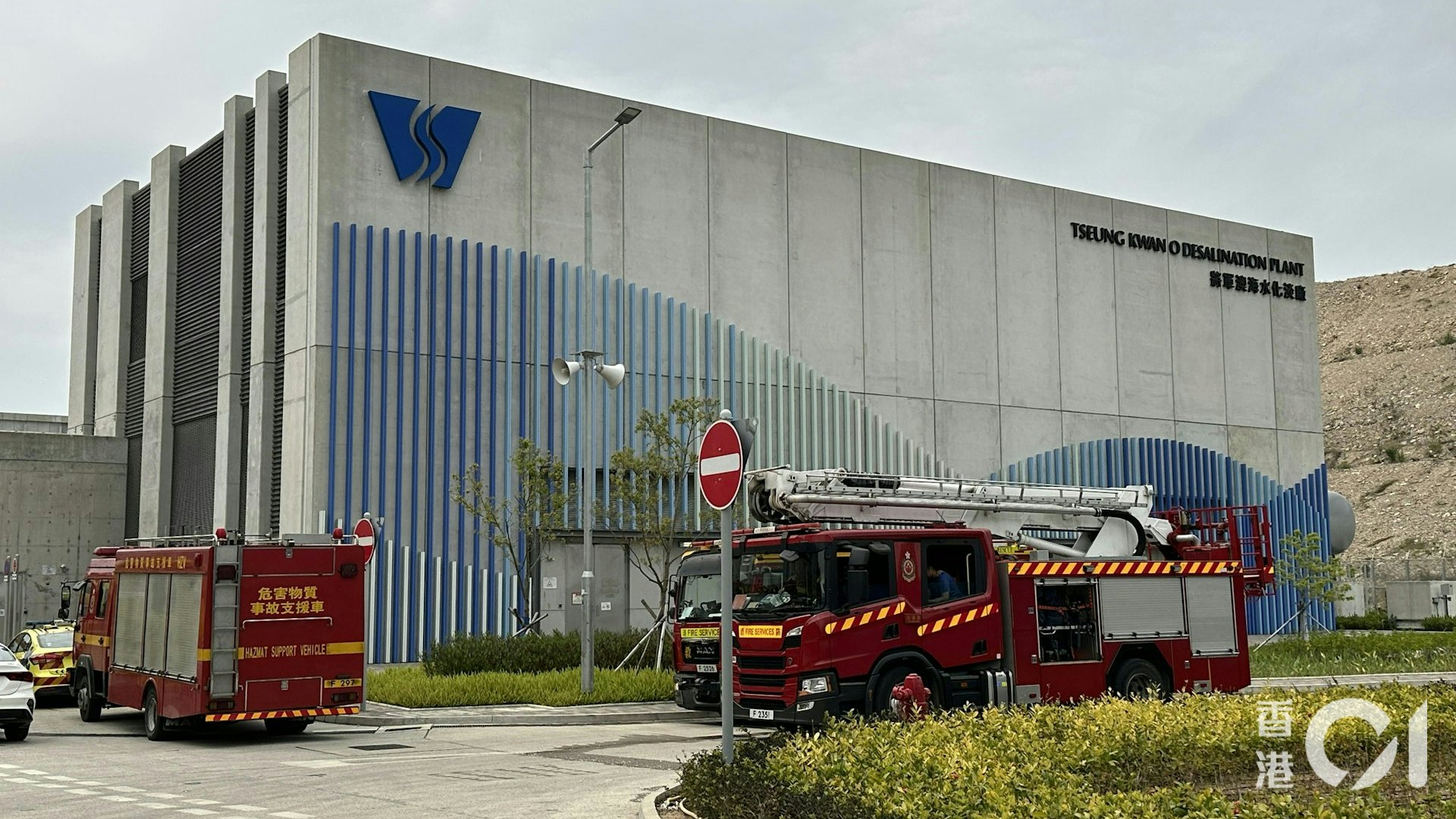
No Evacuation Required
Authorities did not order an evacuation of the desalination plant following the incident.
Police said there was no evidence of criminal involvement at this stage. Officers are investigating what caused the pump to overheat and why the component became detached while firefighters were cooling the equipment.
The investigation will also examine the condition of the pump and surrounding machinery and the circumstances in which the component broke free.
Industrial equipment can generate substantial heat and pressure when operating under demanding conditions. Steam can also reduce visibility and make it harder for emergency workers to assess what is happening around machinery.
In this case, firefighters were using hoses to bring the temperature of the equipment down when the component suddenly came away from the pump.
The incident demonstrates the risks emergency crews can face when responding to problems inside large industrial facilities. Firefighters must deal not only with flames, but also with machinery, pressure, heat and damaged equipment that can behave unpredictably during an emergency.
Investigation Into Pump Failure
Police have not said what type of pump was involved or identified the specific component that detached.
The cause of the overheating remains under investigation.
Officers are expected to examine the machinery and gather information from personnel at the plant as part of the investigation. The findings could help determine whether the incident resulted from an equipment malfunction, operating conditions or another factor.
At present, police have said there is no evidence of criminal elements.
The absence of an evacuation suggests that authorities did not identify a wider threat to people inside or around the facility after the firefighters were injured. The focus has instead remained on the equipment involved and the circumstances that led to the incident.
The plant is located on Wan Po Road in Tseung Kwan O and plays a role in Hong Kong's water supply system.
Hong Kong's First Reverse Osmosis Desalination Plant
The Tseung Kwan O desalination plant is Hong Kong's first facility to use reverse osmosis technology to produce drinking water.
The plant can produce up to 135,000 cubic metres of fresh water each day. That is equivalent to about 5 per cent of Hong Kong's daily water consumption.
Reverse osmosis uses pressure to push water through specialised membranes that remove salt and other dissolved substances. The process allows seawater to be converted into fresh water for use in the city's water supply.
The facility represents a change in Hong Kong's approach to securing water resources. The city has historically relied heavily on imported water and local reservoirs, while desalination provides another source that does not depend directly on rainfall.
Because the plant handles large volumes of water and uses industrial equipment, any machinery failure can require a coordinated response from plant personnel and emergency services.
Tuesday night's incident did not result in an evacuation, but it injured three firefighters who were working to cool an overheated pump.

Firefighters Hurt During Cooling Operation
The sequence of events began with the reported overheating of the pump and the production of large quantities of steam.
Firefighters then used hoses to cool the equipment. The operation was interrupted when the pump component suddenly detached and struck three members of the emergency crew.
The incident illustrates why cooling industrial machinery can present hazards even when there is no continuing spread of fire. Equipment that has become overheated may contain stored heat or pressure, while damaged components can shift or fail when temperatures change.
For the firefighters at the Tseung Kwan O facility, the danger came from a component that separated unexpectedly during the response.
The three injured firefighters were conscious when they were taken to hospital. Their injuries included an abdominal contusion, injuries to the left shoulder and right thigh, and an injury to the left hand.
No further injuries were reported.
Authorities Assess Circumstances
Police are continuing to investigate the incident and determine what caused the pump to overheat and the component to come loose.
The investigation will be important in establishing whether the equipment suffered a technical failure or whether another factor contributed to the incident. Authorities have not announced any criminal concerns and have said there is currently no evidence of criminal involvement.
The desalination plant remains an important part of Hong Kong's water infrastructure, with the capacity to supply up to 135,000 cubic metres of fresh water each day.
For now, the immediate focus is on the three firefighters who were injured while responding to the equipment problem and on determining why the pump failed.
What caused the pump component to break loose during the cooling operation? The police investigation is expected to provide the answer and establish whether further safety measures are needed at the facility.