

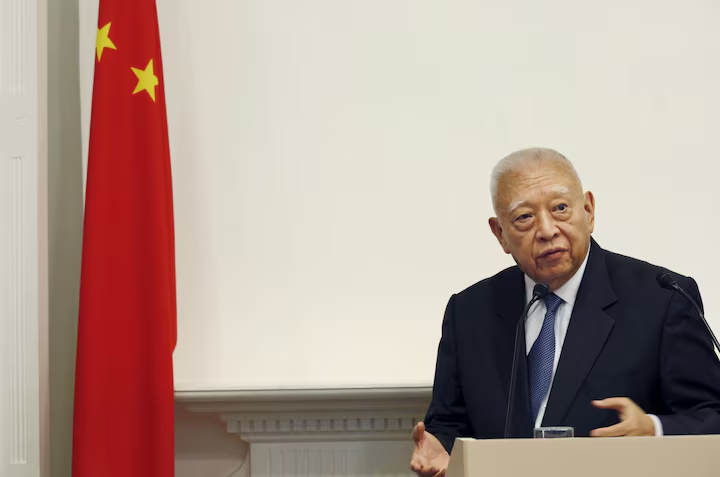
Tung Chee hwa entered Hong Kong’s political history on July 1, 1997, when he became the first Chief Executive of the Hong Kong Special Administrative Region as British rule ended and sovereignty returned to China. His path to that office was shaped long before the handover, beginning with a childhood spent between Shanghai and Hong Kong, a career in maritime engineering and a dramatic rescue of his family’s heavily indebted shipping empire.
Tung, who died on Tuesday aged 89, was born into one of Hong Kong’s most prominent business families. He was the eldest son of Tung Chao yung, the shipping magnate who built the family’s business interests and established Orient Overseas.
For Tung, the shipping industry was not simply a profession. It was the family enterprise into which he was born, and one that would later test his ability to deal with financial pressure, international markets and business uncertainty.
Childhood in Shanghai and Hong Kong
Tung was born in Shanghai in 1937, a year marked by the outbreak of full scale war between China and Japan. His family later moved to Hong Kong during the Chinese civil war, as political and military turmoil reshaped life across the mainland.
He continued his education in Hong Kong and attended Chung Wah Middle School. Among his schoolmates was Elsie Leung, who would later become Hong Kong’s Secretary for Justice.
Tung left Hong Kong for Britain in 1954 to continue his studies. He eventually enrolled at the University of Liverpool, where he studied maritime engineering and graduated in 1960.
The choice of subject reflected the world in which he had grown up. Shipping was already central to the Tung family’s business interests, and his engineering education gave him technical knowledge that would later complement his experience in management and international commerce.
Ten years in the United States
Before returning to the family business, Tung spent about a decade working in the United States.
Among his employers was General Electric, giving him experience outside the family company and exposing him to a corporate environment far removed from Hong Kong’s traditional trading and shipping circles.
He returned to the family business in 1965 and began building his own reputation within the company. Fourteen years later, in 1979, he took charge of Orient Overseas.
The timing proved difficult.
The international shipping industry entered a severe downturn, placing major pressure on companies that had expanded during better years. Orient Overseas was hit hard, and by 1985 the company was carrying a heavy debt burden.
The crisis became one of the defining episodes of Tung’s business career.
The crisis that changed his career
In 1986, Henry Fok, the prominent Hong Kong businessman and later vice chairman of the Chinese People’s Political Consultative Conference, helped lead a US$120 million rescue package for Orient Overseas.
The bailout helped prevent the family company from collapsing under its debts. Tung remained at the centre of the effort to rebuild the business, working through a period when the company’s future was uncertain.
By 1992, Orient Overseas had returned to profitability.
The recovery gave Tung a record that extended beyond his family background. He had inherited a major company, but he had also been forced to manage it through one of the most difficult periods in its history. His handling of the crisis became an important part of the reputation he later carried into public life.
His years in international business also gave him contacts beyond Hong Kong. He maintained relationships with political and business figures in Taiwan, the United States and other parts of the world. That international experience would become significant as Hong Kong prepared for the transfer of sovereignty.
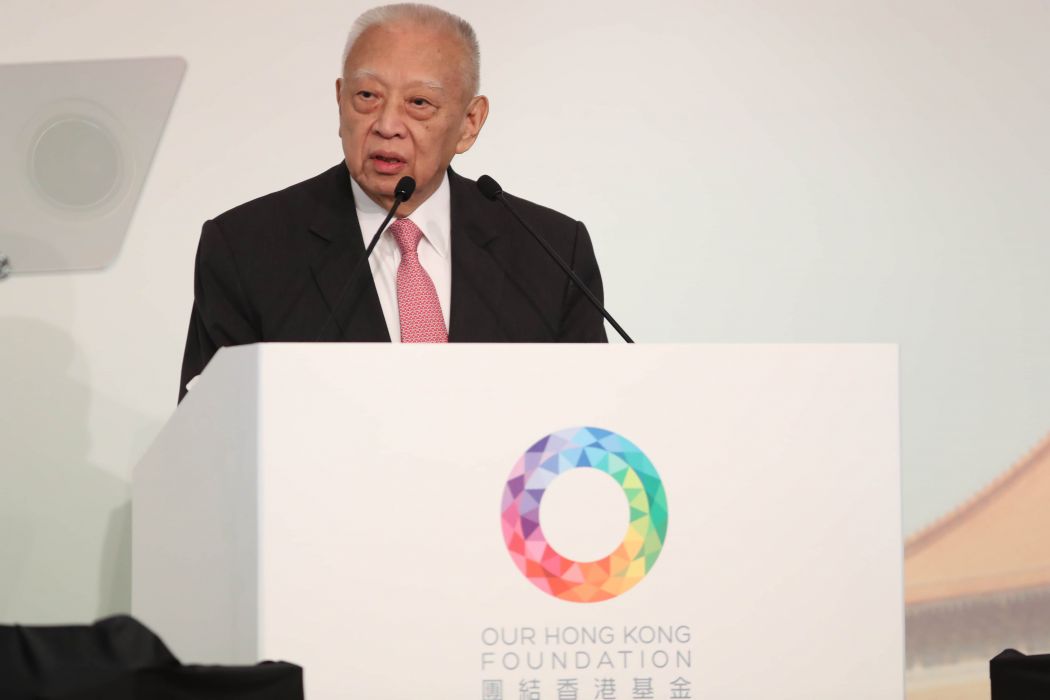
From businessman to Hong Kong’s first leader
By the early 1990s, Tung had become increasingly involved in public affairs. His business background, overseas experience and relationships across political and commercial circles helped establish him as a figure who could operate between Hong Kong, mainland China and the international community.
As preparations for the 1997 handover intensified, attention turned to who would lead the new Hong Kong Special Administrative Region.
Tung emerged as the central government’s preferred candidate and received support from different sections of Hong Kong society. In 1996, he resigned as chairman and chief executive of Orient Overseas International Limited to pursue the position.
He handed responsibility for the family business to his younger brother, Tung Chee chen.
Tung was selected as Hong Kong’s first Chief Executive and formally took office on July 1, 1997, the day the handover took place.
The moment placed him at the centre of one of the most consequential political transitions in Hong Kong’s modern history. He was no longer simply responsible for a shipping company. He was now responsible for leading a city undergoing a fundamental constitutional and political change.
Leaving office in 2005
Tung remained Chief Executive through Hong Kong’s first years under Chinese sovereignty.
His administration faced a series of economic and political difficulties, including the Asian financial crisis, the outbreak of SARS and growing public debate over the direction of the territory after the handover.
He stepped down as Chief Executive in 2005.
His departure from the Hong Kong government did not mark the end of his public career. Instead, he moved into a senior role within China’s political advisory system.
Tung was appointed vice chairman of the National Committee of the Chinese People’s Political Consultative Conference, commonly known as the CPPCC. He remained in that position until 2023.
The appointment reflected the continued importance of his relationship with Beijing and his experience as Hong Kong’s first leader after the handover.
Continued links with business
Even after leaving government, Tung remained involved in the business world.
On June 16, 2014, he was invited to become an independent non executive director of Alibaba Group. The appointment brought him into one of China’s most influential technology companies and reflected the breadth of his experience across business and public administration.
Alibaba was reported to value Tung’s strategic judgement, his experience in both business and government, and his long standing relationships in China and the United States.
The role also illustrated how Tung’s career had evolved. He had begun as an engineer and businessman in the shipping industry, spent years managing a company through financial crisis, then became Hong Kong’s first chief executive and later a senior figure in China’s political advisory system.

Family, faith and football
Away from politics and business, Tung maintained a relatively private personal life.
He was a lifelong Buddhist and was known as a devoted supporter of Liverpool Football Club, a connection that reflected the years he spent studying and working in Britain.
Tung and his wife, Betty Tung, had three children and nine grandchildren.
His family background remained closely connected to Hong Kong’s business history. His father, Tung Chao yung, had established the shipping interests that eventually became Orient Overseas, while his younger brother Tung Chee chen later took over the family company after Tung entered public life.
The story behind his birth date
One of the lesser known details surrounding Tung’s life concerns the date recorded on his official documents.
His official birth date is May 29, 1937. However, reports have said that he was actually born on July 7 of that year.
The reported difference has been linked to the historical significance of July 7, 1937. On that date, the Lugou Bridge Incident took place near Beijing, an event that marked the beginning of the full scale Second Sino Japanese War.
Tung was born against the backdrop of that conflict, and it has been widely believed that the official date was used to avoid associating his birthday with the anniversary of the incident.
That detail adds another layer to a life that crossed several major periods in Chinese and Hong Kong history.
A career spanning business and politics
Tung Chee hwa’s career covered more than six decades and moved through worlds that rarely overlap so closely.
He began as the son of a shipping magnate, trained as a maritime engineer and spent years working overseas before returning to the family company. He then inherited responsibility for a business caught in a major financial crisis and helped bring it back to profitability.
That experience was followed by a move into public life at a moment when Hong Kong was preparing for the end of British rule.
On July 1, 1997, Tung stood at the centre of that historic transition as the first Chief Executive of the Hong Kong Special Administrative Region.
After leaving office in 2005, he continued to serve in senior Chinese political circles and remained connected to major businesses, including Alibaba.
His death closes the life of a man whose career was closely tied to three institutions that shaped modern Hong Kong: its international business community, its post handover government and the political system of the People’s Republic of China.
As Hong Kong remembers its first Chief Executive, what part of Tung Chee hwa’s legacy should receive the closest scrutiny: his record as a businessman, his leadership during the early years after the handover, or his long relationship with Beijing?