

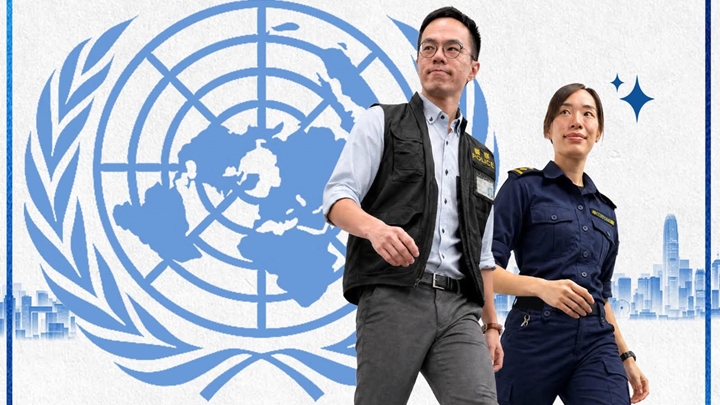
Two Hong Kong disciplined services officers are set to take their anti narcotics experience to the United Nations after being selected for two year assignments under the UN Junior Professional Officer programme.
The officers, one from the Hong Kong Police Force and the other from the Customs and Excise Department, were recommended by China's Ministry of Foreign Affairs for the international postings, the Security Bureau said on Thursday. Both have spent years working on drug enforcement, intelligence gathering and investigations in Hong Kong and will now contribute their experience to international efforts against illicit narcotics trafficking.
Police Experience Moves to the International Stage
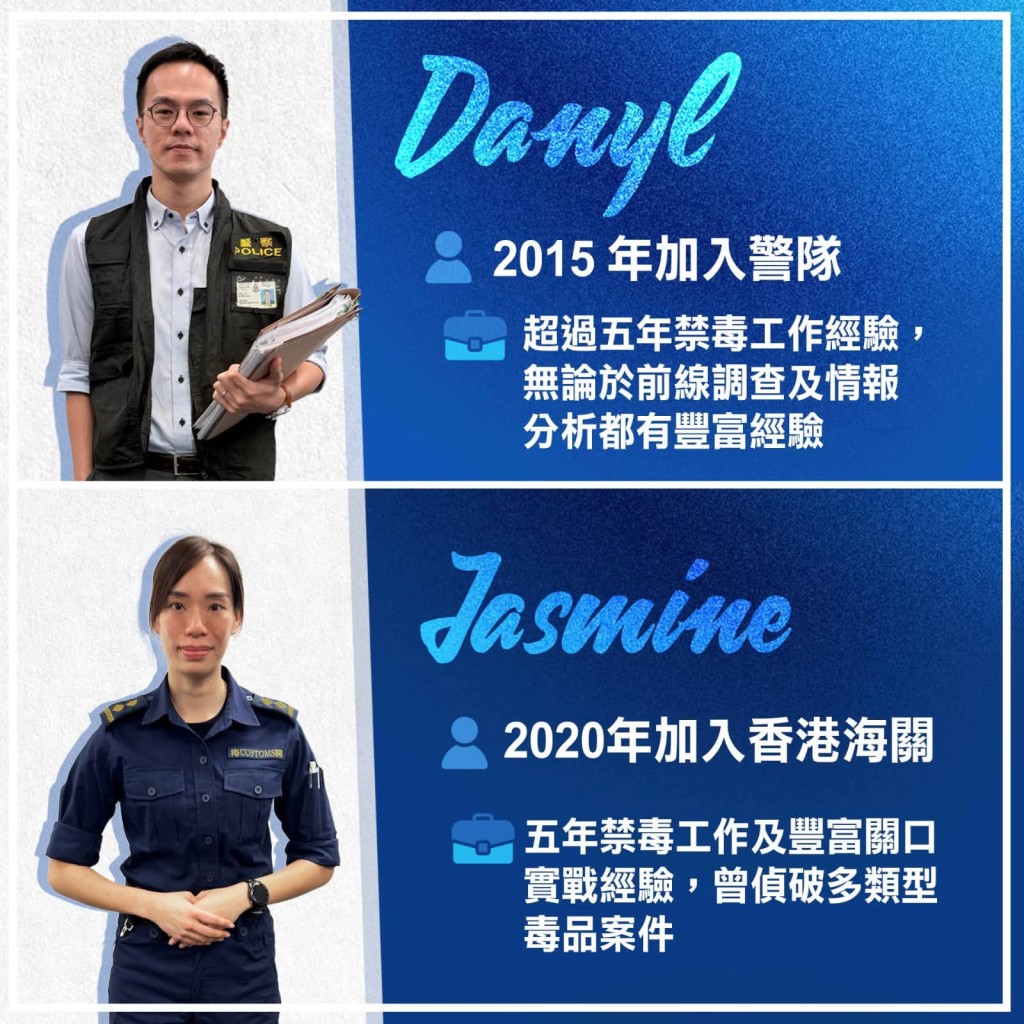
The police officer, identified as Danyl, joined the Hong Kong Police Force in 2015 and has spent more than five years working in the Narcotics Bureau.
His duties have included frontline enforcement, intelligence analysis and joint interdiction operations involving cross border cooperation. Those responsibilities have given him direct experience of how drug trafficking networks operate across jurisdictions and how investigators must share information to disrupt them.
For Danyl, that experience was a major reason for seeking the UN posting.
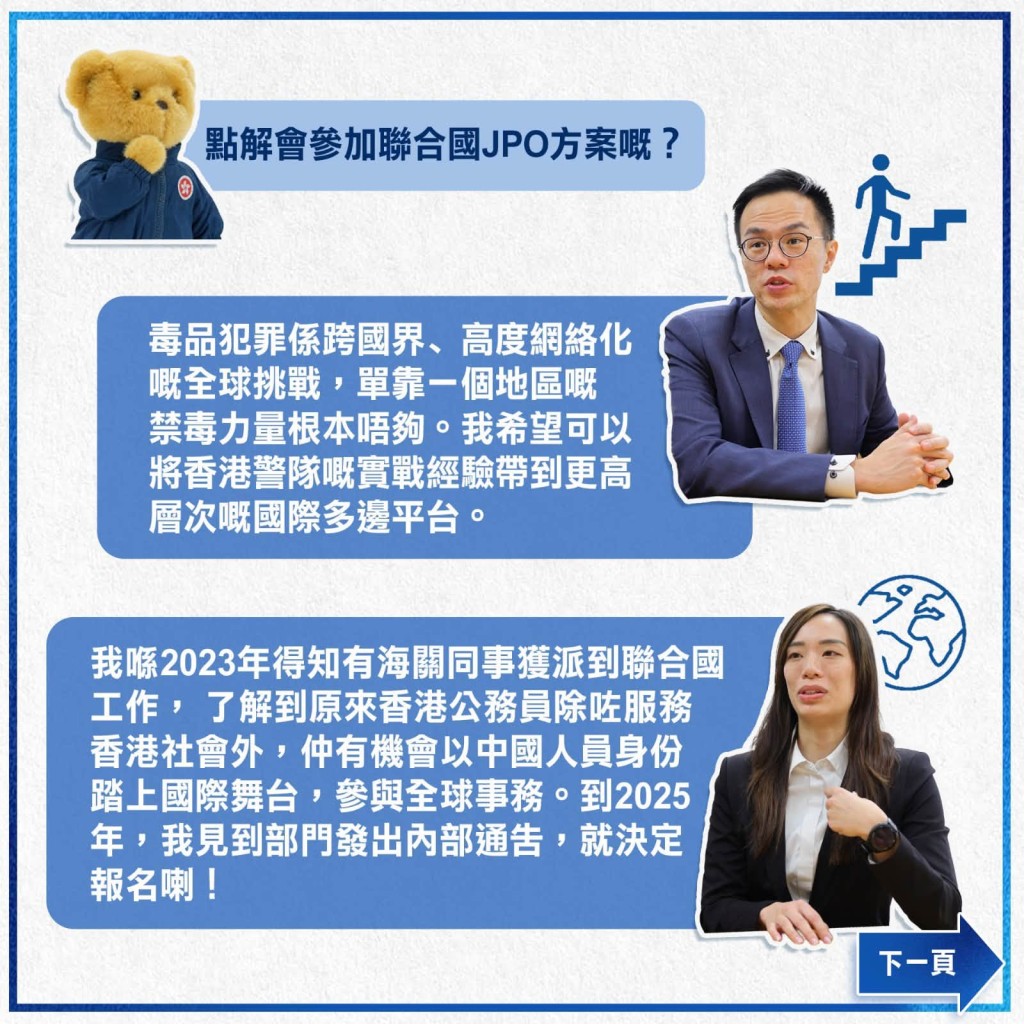
“Drug crime is a transnational, highly networked global challenge, and the anti drug capabilities of a single region are simply not enough,” he said.
He said he hoped to take the practical experience gained by Hong Kong police officers into a wider international setting, where law enforcement agencies and governments work together through multilateral mechanisms.
The move will also expose him to the policy and administrative side of international drug control. During the selection process, Danyl studied UN drug control conventions and examined how member states cooperate through international institutions.
That preparation changed the way he viewed drug enforcement, giving him a broader understanding of the policies, agreements and international structures that support operations carried out on the ground.
His experience in Hong Kong has largely centred on enforcement and investigations. At the UN, he will have an opportunity to see how those operational concerns connect with international policy, coordination and information sharing.
Danyl also intends to bring that experience back to Hong Kong when his two year secondment ends.
He said the international networks and administrative knowledge gained during the assignment could later support the work of the government and the police force. For a frontline officer, the posting therefore represents more than an overseas assignment. It provides an opportunity to build professional links with counterparts from other jurisdictions and gain a wider understanding of how international drug control systems function.
Customs Officer Brings Border Enforcement Experience
Jasmine, the second officer selected for the programme, joined Hong Kong Customs in 2020. Over the past five years, she has worked on drug interceptions at border checkpoints and investigations involving smuggling syndicates.
She is currently stationed at the Asia Airfreight Terminal at Hong Kong International Airport, one of the city's major points for international cargo movement.
Her work has placed her close to the practical challenges faced by customs officers attempting to detect and intercept illicit drugs entering or passing through Hong Kong.
Jasmine became interested in international service after a Hong Kong Customs colleague was seconded to the United Nations in 2023. The experience showed her that Hong Kong civil servants could take part in the work of international organisations while serving under Chinese representation.
When an internal circular about the UN programme was issued in 2025, she decided to apply.
The selection process lasted more than a year and required preparation that extended well beyond her day to day customs duties.
“Beyond mastering the anti drug operations of my own department, I needed to develop a macroscopic vision, understanding national anti narcotics policies, the role of the United Nations in global drug control, international conventions, and the latest global trends,” she said.
That preparation required her to look at drug control from a broader perspective, including the relationship between frontline enforcement, national policy and international cooperation.
For an officer whose work has focused heavily on border controls and investigations, the UN assignment will provide exposure to a much wider group of agencies and enforcement systems.
Hong Kong Officers to Gain International Networks
The two appointments come as drug trafficking networks continue to operate across national borders, making cooperation between law enforcement agencies an important part of investigations and enforcement.
Drugs can move through several jurisdictions before reaching their final destination, while the people organising shipments may operate from countries far removed from where the drugs are eventually intercepted. Investigators therefore often need information from overseas counterparts to establish the full picture behind a shipment or identify links between apparently separate cases.
This is where international assignments can give frontline officers a different perspective.
Danyl's background in intelligence analysis and cross border operations gives him direct experience of the information and coordination required to tackle organised narcotics activity. Jasmine's work at border checkpoints and the airport has given her practical knowledge of cargo screening, drug interception and investigations into smuggling networks.
Their UN assignments will place those experiences within a wider international framework.
The officers are also expected to build professional relationships with counterparts from other countries and gain access to different approaches to intelligence, risk assessment and enforcement.
For Hong Kong, the potential benefit extends beyond the two year postings. When the officers return, they are expected to bring back knowledge that can be applied to local enforcement work.
Customs Officer Seeks to Strengthen Frontline Operations
Jasmine said she hoped the assignment would demonstrate Hong Kong's ability to connect local expertise with international cooperation while showcasing the professional standards of the city's disciplined services.
She described Hong Kong as a “super connector”, reflecting its position as an international transport, trade and financial centre with extensive links to other markets.
Her expectations for the secondment are closely tied to her work at the airport.
After completing the UN assignment, she aims to bring back international intelligence on cross border crime, new approaches to risk management and experience of multilateral enforcement practices.
That knowledge could be applied to frontline customs operations, particularly in identifying emerging trafficking methods and assessing risks associated with international cargo movements.
The Asia Airfreight Terminal, where Jasmine currently works, illustrates why such knowledge can matter. International cargo passes through Hong Kong in large volumes, requiring enforcement agencies to distinguish legitimate trade from shipments that may conceal prohibited goods.
Effective enforcement depends not only on physical inspection but also on intelligence, risk assessment and cooperation with agencies outside Hong Kong.
International Experience Expected to Benefit Hong Kong
The appointments give both officers an opportunity to move between two levels of drug control work.
At home, they have dealt with the practical demands of detecting narcotics, investigating suspects and disrupting smuggling activity. At the United Nations, they will be exposed to international conventions, policy development, coordination between member states and broader approaches to drug control.
That combination could prove useful when they return to their departments.
Danyl expects to bring back international contacts and a better understanding of UN processes, while Jasmine hopes to apply new intelligence and risk management methods to frontline customs work.
Their assignments also reflect the role of disciplined services officers in international cooperation. Drug enforcement increasingly requires agencies to exchange intelligence, coordinate investigations and understand trafficking patterns that do not stop at national or regional borders.
The two officers will spend the next two years working within that wider system.
Their selection also places Hong Kong's frontline enforcement experience in an international setting, allowing the two officers to share knowledge gained from dealing with narcotics cases in one of Asia's busiest international cities.
For Danyl and Jasmine, the assignment begins with a move from local enforcement to international service. For the departments they represent, the longer term objective is to bring that international experience back to Hong Kong and apply it where officers confront drug trafficking at borders, airports and on the streets.
As they prepare to take up their UN roles, the question for Hong Kong's enforcement agencies is straightforward: how much stronger can frontline anti drug operations become when international intelligence and experience gained abroad are brought back home?