
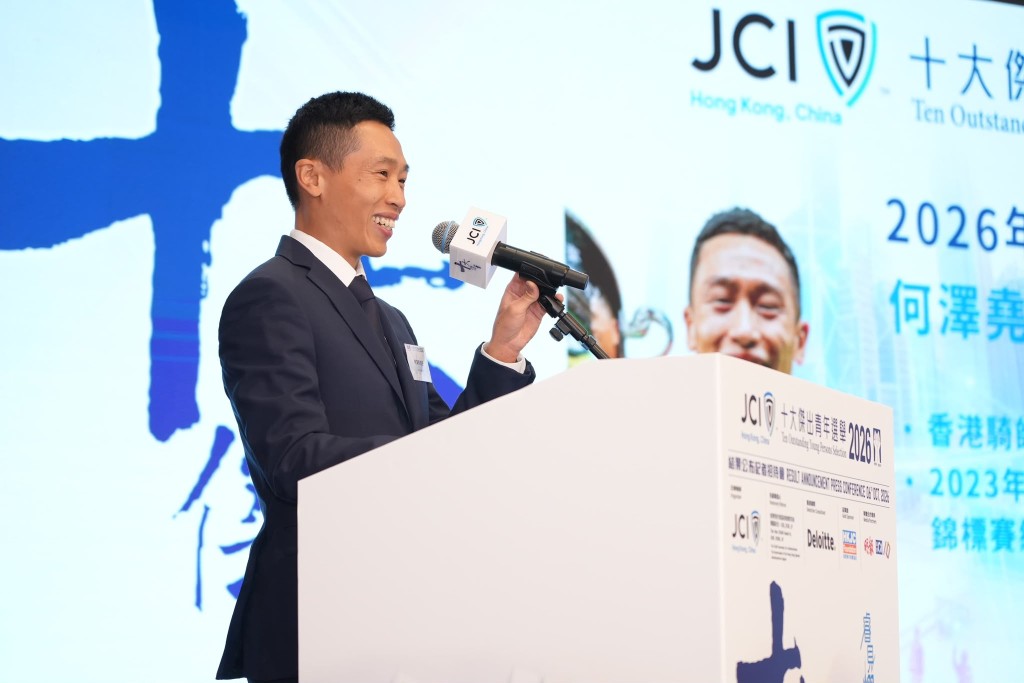
Vincent Ho Chak-yiu has made Hong Kong racing history after becoming the first jockey to be named one of the city's Ten Outstanding Young Persons, an honour that recognises achievements well beyond the racecourse.
The 36-year-old was among this year's recipients announced on Tuesday, adding one of Hong Kong's recognised honours for young achievers to a career that already includes 648 local winners, major international victories and three serious comebacks from injury.
The selection is significant because Ho is the first person from Hong Kong's racing industry to receive the award in its 54 editions. It places his career alongside achievements in other fields and recognises qualities such as professional excellence, perseverance, personal conduct and contribution to society.
For Ho, the honour is therefore about more than the number of races he has won. It reflects the wider example he has set through his approach to a demanding profession and his ability to rebuild his career after setbacks that could have ended it.
Andrew Harding, executive director of racing at the Hong Kong Jockey Club, said Ho's career demonstrated the qualities behind the award.
"Vincent's journey is defined by his resilience and never give up attitude, as well as a constant desire to learn, improve and better himself," Harding said.
Why the award matters
Hong Kong's Ten Outstanding Young Persons Selection has been held for 54 editions and recognises young people whose achievements and character have made an impact in their respective fields.
Ho's inclusion gives the racing industry its first place among the award's recipients. That distinction matters in a city where horse racing has a long-established sporting and cultural following, but where jockeys rarely receive recognition on this scale outside the racing community.
The award also reflects a broader view of achievement. Winning races is central to a jockey's career, but competing at the highest level requires discipline, physical preparation, responsibility and the ability to recover from setbacks.
Ho's career provides examples of all four.
His record includes more than 600 wins in Hong Kong, several Group One victories and a long running partnership with Golden Sixty. Yet some of the most revealing moments of his career came when he was unable to ride.
Three major injuries forced Ho to rebuild his career at different stages. Each time, he returned to competition.
That combination of achievement and perseverance helps explain why his latest honour carries particular weight.
From dressage to 648 Hong Kong winners
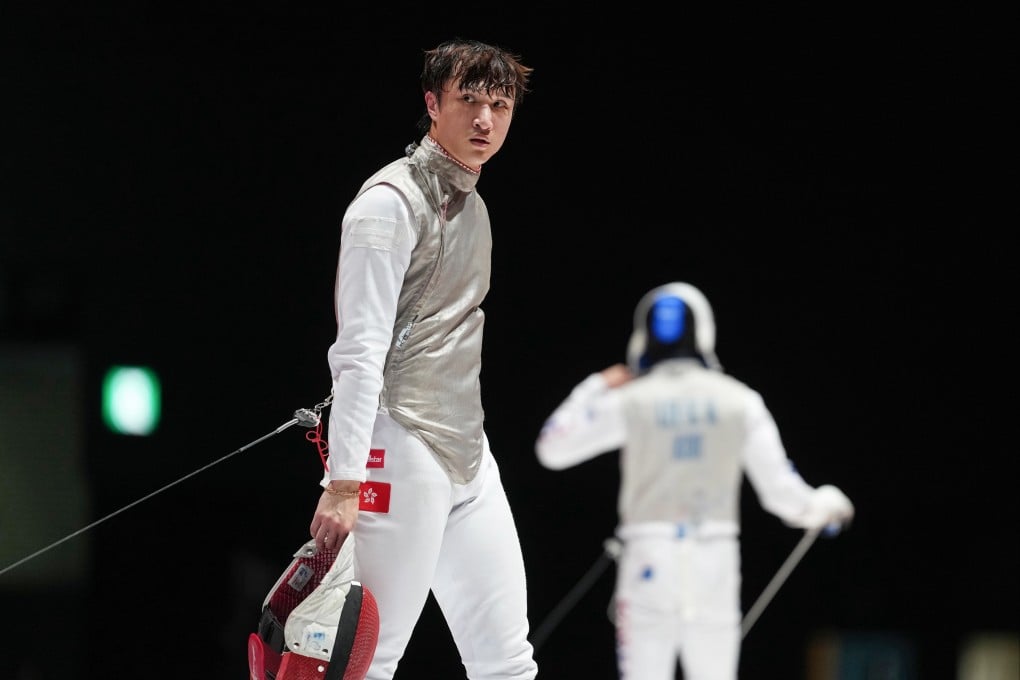
Ho did not begin his sporting career in the saddle of a racehorse.
As a youngster, he competed in dressage before entering the Hong Kong Jockey Club's Apprentice Jockeys' School. The programme later took him to New Zealand, where he rode 44 winners under leading trainer Lance O'Sullivan.
He returned to Hong Kong and quickly established himself as one of the city's leading homegrown riders.
Ho became Hong Kong's champion apprentice in the 2010-11 season and has since won the Tony Cruz Award for leading homegrown jockey four times.
He started the 2026-27 season with 648 Hong Kong wins, making him one of only 11 jockeys to have passed the 600-winner mark in the city.
Among graduates of the Jockey Club's Apprentice Jockeys' School, only legendary jockey Tony Cruz has recorded more Hong Kong winners.
Those figures provide the statistical foundation for Ho's career. His partnership with Golden Sixty, however, gave it a defining story.
Golden Sixty and the biggest wins
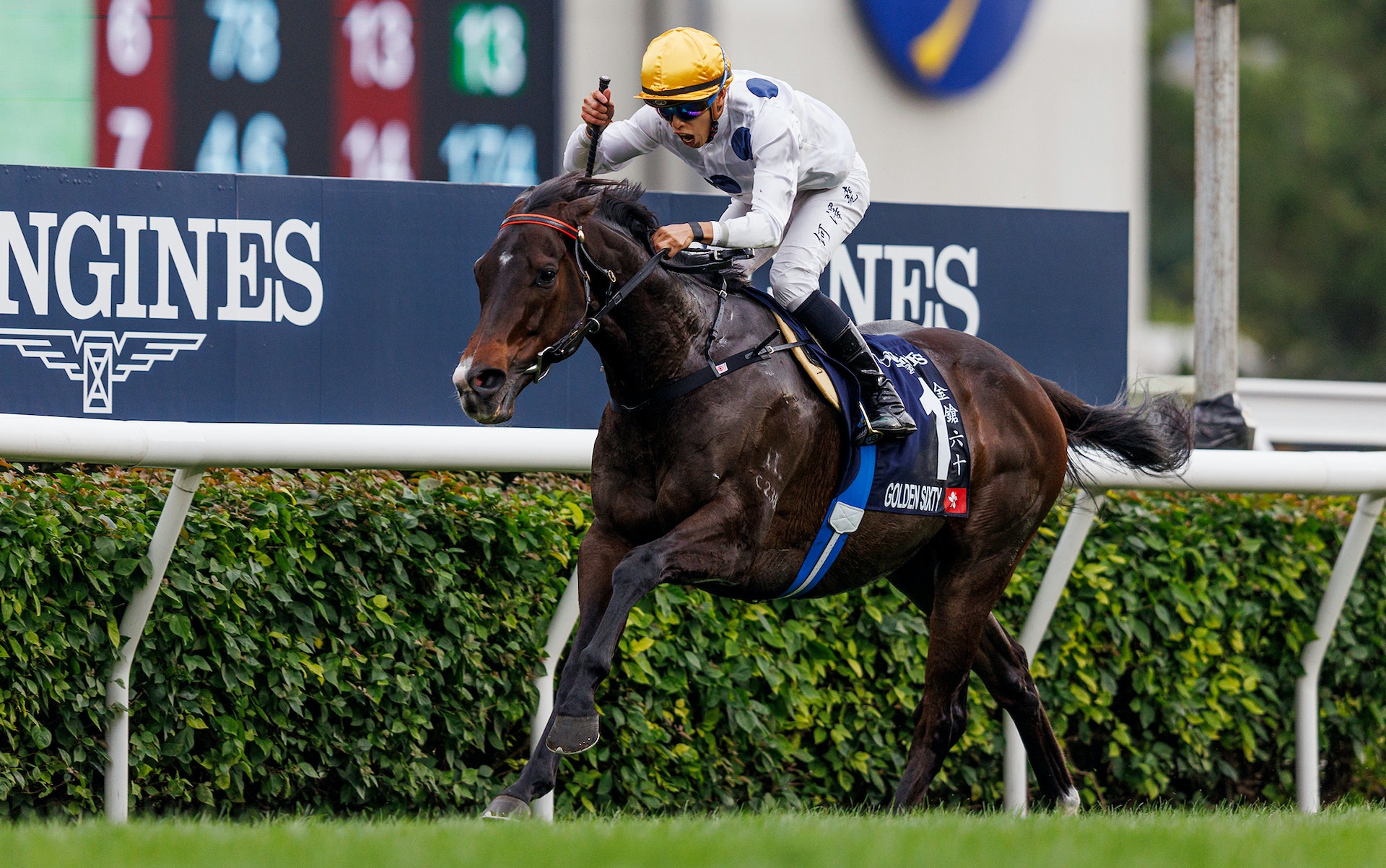
Ho rode Golden Sixty in every race of the champion's career, developing a partnership that became one of the most recognisable in Hong Kong racing.
Together, they won the Hong Kong Derby, three Hong Kong Mile titles and three Champions Mile crowns.
Golden Sixty was not Ho's only major success.
In the 2020-21 season, Ho recorded five Group One victories. One of those came in the 2021 QEII Cup, when he rode Japan's Loves Only You to victory.
Two years later, Ho added an international milestone to his record.
In 2023, he became the first homegrown jockey to win the International Jockeys' Championship. Just four days later, he partnered Golden Sixty to a third Hong Kong Mile victory.
The achievements established Ho as a leading figure in Hong Kong racing. His later injury battles would test whether he could remain there.
The falls that changed his career
Ho's first major injury came during his apprenticeship, when a fall left him with a broken left forearm. Doctors inserted a plate and screws to repair the injury.
The next major setback came in July 2023 during a race at Niigata in Japan.
Ho suffered a fractured T5 vertebra, a broken rib, concussion and lung damage. The Hong Kong Jockey Club arranged a medical flight to bring him home.
Less than two months later, he returned to the saddle for the season opener at Sha Tin.
Another fall in January 2024 forced him to take another break. About three months later, he returned and rode a double at Sha Tin before Golden Sixty's Champions Day appearance.
Then came the most serious accident of his career.
In February 2025, Ho's mount Oldtown clipped heels and fell at Sha Tin. Ho suffered a brain bleed and fractures to his neck and shoulder and was admitted to intensive care.
He spent about five months away from racing.
During his recovery, Ho travelled to Northern Farm in Japan, where Golden Sixty now lives. Those visits formed part of his gradual return to riding.
The physical recovery was only one part of the challenge.
"Even though the scans are clear from concussion, it was a traumatic brain injury, so symptoms can stay," Ho told Idol Horse during his recovery.
Another return to the winner's circle
Ho returned to competitive racing in 2026 and quickly produced another major result.
He won the Hong Kong Classic Mile on Little Paradise, marking another successful comeback after a period away from the sport.
In August, he captained Team Hong Kong at the Shergar Cup at Ascot, helping the team finish second.
His latest return added context to the Ten Outstanding Young Persons honour. Ho's career is not simply a record of victories. It is also a record of returning to work after injuries that forced him to confront uncertainty about his future in racing.
That makes the award particularly relevant for younger people looking at sporting careers. Ho's story shows that elite performance is not built solely on natural ability. It also depends on preparation, discipline, learning from setbacks and maintaining professional standards over time.
Harding said Ho's approach had made him a role model and an ambassador for Hong Kong racing.
"His pursuit of world-class excellence, together with his utmost professionalism, rigid discipline and highest integrity, have made Vincent a role model for young people and an outstanding ambassador for Hong Kong racing," Harding said.
A first for Hong Kong racing
Ho's selection breaks new ground for the racing industry.
For 54 editions, the Ten Outstanding Young Persons Selection had not included a jockey among its recipients. Ho's award changes that record while giving the racing community recognition beyond race results and championship tables.
His career now carries two different kinds of achievement.
There are the measurable results: 648 Hong Kong winners, Group One victories, major international success and an enduring partnership with Golden Sixty.
Then there is the less measurable side of his career: the discipline required to return after serious injuries, the willingness to keep improving and the professional conduct that has earned the respect of the Hong Kong Jockey Club.
"Vincent has shown that lasting success comes not only from talent, but also from perseverance, humility and a commitment to doing things the right way," Harding said.
That may be the most important part of Ho's latest honour. The award does not simply recognise what he has already won. It recognises the way he has built his career.
For Hong Kong racing, it is a first. For Ho, it is another milestone in a career that continues to develop long after his earliest victories.
Do you think Ho's story could inspire more young athletes in Hong Kong to pursue excellence beyond their sport?