

By Sarah Chan
JAKARTA: Macao and Indonesia are preparing to deepen economic and people to people ties, with officials from both sides pointing to new opportunities in trade, investment, tourism, healthcare and business services as China advances its 15th Five Year Plan and Macao implements its third five year plan.
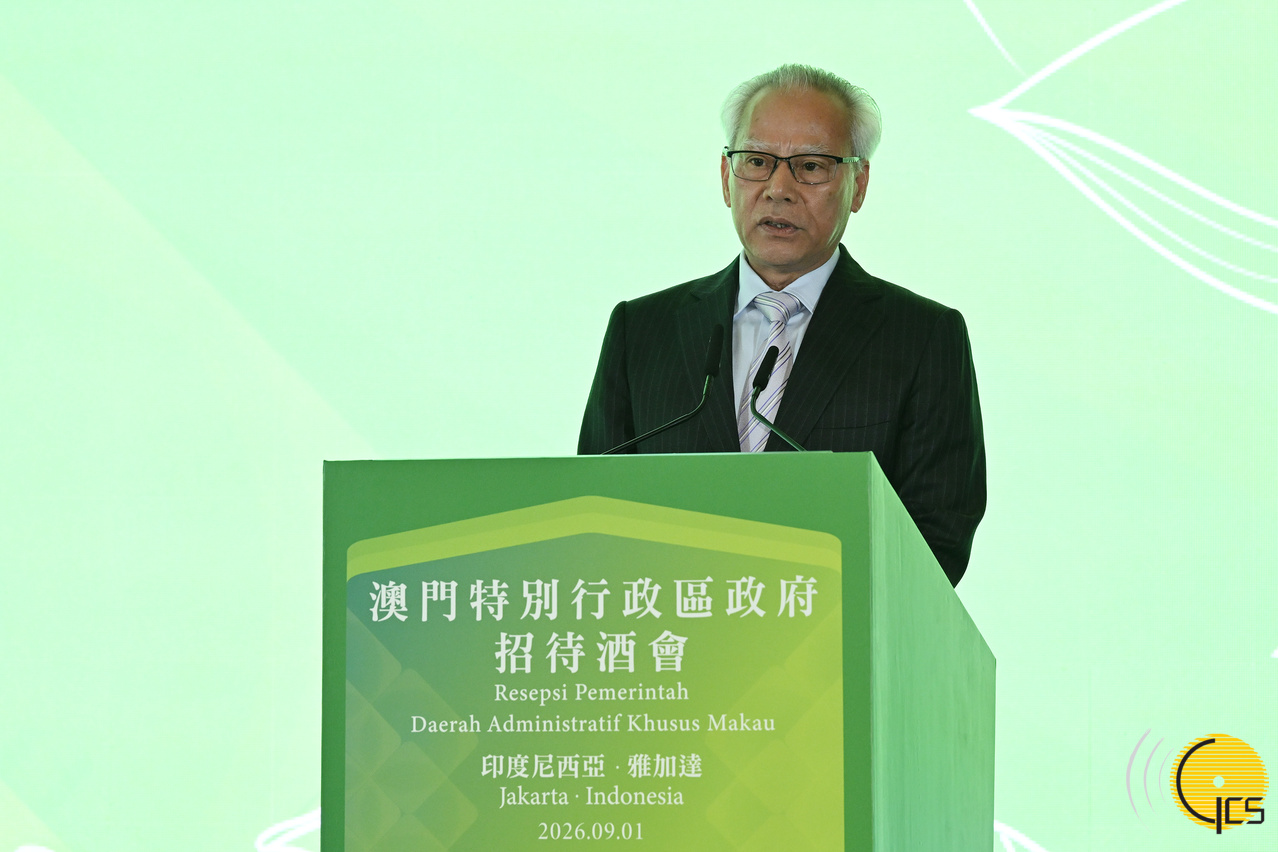
Macao Chief Executive Sam Hou fai made the remarks on Tuesday during a reception hosted by the Macao Special Administrative Region government in Jakarta. He said the two sides have room to build on existing links and expand cooperation across a wider range of industries.
The discussions come as Macao seeks to strengthen its position as a gateway connecting China with international markets, while Indonesia continues to attract investment and develop its role as one of Southeast Asia's largest economies.
Macao Seeks Broader Role in China ASEAN Cooperation
Sam said Macao and Indonesia occupy important positions along the Maritime Silk Road and should make greater use of their existing connections.
He called for closer cooperation between the two sides while encouraging them to contribute to wider economic relations between China and the Association of Southeast Asian Nations.
For Macao, the push reflects a broader effort to expand economic activity beyond its traditional dependence on tourism and gaming. The city has increasingly sought opportunities in areas such as conventions and exhibitions, financial services, trade, investment, healthcare and cultural exchanges.
Indonesia, meanwhile, offers access to a large domestic market and a fast growing regional economy. Its population of more than 280 million people gives businesses a substantial consumer base, while its position in Southeast Asia makes the country an important partner for companies looking to expand across the region.
Sam said Macao would continue using its role as a gateway for China's high level opening up to promote practical cooperation with Indonesia.
The areas identified include trade and investment, conventions and exhibitions, tourism, as well as cultural and people to people exchanges.
The emphasis on practical cooperation is significant because business links between Macao and Indonesia extend beyond government relations. Companies, tourism operators, investors, medical institutions, and organisers of international events all have potential areas for collaboration.
Indonesian Officials Welcome Greater Business Links
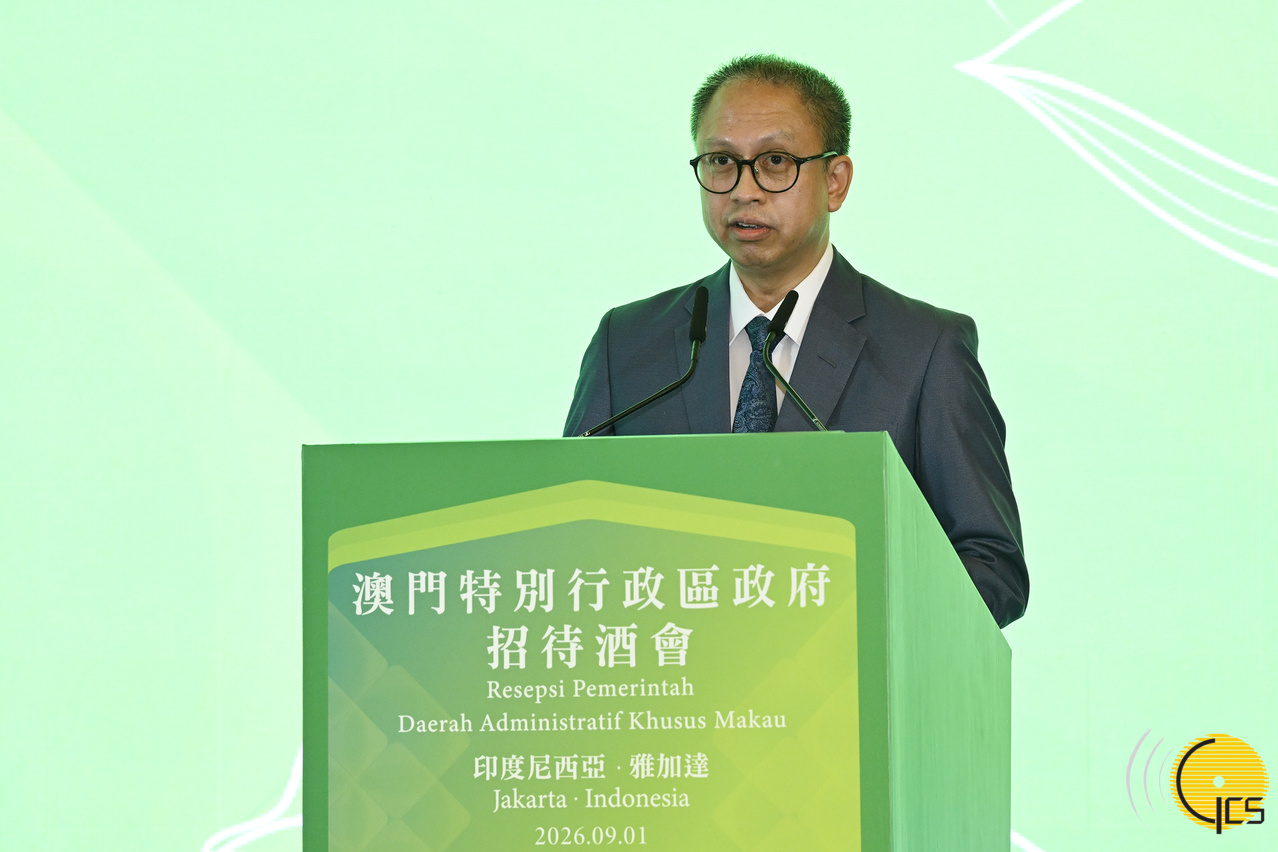
Edi Prio Pambudi, deputy minister for Coordination of International Economic Cooperation under Indonesia's Coordinating Ministry for Economic Affairs, said Indonesia and Macao already maintain close economic and people to people relations.
He encouraged companies from both sides to strengthen their connections and make use of emerging opportunities.
Pambudi's comments reflect Indonesia's wider effort to attract foreign investment, develop international business partnerships and expand economic cooperation with markets across Asia.
For Indonesian companies, stronger links with Macao can provide additional channels into the Chinese market. For Macao businesses, closer ties with Indonesia can offer opportunities in a country that has become increasingly important to regional supply chains, tourism and investment.
The potential relationship is also supported by Macao's connections with mainland China and its established links with Portuguese speaking markets. That combination gives Macao businesses and institutions a platform from which they can explore partnerships with Indonesian counterparts.
The latest meetings therefore carry significance beyond the immediate agreements signed in Jakarta. They point toward a wider effort to connect businesses and institutions through investment, tourism, professional services and other commercial activities.
Nine Agreements Signed at Jakarta Reception
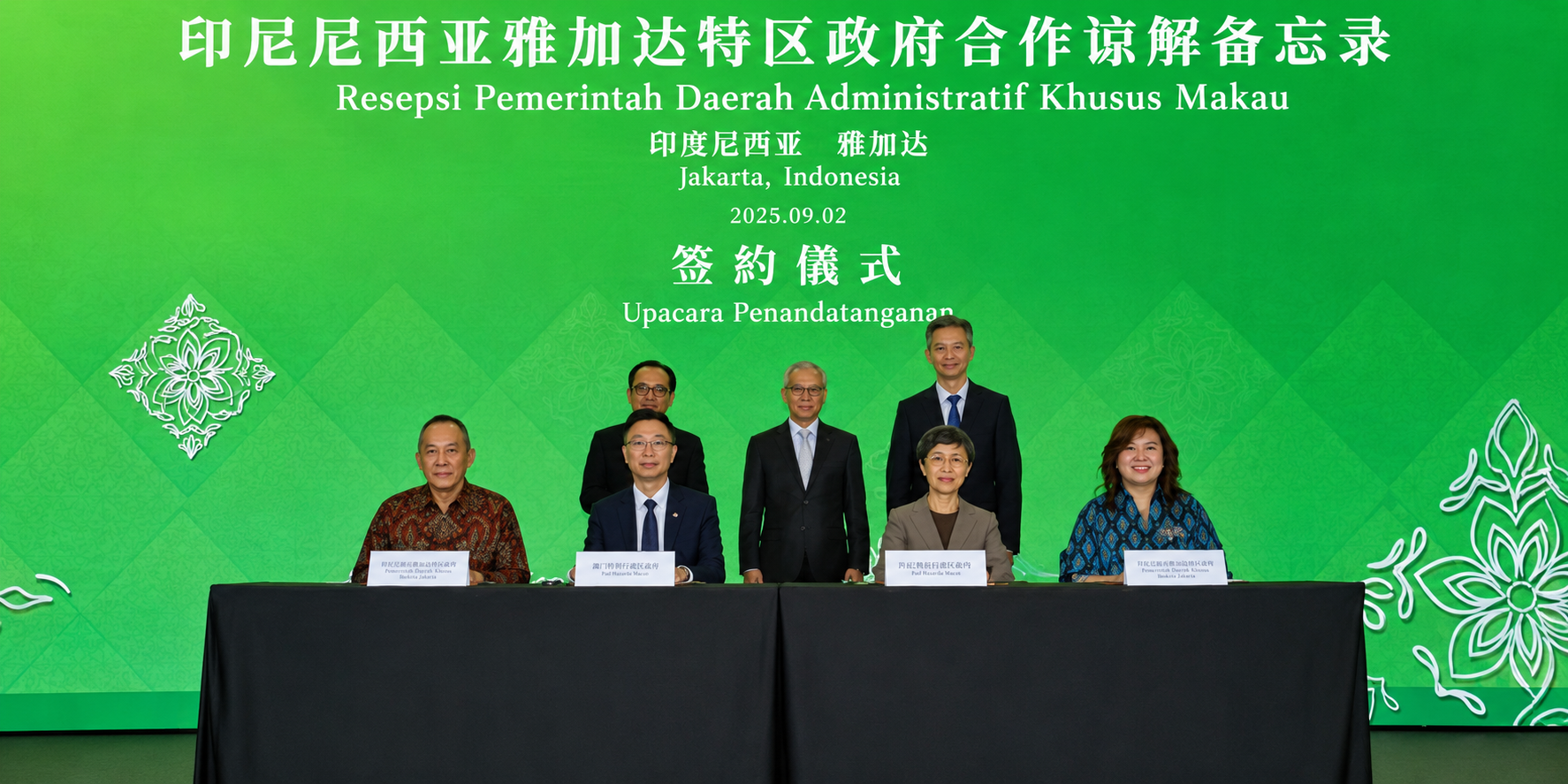
The cooperation discussions produced concrete results on Tuesday, when nine agreements were signed during the reception.
The agreements cover several sectors, including investment, tourism, conventions and exhibitions, and medicine and health.
The range of sectors involved reflects the broader direction of Macao's economic development strategy. Tourism remains an important part of Macao's economy, but officials have increasingly promoted conventions, exhibitions, investment and other industries as additional sources of growth.
Cooperation in medicine and health could also create opportunities for exchanges involving medical institutions, professional expertise and services. Such partnerships can involve more than commercial activity, including institutional cooperation and the sharing of experience between healthcare organisations.
The tourism agreements, meanwhile, could support greater movement of visitors and stronger cooperation between tourism businesses and destination marketing organisations.
Conventions and exhibitions offer another avenue for cooperation. Macao has established itself as a destination for major business events, while Indonesia has a large domestic market and an expanding international events sector. Cooperation between the two could help companies use exhibitions and conferences to establish commercial relationships.
Investment agreements may provide the most direct route for businesses seeking to expand into new markets. They can help connect investors, companies and government agencies while giving enterprises greater opportunities to identify projects and potential partners.
36 Projects Signed at Economic and Investment Conference
The nine agreements were followed by a larger round of commercial activity at a Macao economic, trade, tourism and investment promotion conference held in Jakarta on the same day.
A total of 36 cooperation projects were signed during the conference.
The number of projects demonstrates the level of interest generated by the visit and gives the bilateral relationship a stronger commercial dimension. While the individual projects cover different areas, together they point to growing engagement between businesses and institutions from Macao and Indonesia.
Promotion conferences of this type also give companies an opportunity to meet potential partners directly, discuss investment opportunities and explore areas where their interests overlap.
For Macao, Indonesia represents an important market in Southeast Asia at a time when the city is seeking to broaden international economic links. For Indonesia, closer relations with Macao can add another channel for cooperation with Chinese businesses and institutions.
Cooperation Comes as Macao Pursues Economic Diversification
Macao's push for closer economic cooperation with Indonesia is taking place against the backdrop of China's 15th Five Year Plan and the implementation of Macao's third five year plan.
The policy environment gives greater importance to economic diversification, international cooperation and Macao's role in China's wider opening up.
The city has spent recent years seeking to develop industries alongside its established tourism and entertainment sectors. The convention and exhibition industry has received greater attention, as have financial services, technology, healthcare, cultural activities and other areas with potential for international cooperation.
Indonesia can play a role in that effort because of its scale and its growing importance in the regional economy.
The two sides also have an opportunity to build stronger people to people connections. Tourism, education, culture, healthcare and business travel can create relationships that extend beyond individual commercial transactions.
Such links often provide the foundation for longer term economic cooperation because businesses are more likely to develop partnerships when people and institutions have established direct contacts.
A Wider China ASEAN Dimension
The Macao Indonesia relationship also fits into a much broader pattern of economic engagement between China and Southeast Asia.
The Association of Southeast Asian Nations has become one of China's most important regional economic partners, with trade, investment and supply chain connections expanding across a wide range of industries.
Sam's call for Macao and Indonesia to contribute to China ASEAN cooperation places the bilateral relationship within that wider framework.
Macao's role is distinctive. As a Special Administrative Region of China, it can serve as a bridge between mainland Chinese businesses and international partners while maintaining its own commercial, tourism and cultural networks.
Indonesia's geographic position gives it a different but complementary role. The country sits at the centre of major maritime routes and has direct connections to markets throughout Southeast Asia.
Greater cooperation between the two could therefore benefit companies seeking access to both Chinese and Southeast Asian markets.
The Jakarta meetings also show that the relationship is moving beyond broad statements of intent. The signing of nine cooperation agreements and 36 projects provides specific areas in which companies and institutions can begin working together.
The next stage will depend on implementation. Businesses will need to turn agreements into investment, tourism activity, commercial partnerships and institutional exchanges.
For Macao and Indonesia, the immediate task is clear: convert the agreements and projects announced in Jakarta into working partnerships that produce measurable economic and people to people links.