

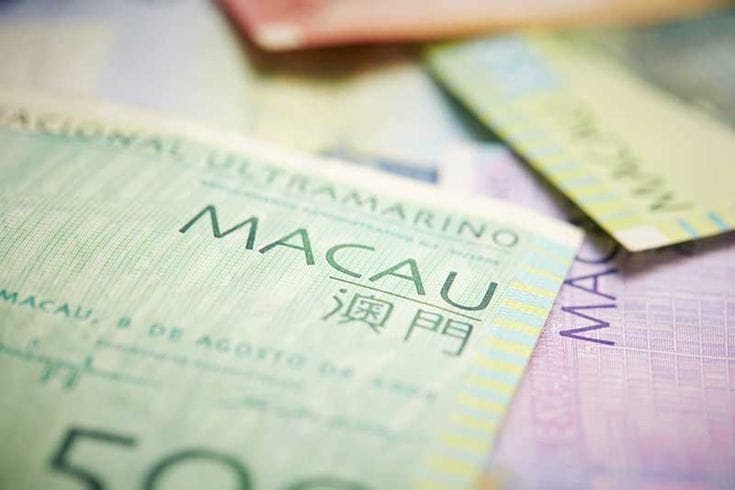
Macau Chief Executive Sam Hou Fai presented an upbeat assessment of the Special Administrative Region's economic diversification progress at the semi-annual legislative briefing on Wednesday, citing data showing that non-gaming GDP sectors have grown by an aggregate 34 percent since the launch of the Macau Economic Diversification Action Plan in January 2025.
The Diversification Mandate
Macau's near-total dependence on gaming revenue has long been identified by both the Macau government and Beijing as an economic vulnerability. In the pandemic years of 2020 to 2022, when international travel restrictions effectively shut down the casino industry for extended periods, Macau's GDP contracted by as much as 56 percent in a single year, underscoring the structural fragility of a monoculture economy.
The action plan identified six priority non-gaming sectors for targeted development: MICE (meetings, incentives, conferences and exhibitions) tourism, financial services, traditional Chinese medicine (TCM) research and trade, Portuguese-speaking country trade facilitation, technology innovation, and cultural and creative industries. Each sector has been assigned specific growth targets, dedicated investment funds, and streamlined licensing arrangements.
Macau's cultural heritage and unique Sino-Portuguese identity are central to its strategy of attracting high-value cultural tourism beyond the casino sector.
MICE Sector Leads the Way
The MICE sector has delivered the most impressive results. Macau hosted 2,340 international conferences, exhibitions and incentive events in the first six months of 2026, generating an estimated 8.4 billion patacas in direct delegate spending. The Venetian Macao Convention Centre completed a 30,000 square metre expansion in March, adding capacity equivalent to three soccer pitches and enabling simultaneous hosting of two large-scale international exhibitions that would previously have required individual booking.
Notable events in the period included the Asia Healthcare Investment Summit, the Global Chinese Business Leadership Forum, and the International Conference on Traditional Chinese Medicine and Genomics, the latter attracting 4,800 delegates from 62 countries and generating significant media attention for Macau's emerging role as a bridge between traditional and contemporary medical science.
Financial Services Development
Macau's financial services sector, historically limited by the dominance of the Macau Pataca and the absence of a significant domestic capital market, has begun to develop depth around niche areas including wealth management for Greater Bay Area high-net-worth individuals, project finance for Belt and Road infrastructure, and renminbi-denominated fixed income instruments.
The Monetary Authority of Macau granted four new banking licences in 2025, three to mainland Chinese institutions seeking a cross-border booking platform and one to a Portuguese bank expanding its Asian trade finance operations. Total banking sector assets under management in Macau grew 22 percent year-on-year to reach 1.9 trillion patacas at the end of the first quarter of 2026.

Macau's MICE sector hosted 2,340 international events in H1 2026, generating 8.4 billion patacas in delegate spending.
Traditional Chinese Medicine Hub Ambitions
The Macau-Guangdong Traditional Chinese Medicine Science and Technology Industrial Park in Hengqin, operated jointly by the Macau and Guangdong governments, has emerged as a genuine locus of activity rather than the empty development of earlier years. The park now accommodates 68 TCM enterprises employing over 3,400 people, focused on product research, clinical testing and regulatory compliance services for TCM products seeking international market access.
A bilateral agreement signed with Portugal in March establishes Macau as the recognised gateway for TCM product registration within the EU, exploiting Macau's unique linguistic and legal heritage to create a genuine comparative advantage in bridging Chinese and European pharmaceutical regulatory systems.
Challenges and Structural Constraints
Despite the progress, structural constraints remain. Macau's land area of approximately 33 square kilometres severely limits the scope for large-scale manufacturing or logistics industry development. Talent availability is a persistent challenge, with the small domestic labour force unable to meet demand in specialised professional services without heavy reliance on non-resident workers who currently account for 43 percent of the total workforce.
Chief Executive Sam pledged that the government would expand its non-resident worker quota for technology and professional services roles and would introduce new incentives for Macau permanent residents who pursue higher education in priority non-gaming sectors to return to the SAR and contribute to the diversification effort.