

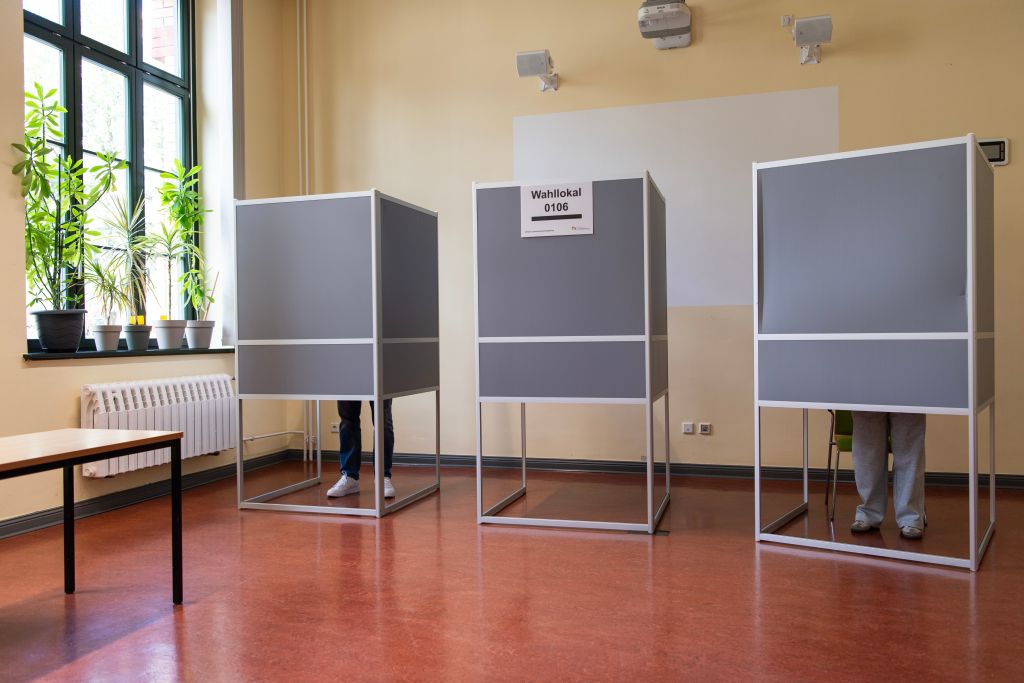
MAGDEBURG, Germany: The far right Alternative for Germany, or AfD, secured a record result in Sunday’s state election in Saxony Anhalt, taking 44.4 percent of the vote according to an exit poll released by public broadcaster ARD.
The result represents a major setback for the Christian Democratic Union, or CDU, which had governed the eastern German state and saw its support collapse to 18.4 percent. The party won 37.1 percent in the previous state election in 2021.
The figures put the AfD well ahead of its main political rivals and give the party a strong position in the 83 seat state parliament. Despite its first place finish, however, the AfD is projected to win 39 seats, leaving it three seats short of the 42 required for an absolute majority.
That gap could make the formation of the next state government particularly difficult.
CDU Suffers Sharp Drop in Support
Sven Schulze, the incumbent state leader and CDU candidate, acknowledged the scale of the defeat after the exit poll results were released.
The CDU’s decline was one of the most striking features of the election. Its support fell by almost half compared with 2021, when the party won more than 37 percent of the vote.
Schulze accepted that the AfD had achieved a clear victory and urged political leaders throughout Germany to take the result seriously.
The outcome carries significance beyond Saxony Anhalt because the state has long been viewed as part of the political testing ground in eastern Germany, where support for the AfD has grown substantially in recent years.
The election result also comes at a time when Germany’s mainstream parties are under pressure over economic concerns, migration, public services and the direction of national politics.
For the CDU, the immediate challenge is to work out how to form a government while excluding the AfD from coalition negotiations.
Left and Greens Remain in Parliament
The Left party finished third with 9.3 percent, according to the exit poll. The Greens followed with 8.7 percent, while the Social Democratic Party, or SPD, received 8.4 percent.
The newly formed Sahra Wagenknecht Alliance, known as BSW, was hovering around the five percent threshold required to enter the state parliament.
Its final position could have a direct effect on coalition arithmetic. A small change in its share of the vote could determine whether it wins representation and potentially influence which combinations of parties can command enough seats to govern.
The Free Democratic Party, or FDP, suffered a particularly poor result. The business friendly party received only 2.2 percent and was projected to fall out of the state parliament.
The figures show a fragmented political field behind the AfD, with no obvious governing combination emerging immediately from the exit poll.
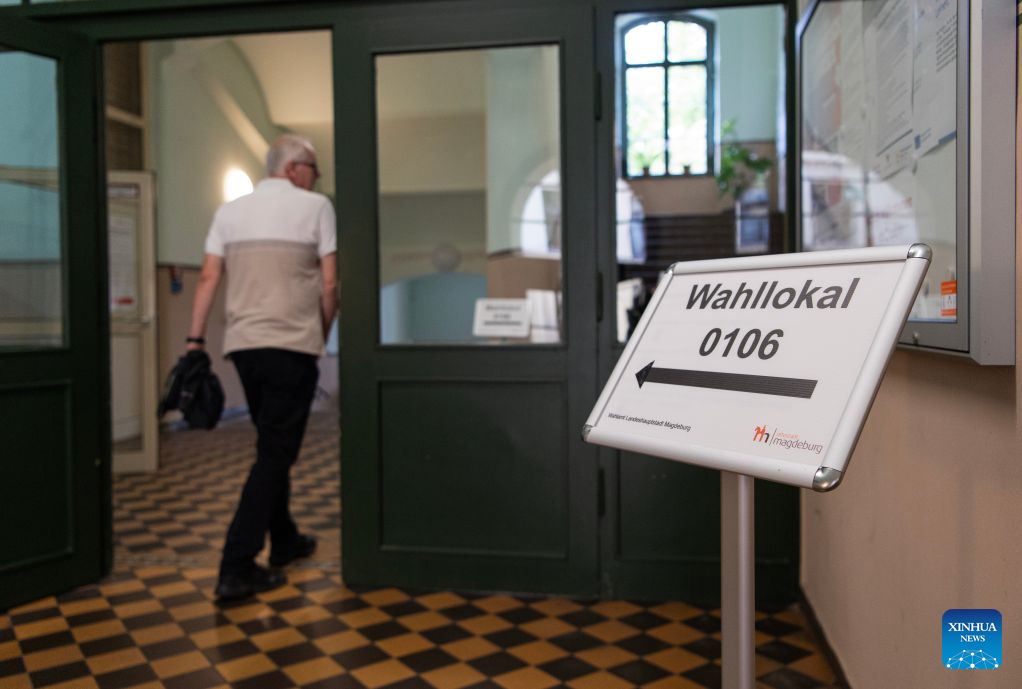
AfD Opens Door to Coalition Government
Ulrich Siegmund, the AfD’s 35 year old lead candidate in Saxony Anhalt, celebrated the result as a clear message from voters.
“The people have sent a clear signal,” Siegmund said.
His comments also suggested a change in the party’s position on entering government.
Before the election, Siegmund had indicated that the AfD would seek to take office only if it won an absolute majority. With the party falling three seats short of that target, he signaled after the vote that the AfD was now prepared to consider a coalition.
That possibility faces a major obstacle.
Germany’s mainstream parties have repeatedly rejected cooperation with the AfD at both state and federal levels. The CDU, SPD, Greens and other established parties have maintained that they will not form a coalition government with the far right party.
Siegmund’s willingness to consider a coalition therefore does not mean that negotiations are likely to begin.
Instead, the result creates a complicated political calculation. The AfD has won more seats than any other party, but its exclusion by the other parties means those parties must find another arrangement capable of securing a majority in the 83 seat parliament.
Berlin Calls Result a Serious Warning
The election result also prompted an immediate response from Berlin.
Nina Warken, head of the Chancellery, described the vote as a watershed moment for the CDU during an appearance on ZDF.
She called the result “a very, very difficult” one for the party while maintaining that the federal government would continue with its planned reform programme.
The response reflects the wider political pressure facing Germany’s governing parties. A strong AfD performance in a state election can quickly become part of national political debate, particularly when the party outperforms established parties by such a wide margin.
The Saxony Anhalt vote gives the AfD a fresh argument that its support is no longer confined to protest voters or isolated pockets of eastern Germany.
At the same time, the election demonstrates the limits of that electoral strength. Winning 44.4 percent of the vote gives the AfD the largest bloc in the state parliament, but without an absolute majority and without coalition partners, it cannot govern alone.
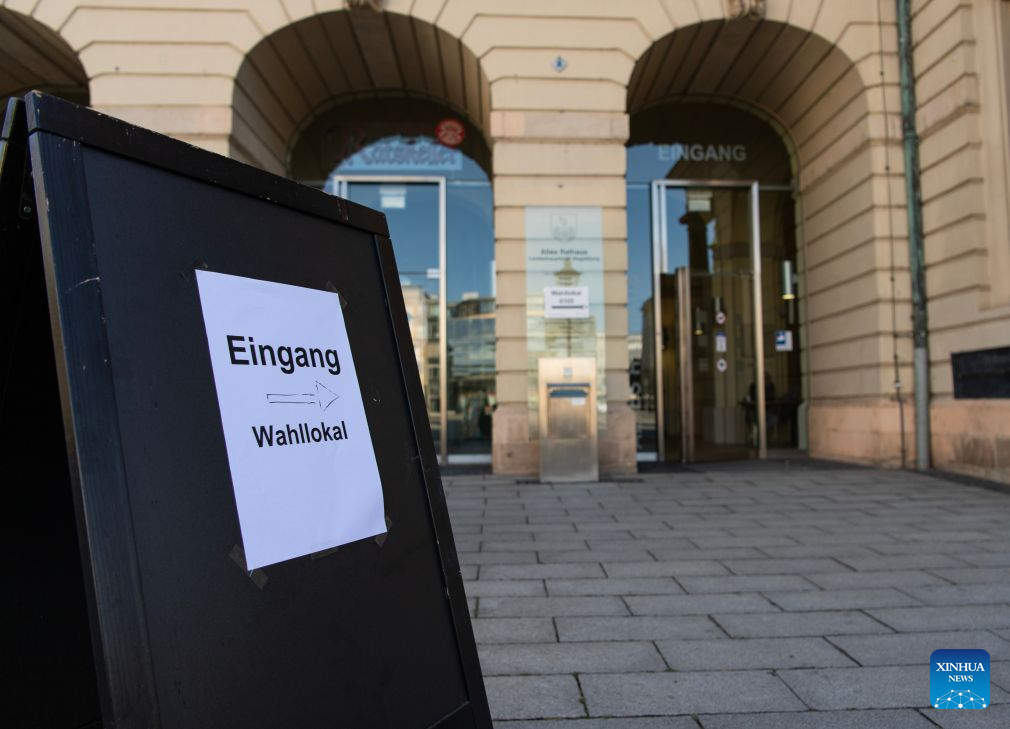
Coalition Talks Could Become Complicated
The central question now is how the other parties will respond to the AfD’s result.
The CDU remains the second largest party but has suffered a dramatic fall in support. The Left, Greens and SPD all remain well below 10 percent.
If the BSW clears the five percent threshold, it could become an important factor in negotiations. If it fails to enter parliament, the number of available coalition combinations will be reduced further.
The arithmetic means that parties that campaigned against the AfD may have to consider a complicated coalition arrangement to prevent the far right party from taking control of the state government.
Such negotiations could take time and may require parties with significant political differences to agree on a common programme.
The AfD, meanwhile, can point to its election result as evidence of strong voter support. Its 39 projected seats represent a substantial parliamentary presence even if the party remains outside government.
AfD Result Reflects Broader Shift in Eastern Germany
The strength of the AfD in Saxony Anhalt also fits into a broader pattern in eastern German politics.
The party has built a particularly strong base across several eastern states, where voters have expressed frustration over national policies and concerns about economic conditions, migration and political representation.
Saxony Anhalt has become one of the states where the AfD has been able to translate that dissatisfaction into substantial electoral support.
Sunday’s result gives the party greater influence over political debate in the state and puts pressure on its competitors to explain why they have lost such a large share of the electorate.
For the CDU, the decline from 37.1 percent in 2021 to 18.4 percent represents more than a routine election setback. It leaves the party with fewer seats and a much weaker negotiating position than it held after the previous election.
The AfD’s performance, meanwhile, has created a political situation in which the largest party may remain outside the government.
That tension will shape the next stage of negotiations in Magdeburg.
What Happens Next
The immediate task for Saxony Anhalt’s political parties is to determine whether a stable majority can be assembled without the AfD.
With the far right party projected to hold 39 of 83 seats, it needs only three additional seats to reach an absolute majority. Yet the established parties have ruled out joining it in government.
The CDU therefore faces a difficult choice between attempting to construct a coalition involving several smaller parties or finding another parliamentary arrangement capable of supporting a government.
For the AfD, the election has delivered its strongest result in the state and placed it at the centre of the political discussion. Whether that electoral strength translates into government participation will depend not on the vote share alone, but on the coalition arithmetic and the willingness of other parties to work with it.
For now, the numbers are clear. The AfD has won the election with 44.4 percent, while the CDU has fallen to 18.4 percent. The next government of Saxony Anhalt will have to be built around that new balance of power.