
China has lodged formal protests with Italy and the European Union over a visit to Italy by Taiwanese politician Hsiao Bi khim, with Beijing accusing Taiwan’s Democratic Progressive Party authorities and certain foreign politicians of seeking international backing for what it describes as separatist activities.
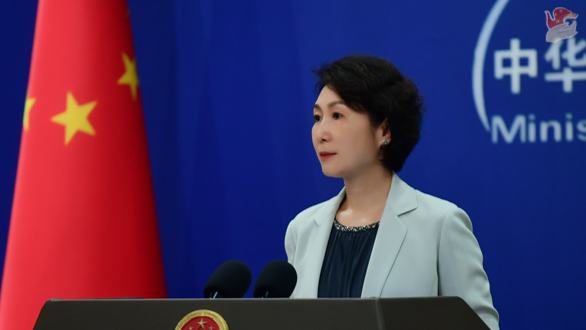
Foreign Ministry spokeswoman Mao Ning said on Friday that Beijing had made solemn representations to both Italy and the European Union over Hsiao’s visit, reiterating China’s opposition to official exchanges between countries that maintain diplomatic relations with Beijing and Taiwan.
Speaking at a regular news briefing, Mao said Taiwan authorities and certain politicians were attempting to attract international attention and build external support for their political agenda by presenting their activities under the banners of democracy and freedom.
She dismissed those efforts as an attempt to pursue what Beijing calls Taiwan independence through international engagement.
“Such conduct is disgraceful and ultimately futile,” Mao said.
Beijing Reaffirms Its Position on Taiwan
Mao repeated Beijing’s long standing position that there is only one China and that Taiwan is an inseparable part of Chinese territory.
China opposes all forms of official interaction between countries that have diplomatic relations with Beijing and the Taiwan region, she said.
The dispute over Hsiao’s visit reflects the continuing sensitivity surrounding Taiwan’s contacts with foreign governments and political figures. Beijing closely monitors such exchanges and regularly objects when Taiwanese officials meet representatives of countries or institutions that have formal diplomatic relations with China.
For Beijing, the issue is not limited to an individual visit. Chinese authorities view official or political contacts involving Taiwanese representatives as matters connected to sovereignty and territorial integrity.
Taiwan, however, maintains its own political system and conducts international exchanges in a range of unofficial capacities. Those engagements have repeatedly become points of friction between Beijing and foreign governments.
Friday’s comments made clear that China considers Hsiao’s visit to Italy part of a broader effort by Taiwan’s Democratic Progressive Party authorities to expand their international presence.
China Raises Concerns With Italy and the European Union
Mao said Beijing had lodged solemn representations with both the Italian government and the European Union.
Diplomatic representations are a formal way for one government to communicate objections and concerns to another government or institution. In this case, China used the move to register its opposition to the visit and to call on the parties involved to follow Beijing’s position on Taiwan.
Mao said the one China principle forms the political foundation of relations between China and Italy, as well as relations between China and the European Union.
She described the principle as a widely recognised norm in international relations and said it represents a broad consensus within the international community.
China has repeatedly called on countries that recognise Beijing to avoid official contact with Taiwan. The Chinese government considers adherence to the one China principle a central element of its diplomatic relations with other states.
The issue has remained particularly sensitive as Taiwan seeks to expand its international contacts and participation in global discussions despite having formal diplomatic relations with only a limited number of countries.
Italy, like other European Union member states, maintains diplomatic relations with the People’s Republic of China. At the same time, European governments and institutions maintain various economic, cultural and other forms of contact with Taiwan.
Those contacts have often drawn criticism from Beijing when they involve senior political figures or appear to carry official recognition.
Mao Criticises What Beijing Calls External Support for Separatism
Mao directly criticised the Democratic Progressive Party authorities and what she described as certain politicians seeking to provide support for Taiwan through international engagement.
According to Mao, the effort involves seeking greater attention abroad while pursuing support for an independence agenda.
Beijing has consistently accused the Democratic Progressive Party of promoting separatist policies. Taiwan’s political leadership and authorities reject Beijing’s sovereignty claims and maintain that the island’s future should be decided by its people.
The differences between the two sides remain one of the most politically sensitive disputes in East Asia and a major source of tension in China’s relations with several Western governments.
Mao said attempts to frame political engagement around democracy and freedom would not change Beijing’s position.
Her comments also placed the focus on the responsibilities of foreign governments and institutions that engage with Taiwanese political figures.
China expects countries with diplomatic relations with Beijing to conduct their dealings with Taiwan in a manner consistent with the one China principle, according to the Foreign Ministry.
One China Principle at the Centre of Diplomatic Relations
Mao urged the parties concerned to demonstrate their commitment to the one China principle through concrete actions.
That call placed the emphasis not simply on public statements but on how Italy, the European Union and other international partners conduct future interactions with Taiwanese representatives.
China has repeatedly argued that countries should honour commitments made when establishing diplomatic relations with Beijing. Questions surrounding meetings, visits and other exchanges involving Taiwanese political figures can therefore quickly develop into diplomatic disputes.
The one China principle remains central to Beijing’s foreign policy position on Taiwan. China maintains that Taiwan is part of its territory and opposes any action that it believes could encourage formal separation.
Foreign governments, meanwhile, have adopted different approaches to relations with Taiwan while maintaining formal diplomatic recognition of Beijing.
This has created a complicated pattern of unofficial engagement in which Taiwanese representatives participate in political discussions, trade relations, cultural exchanges and international forums, while the governments involved seek to maintain their established diplomatic relationship with China.
Hsiao’s visit to Italy has now added another point of tension to that relationship.
Visit Draws Beijing Into Another Diplomatic Dispute
The Foreign Ministry’s response on Friday shows that Beijing remains prepared to challenge foreign contacts involving senior Taiwanese political figures when it believes those exchanges cross its political boundaries.
By lodging representations with both Italy and the European Union, China addressed the issue at both the national and regional levels.
Mao’s remarks also linked the visit to Beijing’s wider criticism of Taiwan’s Democratic Progressive Party authorities and their international engagement.
The Chinese government has maintained that foreign political support cannot alter its position on Taiwan or change what it regards as the established international consensus on the one China principle.
For Italy and the European Union, the issue again places relations with Taiwan alongside the need to manage diplomatic ties with Beijing.
China’s message on Friday was direct. Beijing wants Italy and the European Union to demonstrate their commitment to the one China principle through their actions, particularly when dealing with Taiwanese political figures.
Should European governments continue expanding political engagement with Taiwan, or do such visits risk creating deeper tensions with Beijing?