

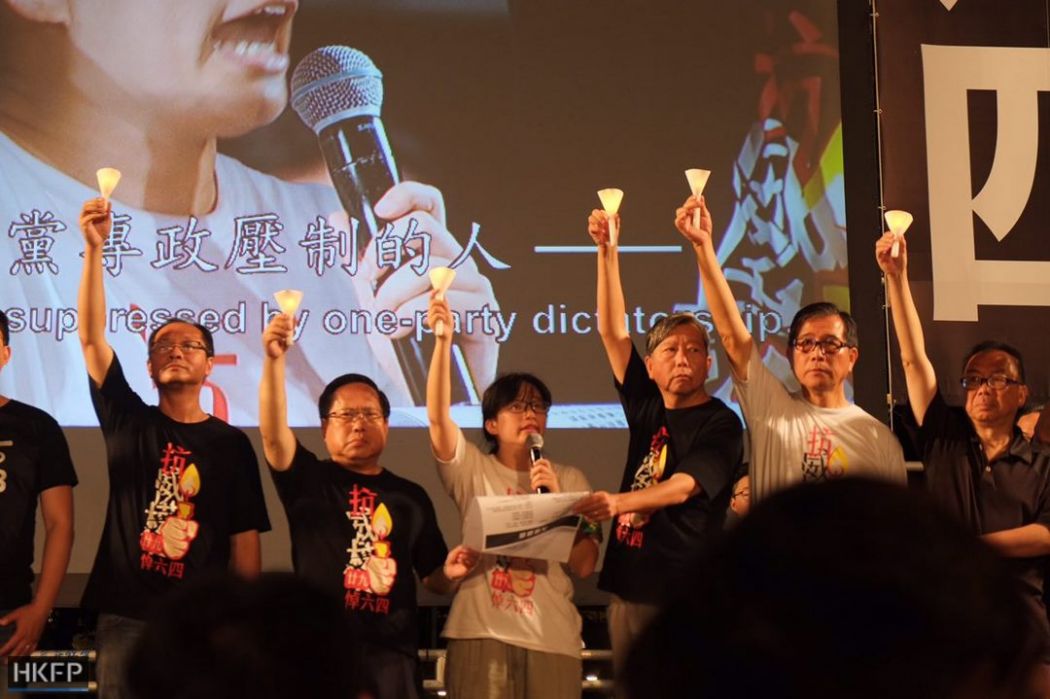
Tiananmen vigil activist Chow Hang tung has criticised her conviction under Hong Kong’s national security law, as she and fellow activists Lee Cheuk yan and Albert Ho await sentencing.
Tiananmen vigil activist Chow Hang tung told a Hong Kong court on Friday that her conviction under the city’s national security legislation effectively suggested that “pursuing democracy is a crime”, as she delivered a mitigation statement ahead of sentencing.
Chow, a former leader of the now defunct Hong Kong Alliance in Support of Patriotic Democratic Movements of China, made the remarks during a mitigation hearing at the West Kowloon Law Courts Building.
She appeared alongside fellow activists Lee Cheuk yan and Albert Ho, who were also convicted of inciting subversion under the Beijing imposed national security law. The three are expected to be sentenced within two weeks.
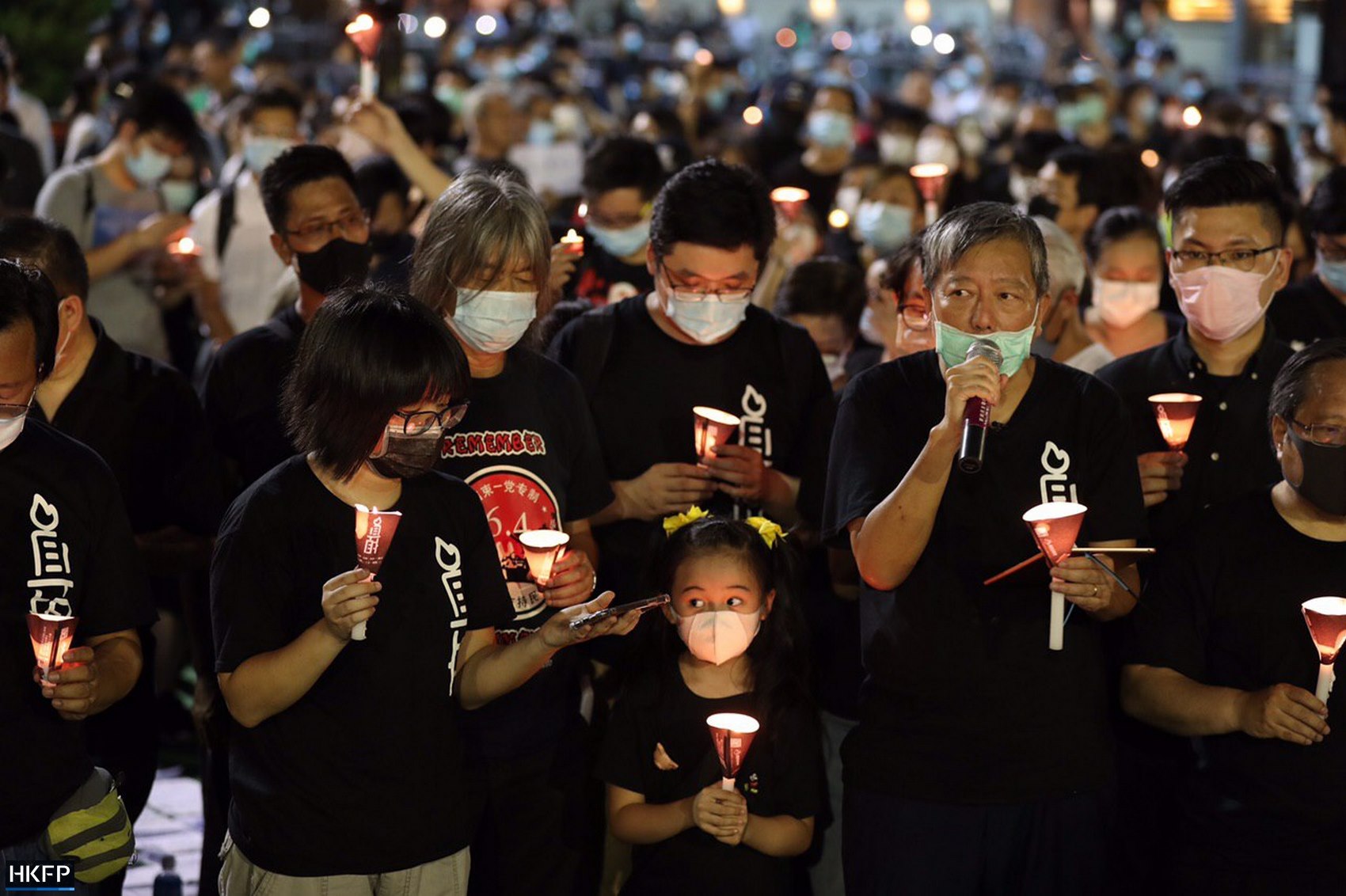
The case stems from the activists’ involvement with the Alliance, a group that for decades organised annual candlelight vigils in Hong Kong to commemorate the victims of the 1989 Tiananmen crackdown in Beijing.
The Alliance was dissolved after authorities began investigating it under the national security law. Prosecutors subsequently accused its former leaders of attempting to incite subversion by promoting the group’s political aims, including its long standing call for an end to one party rule in mainland China.
A panel of designated national security judges convicted Chow, Lee and Ho last week.
The convictions have drawn sharply different reactions. Rights groups and the United Nations have expressed concern over the use of national security legislation against political activists, while the Hong Kong government has defended the verdict and welcomed the court’s decision.
Chow challenges court ruling
Chow, who is a barrister and represented herself during the proceedings, attempted to read her mitigation submission to the court in full on Friday.
She had begun reading from her written statement when High Court judge Alex Lee interrupted her.
Chow nonetheless managed to make a number of political points before being stopped.
“The 206 page judgment, after all, boils down to saying that pursuing democracy is a crime,” she said, referring to the court’s written verdict.
She also criticised the idea that political authorities could claim to represent the will of the people while requiring citizens to accept their authority.
“I find it entirely unpalatable that any political party can barter away a nation’s sovereignty, claim to represent the will of the people, appoint itself as the sole authority, and then insist that citizens are legally bound to uphold its self fashioned throne,” Chow said.
Judge Lee told her that she could make such statements on another occasion.
Chow continued by arguing that people who believe in ending one party rule in mainland China, which she described as a central principle of the Alliance’s activism, had effectively been left without a political position they could legally express.
“In the eyes of this brand of ‘law’, holding such a thought inherently contravenes the Constitution, rendering it unlawful, an original sin,” she said.
The judge then questioned whether Chow intended to use her statement to mitigate her sentence.
“So, you will continue to persist?” Lee asked.
Chow answered affirmatively.
The judge said the court would take her response into account.
The exchange illustrated the tension surrounding the mitigation hearing, where the court was expected to consider factors relevant to sentencing while Chow continued to challenge the underlying basis of her conviction.
At another point, Judge Lee jokingly suggested that Chow should thank the court after she said the national security prosecution had helped spread the Alliance’s message internationally.
The remark drew laughter from members of the public gallery.
Defence seeks lower sentencing band
Barrister Erik Shum, who represents Lee and Ho, urged the court to place the two men in the lower sentencing band for the offence.
Shum argued that the case involved an inchoate offence and that there had been no concrete plan, timetable or operational roadmap for carrying out the alleged subversive activities.
Under the lower sentencing band, the activists could receive prison terms of less than five years.
The defence lawyer sought to distinguish the case from the prosecution of the so called Hong Kong 47, a group of democracy activists convicted in a separate national security case.
Shum argued that the Hong Kong 47 case involved a more developed political plan, including an effort to secure a legislative majority and use that majority to veto government budgets.
By comparison, he said the conduct for which Lee and Ho were convicted did not involve the same level of planning or a clearly defined course of action.
Shum also asked the court to grant Ho a sentence reduction of between 20 and 25 per cent.
Ho, a former lawmaker and veteran democracy activist, pleaded guilty when the trial began in January. His guilty plea is among the factors the defence has asked the court to consider when determining his sentence.
“Whether the incitement led to substantial destruction is a very important sentencing factor,” Shum told the court.
The defence is therefore seeking to persuade the judges that the activists’ actions should be treated as falling at the less serious end of the offence covered by the national security legislation.
Years in detention
The lengthy detention already served by the three activists is another significant feature of the sentencing proceedings.
Chow and Lee have been held in custody for almost four years. Ho has been remanded for approximately three years and six months.
Their prolonged detention has meant that the defendants have already spent several years behind bars before receiving final sentences.
The court is expected to take the period of pre trial detention into account when determining the eventual terms of imprisonment.
The activists were among the prominent figures associated with the Alliance, which had become one of Hong Kong’s most visible organisations commemorating the Tiananmen crackdown.
For decades, the group organised an annual vigil at Victoria Park on June 4, drawing tens of thousands of people in some years.
The event became an important part of Hong Kong’s political and civil society landscape, particularly because public commemoration of the 1989 crackdown remains heavily restricted in mainland China.
The vigils were halted after authorities prohibited the gathering in 2020. In subsequent years, police took measures to prevent public commemorations, while the Alliance itself came under increasing scrutiny.
The group eventually disbanded in September 2021 after its leaders were detained and authorities demanded information about its activities.
National security law reshapes political landscape
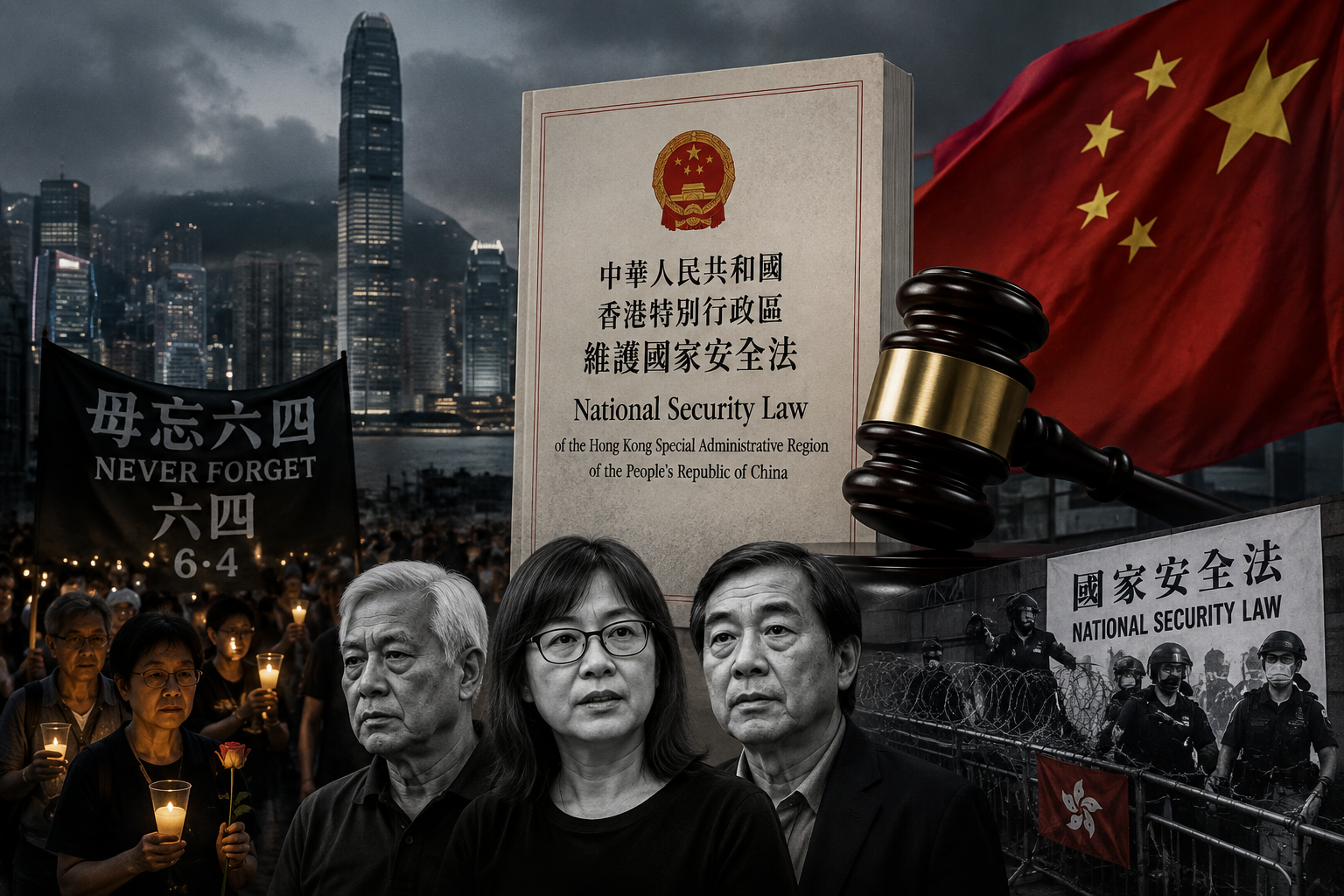
The case against Chow, Lee and Ho is part of a broader transformation of Hong Kong’s political environment since the introduction of the national security law in 2020.
The legislation was imposed by Beijing following months of mass protests in 2019. It criminalises acts including secession, subversion, terrorism and collusion with foreign forces.
Authorities have repeatedly said the law is necessary to protect national security and restore stability following the unrest.
Critics, however, have argued that the legislation has been used to suppress political opposition and restrict freedoms that Hong Kong previously enjoyed under the “one country, two systems” framework.
The government has rejected those accusations and maintained that the law targets serious threats to national security rather than legitimate political activity.
The prosecution of former democracy activists has nevertheless attracted international attention, particularly in cases involving political organisations and public figures who were previously active in Hong Kong’s civil society.
The conviction of Chow, Lee and Ho is significant because of the Alliance’s long history and its role in commemorating the Tiananmen crackdown.
Sentencing awaited
The mitigation hearing is now the final stage before the three activists receive their sentences.
The court has indicated that sentencing will take place within two weeks.
For the defence, the immediate focus is on persuading the judges that the circumstances of the case justify sentences at the lower end of the available range, while seeking reductions for factors such as guilty pleas and the absence of a concrete operational plan.
For Chow, however, the hearing has also provided an opportunity to publicly challenge the court’s interpretation of her political beliefs and the activities of the Alliance.
Her decision to continue making political arguments despite interruptions from the bench underlined the extent to which the proceedings have become a broader test of the boundaries between political advocacy and conduct prohibited under Hong Kong’s national security legislation.
The eventual sentences will be closely watched by supporters of the activists, rights groups and observers of Hong Kong’s increasingly restrictive political environment.
They will also provide a further indication of how courts apply the sentencing framework for inciting subversion in cases involving political advocacy and organisations that sought to promote democratic change.
For Chow and her co defendants, the outcome will bring an end to a prosecution that has lasted several years. For Hong Kong’s wider political landscape, the case is another marker of how activities that were once a visible part of the city’s civil society have come under the scrutiny of national security law.