

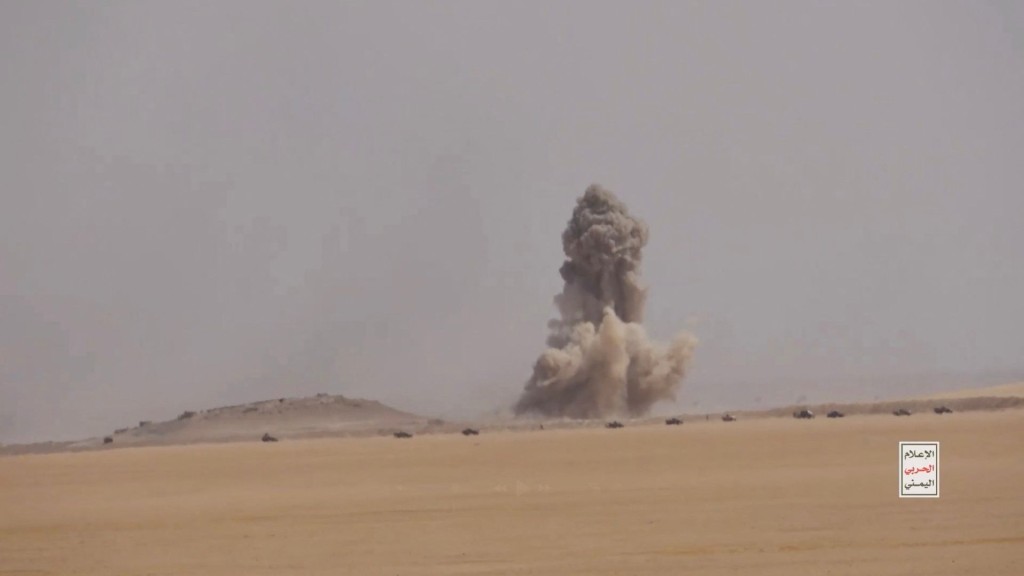
Saudi Arabia said it intercepted six ballistic missiles fired by Yemen's Houthi movement on Thursday as the Iran aligned group claimed a series of attacks against targets inside the kingdom, including what it called a sensitive site in Riyadh and facilities linked to Saudi Aramco in Yanbu.
The Saudi led coalition operating in Yemen said the missiles were heading towards Taif in western Saudi Arabia and the Yanbu area on the Red Sea. Saudi authorities did not immediately report damage or casualties from the interceptions.
Hours later, Houthi military spokesman Yahya Saree claimed the group had launched two separate operations against Saudi targets. He said the attacks involved ballistic missiles, cruise missiles and drones and claimed that both operations had achieved their objectives.
Saudi authorities did not immediately confirm that Riyadh had come under attack.
Saudi civil defence also did not issue an emergency warning for the capital on Thursday, leaving the Houthi claim about a strike on a sensitive target in Riyadh unverified.
The competing claims came as fighting in Yemen expanded into a wider confrontation involving Saudi Arabia and threatened another route for the kingdom's oil exports.
Yanbu attack raises concern over oil exports
Yanbu has particular importance for Saudi Arabia because the Red Sea port provides an alternative route for moving crude oil when shipments through the Persian Gulf face disruption.
The latest escalation comes as Saudi Arabia works to restore oil flows through its East West pipeline, which carries crude from the kingdom's eastern oil producing region towards the Red Sea.
The pipeline was shut on September 11 after drone attacks that Riyadh blamed on Iraqi militia groups. Industry sources said Saudi Arabia had since begun increasing crude pumping volumes through the system as the country sought to restore exports through the Red Sea.
The Houthi claim of an attack on facilities in Yanbu therefore comes at a sensitive moment for Saudi energy infrastructure.
The situation is particularly significant because shipping through the Strait of Hormuz has also been disrupted. With that route facing difficulties and Saudi Arabia attempting to restore its East West pipeline, the Red Sea offers an alternative channel for moving oil towards international markets.
The Houthis declared a naval blockade against Saudi Arabia in July, opening another front in a conflict that has increasingly crossed Yemen's borders and affected wider Middle Eastern security.
It was not immediately clear whether the latest missile activity caused damage in Yanbu or Taif.
Saudi authorities issued a broad emergency warning covering areas including Jeddah and the holy city of Mecca, but officials did not immediately provide details about the incidents that prompted the alert.

Houthis claim attack on Jazan military sites
The latest claims followed another Houthi statement earlier on Thursday concerning Saudi Arabia's southern Jazan province, which borders Yemen.
Saree said Houthi forces had launched dozens of ballistic missiles and drones at Saudi military installations in the area. He claimed the targets included operations rooms, command and control centres, weapons depots, missile launch positions and military camps.
Saudi Arabia did not immediately confirm that those facilities had been struck.
Saudi civil defence had issued an emergency warning in Jazan on Wednesday over a potential threat, but no equivalent alert was reported there on Thursday.
Authorities also warned residents about a possible danger in Tabuk, a northwestern Saudi province near the Jordanian border. The warning was notable because Tabuk had not previously been included in emergency alerts during the latest escalation between Saudi Arabia and the Houthis this month.
For years, Houthi attacks against Saudi Arabia have largely focused on areas in the kingdom's south, particularly locations closer to the Yemeni border. The reported expansion towards western and northwestern areas suggests a wider geographic reach, although the claims have not all been independently verified.
Houthis push towards the Red Sea
The movement's territorial gains inside Yemen have added another layer to the crisis.
The Houthis seized control of Yemen's entire western coastline in a rapid offensive nearly two weeks ago, bringing their forces closer to the Bab el Mandeb strait.
The waterway connects the Red Sea with the Gulf of Aden and is one of the world's important maritime passages. Its location gives the group a position near a shipping route that carries commercial goods and energy products between Europe, Asia and the Middle East.
The territorial advance has also put additional pressure on forces loyal to Yemen's internationally recognised government.
Government forces backed by Riyadh earlier repelled overnight Houthi attacks against a key supply route leading towards Taiz, Yemen's third largest city, according to government sources.
The fighting centred on the Hejat al Abd mountain pass, a steep and winding route that has become a lifeline for government forces and civilians in Taiz.
The road links the city with the southern port of Aden, where the internationally recognised administration is based. It also serves as the main route for goods and residents moving into and out of Taiz.
Control of sections of the road would give the Houthis another way to tighten pressure around the city.
For the government side, losing access would be a serious setback after the Houthis captured large sections of the western coastline.
Yemen's frozen war erupts again
The latest fighting is part of a conflict that has shaped Yemen for more than a decade.
The Houthis captured the capital, Sanaa, in 2014 and expanded their control across large parts of the country. Saudi Arabia intervened militarily the following year at the head of a coalition supporting Yemen's internationally recognised government.
Years of fighting followed, causing widespread destruction and a humanitarian crisis.
A truce in 2022 largely froze the main front lines, although the conflict never reached a permanent political settlement. The latest offensive has now reopened major battlefronts and brought Saudi Arabia directly back into the security picture.
The United Nations estimates that more than 700 people have been killed and thousands wounded in the latest fighting.
The humanitarian consequences extend beyond the battlefield. Nearly 130,000 Yemenis have been displaced inside the country, while more than 3,000 people have crossed the Red Sea by boat to seek safety in Africa.
The renewed violence also threatens communities that had spent years living with an uneasy pause in the fighting.
Regional risks grow as attacks spread
The latest missile claims show how quickly Yemen's renewed conflict can affect neighbouring states and regional infrastructure.
For Saudi Arabia, the immediate concern extends beyond whether individual missiles reached their stated targets. The location of the claimed attacks matters because Yanbu is tied to the kingdom's efforts to maintain an alternative oil export route, while the reported attacks around Jazan and the warnings issued in Tabuk indicate a potentially wider security challenge.
For the Houthis, attacks on Saudi territory also provide a way to demonstrate that the conflict can reach beyond Yemen's front lines.
Yet many of the claims remain difficult to independently verify. Saudi Arabia has confirmed missile interceptions but has not confirmed the Houthi claim of an attack on Riyadh or the alleged strikes on Saudi Aramco facilities in Yanbu.
That distinction matters as the conflict develops. Intercepted missiles, claimed impacts and confirmed damage represent different stages of an attack, and the available information does not establish that every Houthi claimed target was hit.
The immediate pressure now falls on Saudi authorities to protect critical infrastructure while restoring its Red Sea oil export capacity, and on Yemen's warring sides as they contest supply routes around Taiz and strategic territory along the Red Sea.
With missile attacks, territorial advances and fighting around major supply routes occurring at the same time, the next phase of Yemen's war is no longer confined to its traditional battle lines.
Should the latest Houthi attacks prompt stronger international efforts to protect Saudi energy infrastructure and civilians in Yemen?