

U.S. President Donald Trump said he has urged Ukrainian President Volodymyr Zelensky to stop attacking Russian diesel refineries, arguing that the campaign is contributing to fuel shortages and placing additional pressure on countries already facing rising energy costs.
Trump made the comments on Sunday while speaking to reporters during a visit to Ireland, saying Ukraine should continue pursuing military targets in its war against Russia but should avoid facilities linked to diesel production.
"Mr. Zelensky has to do one thing," Trump said. "He has to stop knocking out diesel fuel in Russia."
Trump said he had discussed Ukraine's recent attacks with Zelensky and made clear that he opposed strikes on diesel facilities.
"Let him go after targets, but not diesel fuel, because he's causing a shortage of diesel," Trump said. "This isn't done by the Middle East, this is done by what's happening with Russia and Ukraine."
He later returned to the same point, saying there were other military and strategic targets available to Ukraine.
"There are plenty of other targets. Don't hit diesel fuel because that's hurting. That's hurting the world. We don't want him to hit diesel fuel. He's hitting diesel refineries."
The remarks place Trump in the middle of an increasingly sensitive debate over how Ukraine should conduct its long range campaign inside Russian territory as the war continues to expand beyond the front lines.

Ukraine expands attacks deep inside Russia
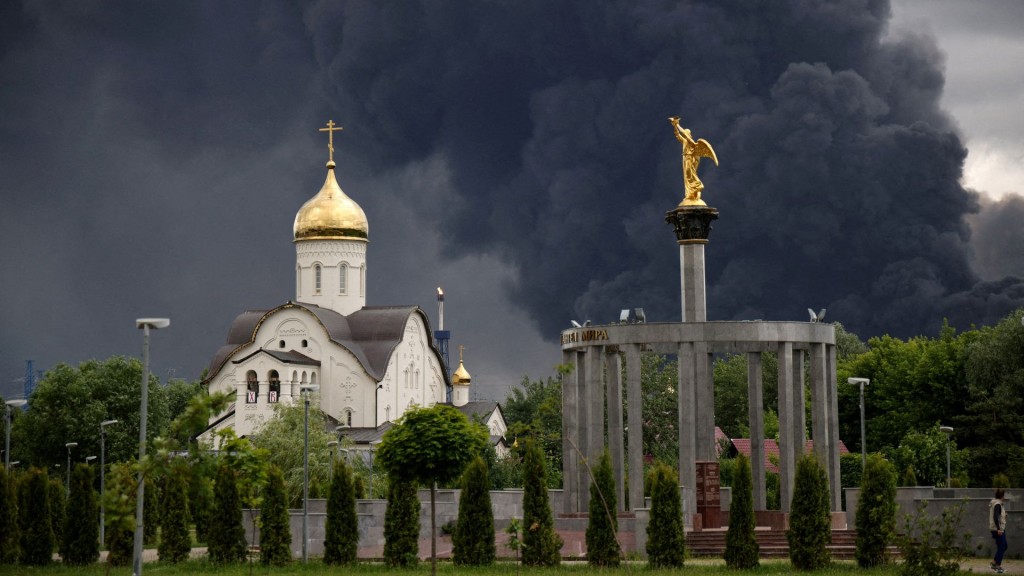
Ukraine has carried out repeated attacks on Russian oil refineries located hundreds of kilometres from the border. The campaign has relied heavily on long range drones and has increasingly targeted energy facilities that support Russia's economy and military operations.
The attacks represent part of Kyiv's broader effort to bring the consequences of the war deeper into Russian territory. Ukraine has argued that Russia's energy infrastructure plays an important role in financing and sustaining Moscow's military campaign.
Moscow has responded with an intensified campaign of its own.
Russia has stepped up long range attacks against Ukraine in recent months, using large numbers of missiles and drones against targets across the country. The increased scale of those attacks has contributed to a rise in civilian deaths.
Both sides are now deploying weapons in numbers that have reached new levels during the conflict.
Kyiv has been launching record numbers of drones toward Russia, while Moscow has carried out missile attacks on a scale not previously seen during the war. The growing exchange has widened the geographical reach of the conflict and increased pressure on air defence systems.
Trump's comments suggest that the economic consequences of attacks on Russia's fuel infrastructure are becoming an important factor in Washington's calculations.
A strike that damages a refinery can have effects beyond the immediate military target. Reduced refining capacity can affect the availability of fuel, transport costs and wider energy markets, particularly when supply concerns are already pushing prices higher.
Trump's argument was that diesel shortages linked to the destruction of Russian refining capacity could affect countries far beyond Russia and Ukraine.
Attacks continue as diplomatic efforts resume
The latest escalation has come as Washington attempts to revive negotiations aimed at ending the war.
U.S. envoys visited both Moscow and Kyiv in recent days as part of efforts to restart talks involving Washington. The conflict remains Europe's largest since World War II and has continued despite repeated attempts to create a path toward a negotiated settlement.
The diplomatic push has unfolded against a military situation that remains intensely active.
On Sunday, a Russian drone struck a passenger train travelling from Kyiv toward Warsaw, according to authorities in both Ukraine and Poland. The train was bound for the Polish capital when it was hit, but no casualties were reported.
The incident added to concerns about attacks reaching areas and transport routes used by civilians far from the main areas of fighting.
Zelensky also said that western regions of Ukraine had come under attack.
Those areas have often been viewed as relatively distant from the heaviest fighting in eastern and southern Ukraine, but Russia's ability to launch long range missiles and drones means that much of the country remains exposed to attack.
The strike on the Warsaw bound train and the reported attacks in western Ukraine came as both sides continued to demonstrate their ability to strike targets far from the battlefield.
Ukraine's drone campaign has similarly challenged Russia's ability to protect industrial and energy facilities across a vast territory.
Energy concerns add pressure to the conflict
The dispute over attacks on Russian refineries comes at a time when oil markets are already under pressure from renewed conflict in the Middle East.
Fighting in the region has contributed to a rise in oil prices, creating additional concerns about fuel costs in the United States and other major economies.
Higher oil prices can quickly affect transport, manufacturing and household expenses. In the United States, rising fuel costs can also feed into broader inflation, placing pressure on consumers and creating a political problem for the White House.
Trump's comments linked Ukraine's refinery strikes to those wider concerns.
His position is that further damage to Russian diesel production could worsen supply shortages at a time when energy markets are already dealing with disruption connected to the Middle East.
The issue also has implications for U.S. monetary policy.
Rising fuel prices can contribute to higher inflation, and persistent inflation may affect decisions by the Federal Reserve on interest rates. Speculation has grown that the central bank could raise rates as concerns over inflation increase.
That prospect carries particular political significance as American voters prepare to vote in key midterm elections in November.
Higher borrowing costs can affect mortgages, consumer spending and business investment, while rising prices at petrol stations remain one of the most visible economic pressures for voters.
Trump's intervention therefore reflects concerns that the consequences of the Russia Ukraine war are reaching well beyond the battlefield.

A difficult message for Kyiv
Trump's remarks create a sensitive political challenge for Zelensky.
Ukraine has consistently sought greater freedom to strike military and strategic targets inside Russia, arguing that it cannot effectively defend itself if Russian forces can operate from protected territory beyond the border.
Oil and fuel infrastructure has become an important part of that strategy.
Ukraine sees attacks on refineries as a way to place economic and logistical pressure on Russia, whose armed forces depend heavily on fuel for military vehicles, aircraft and supply operations.
Trump did not say Ukraine should stop attacking Russia altogether.
Instead, he drew a distinction between diesel refineries and other potential targets, arguing that Kyiv should redirect its long range campaign toward facilities that do not risk worsening international fuel shortages.
"There are plenty of other targets," he said.
Whether Ukraine will accept that approach remains uncertain.
Kyiv must balance the pressure from its allies with its own military assessment of how best to weaken Russia's ability to sustain the war. At the same time, the United States remains a major player in efforts to support Ukraine and pursue negotiations with Moscow.
The disagreement over refinery strikes shows how the conflict is increasingly shaped by competing priorities.
Ukraine wants to maintain pressure inside Russia. Moscow continues its large scale missile and drone campaign against Ukrainian territory. Washington is attempting to push diplomacy while also watching the economic effects of the war on energy prices and inflation.
As U.S. envoys seek to restart negotiations, the next test will be whether the pressure to reduce attacks on Russian diesel facilities changes Ukraine's military strategy, or whether Kyiv continues its campaign against energy targets while the wider conflict and its economic costs keep spreading beyond the battlefield.
Will Zelensky adjust Ukraine's targeting strategy in response to Trump's warning, or will the attacks on Russian refineries remain part of Kyiv's campaign to pressure Moscow?