

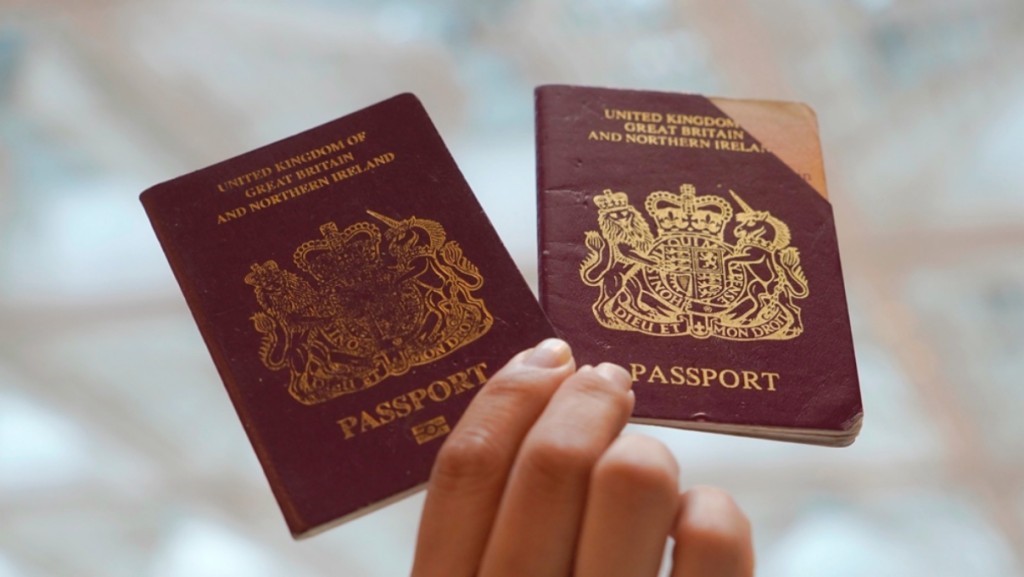
At least 12 Hongkongers convicted in connection with the 2019 anti-government protests have reportedly been refused British National (Overseas) visas since Andy Burnham became UK prime minister in July, according to lawyers cited in British media reports.
The cases have brought renewed attention to how the UK applies criminality rules to BN(O) applicants who were convicted in Hong Kong during the unrest. Two applicants, identified by the pseudonyms Edward and John, told the Metro that their applications were rejected despite arguments from their legal representatives that their convictions arose from political protests and should be considered in the context of the events surrounding the demonstrations.
The Home Office, however, has maintained that criminal convictions and other forms of adverse conduct remain relevant when assessing BN(O) applications. A spokesperson said the department could not assess the accuracy of claims made by anonymised applicants but reiterated the government's commitment to the BN(O) route.
The issue centres on a conflict between two elements of Britain's immigration policy. The BN(O) scheme was introduced in January 2021 to provide eligible Hong Kong citizens and their families with a route to live, work and study in Britain. At the same time, UK immigration rules contain mandatory grounds for refusing entry clearance or permission where an applicant has received a custodial or suspended sentence of 12 months or more.
Edward's application rejected after three and a half year sentence
Edward, a 28-year-old Hongkonger, was convicted of rioting in connection with a protest in Yuen Long on July 28, 2019. He was sentenced to three and a half years in prison in January 2022 and released in March 2024.
His case became particularly complicated after three members of his family moved to Britain under the BN(O) scheme. Edward later applied for his own visa in October 2025, hoping to join them.
The Home Office rejected his application on July 21, according to a refusal letter seen by the Metro.
The letter referred to Edward's riot conviction and relied extensively on the judgment issued by the Hong Kong court. Reporting on the case said the judgment described Edward as being near the front of the protesters during the confrontation with police and noted that he had not followed an order to disperse.
His legal representatives argued that the circumstances surrounding his conviction should be taken into account. They maintained that his participation was connected to demands for justice and democracy and disputed the way the conviction was being used in determining his eligibility for a British visa.
The Home Office did not accept that argument.
The refusal has left Edward separated from family members who have already established themselves in Britain. His case also illustrates the difficulty facing applicants whose criminal records were acquired during the 2019 protest movement and who now seek to use a migration route created specifically for eligible people from Hong Kong.
Second applicant rejected after Polytechnic University protest
A similar decision was issued to another applicant identified as John.
John was convicted of rioting in connection with protests surrounding Hong Kong Polytechnic University in November 2019. He received a prison sentence of two years and one month and was released early in November 2025 after serving his sentence in prison.
His BN(O) visa application was rejected on July 22, one day after Edward's refusal, according to reporting based on the Home Office correspondence.
As with Edward's case, officials referred extensively to the Hong Kong court's findings when assessing the application. The refusal was linked to John's conviction and the fact that his prison sentence exceeded 12 months.
The Polytechnic University protests became one of the most intense episodes of the 2019 unrest. Demonstrators gathered around the university during a prolonged confrontation with police, while protesters inside the campus faced attempts by authorities to prevent people from entering or leaving.
John's lawyers argued that his conviction should not automatically prevent him from accessing the BN(O) route. The applicants said they regarded the visa scheme as a pathway created to help Hongkongers facing serious political and personal difficulties after the protests.
Both men have described the British government's decisions as a betrayal.
Those statements are their personal accounts, however, and the Home Office has not accepted the underlying characterisation of their convictions. The department has instead pointed to the existing immigration rules governing criminal records.
UK criminality rules apply to overseas convictions
The legal issue is not limited to Hong Kong convictions.
Current UK immigration guidance states that an application for entry clearance or permission must generally be refused where an applicant has been convicted in the UK or overseas and received a custodial or suspended sentence of 12 months or more. The same guidance also allows for discretionary refusal in cases involving shorter sentences or certain other recorded offences.
The rules were updated in March 2026. The Home Office guidance states that the mandatory grounds for refusal were expanded to include suspended sentences of at least 12 months. It also sets out how immigration officials should consider overseas offending and other criminality-related issues.
That framework is significant in the Hong Kong cases because both Edward and John received prison sentences exceeding the 12-month threshold.
The applicants' lawyers have nevertheless challenged the way the rules are being applied. Their argument, as reported by British media, is that some convictions arising from the 2019 protests should be examined in light of the circumstances surrounding the demonstrations rather than treated solely as conventional criminal records.
The Home Office has not accepted that interpretation in the cases reported so far.
BN(O) route has brought thousands of Hongkongers to Britain
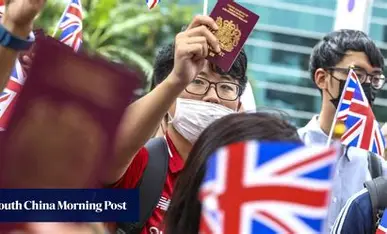
The dispute comes against the backdrop of a large migration programme that has moved hundreds of thousands of people through the BN(O) route.
The scheme opened on January 31, 2021, allowing eligible BN(O) passport holders from Hong Kong and their family members to live, work and study in the UK. Government statistics show that 187,552 BN(O) visas had been granted from the start of the scheme through June 2026, including 5,944 grants in the year ending June 2026.
The government has also reported tens of thousands of in-country extensions and a growing number of settlement grants as early arrivals reach the point at which they can qualify for permanent status.
The scale of the programme means that decisions affecting applicants with criminal records could have consequences beyond individual cases, particularly for families in which some members have already moved to Britain while others remain in Hong Kong.
For applicants with protest-related convictions, the question is therefore not simply whether they qualify under the ordinary BN(O) criteria. Their criminal history can become a separate barrier to entry.
Home Office says BN(O) route remains open
The Home Office has sought to distinguish between its support for the BN(O) programme and the separate criminality requirements contained in immigration law.
A spokesperson said the government remained committed to supporting Hong Kong residents and welcoming eligible applicants through the BN(O) route. At the same time, the department stressed that immigration rules covering criminal convictions and other adverse conduct apply to BN(O) applications as they do to other immigration routes.
The department also said it could not assess the veracity of anonymised claims made by applicants and their representatives.
That leaves an important distinction between the political arguments surrounding the 2019 protests and the legal test currently being applied by British immigration officials. The applicants and their lawyers have questioned whether protest-related convictions should carry the same immigration consequences as other criminal convictions. The Home Office has relied on the existing criminality framework in rejecting the applications described in the reports.
For now, the reported refusals show that having access to the BN(O) route does not guarantee approval where an applicant has a qualifying criminal conviction. Applicants with protest-related records face the additional question of how their conduct and sentences are treated under Britain's immigration rules.
As more Hongkongers who were convicted during the 2019 protests seek to relocate, the treatment of their criminal records could become an increasingly important test of how the UK balances its BN(O) commitment with its general immigration requirements. What should British authorities consider when assessing protest-related convictions under the BN(O) scheme?