

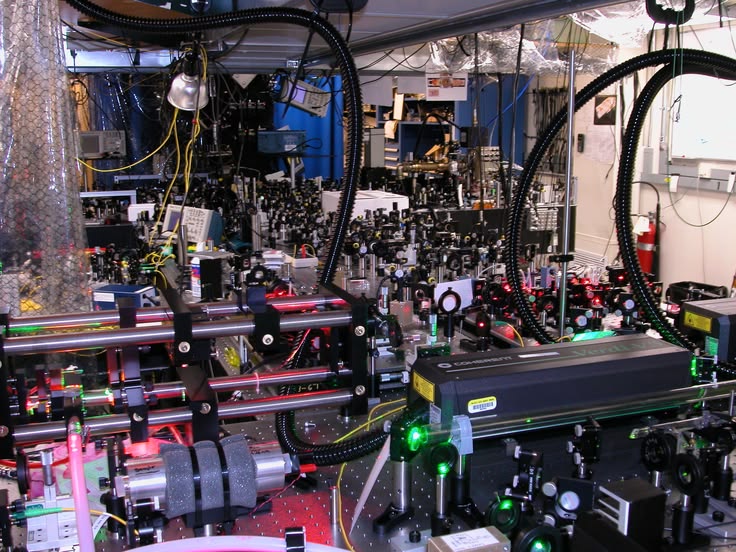
A research team led by Professor Zhang Wei at the Hong Kong University of Science and Technology (HKUST) has published a landmark quantum computing result in the journal Nature, demonstrating a logical qubit with a measured coherence time of 4.2 milliseconds, approximately 40 times longer than the previous published benchmark for a comparable quantum error-corrected qubit system. The achievement, independently verified by research teams at MIT, Google Quantum AI and ETH Zurich, represents a significant step toward the threshold required for practical fault-tolerant quantum computing.
The Technical Achievement
Quantum computing's central challenge is the fragility of quantum states. Quantum bits, or qubits, must maintain their superposition and entanglement long enough to perform computations of practical value, but they are exquisitely sensitive to environmental disturbances including temperature fluctuations, electromagnetic interference and vibration. The science of quantum error correction addresses this challenge by encoding logical qubits redundantly across multiple physical qubits, detecting and correcting errors without disturbing the underlying quantum information.
Professor Zhang's team used a superconducting qubit architecture with a novel surface code error correction protocol that they describe as "dynamically adaptive," meaning the error correction cycle is continuously adjusted based on real-time monitoring of qubit error rates rather than operating on a fixed schedule. This adaptation allowed the team to substantially extend the time over which the logical qubit could maintain its state before cumulative errors caused decoherence.
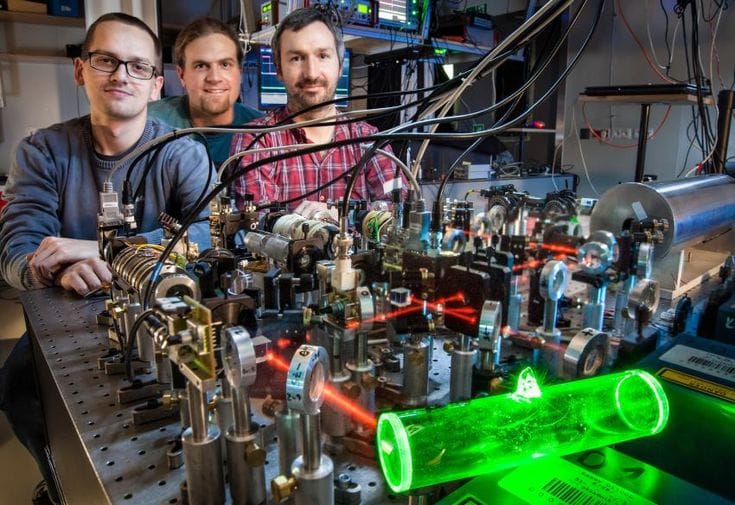
HKUST's quantum research team achieved a 4.2 millisecond logical qubit coherence time, 40 times the previous benchmark, in a result verified by MIT and Google.
Why This Matters
The significance of the achievement is best understood in the context of the quantum computing community's long-term goal of building machines capable of solving problems that are intractable for even the most powerful classical supercomputers. Experts estimate that useful fault-tolerant quantum computers will require logical qubits with coherence times in the range of 1 to 10 milliseconds, and error rates below certain defined thresholds. The HKUST result, at 4.2 milliseconds, enters this target range for the first time in a laboratory demonstration.
Applications that would become feasible with reliable fault-tolerant quantum computers include the simulation of molecular and material systems at quantum mechanical precision levels, enabling discovery of new drug compounds, battery materials and industrial catalysts; optimisation of supply chains, financial portfolios and logistics networks at scales beyond classical computational reach; and certain cryptographic applications that are relevant to communications security.
Commercial and Strategic Implications
The commercial implications of the breakthrough are significant. Multiple technology companies and venture capital firms contacted HKUST within 48 hours of the Nature publication to discuss licensing, collaboration and investment arrangements. The university's technology transfer office has confirmed that advanced discussions are underway with parties in the United States, Europe and mainland China, and that a spin-out company to commercialise the HKUST error correction technology is expected to be incorporated before the end of the year.
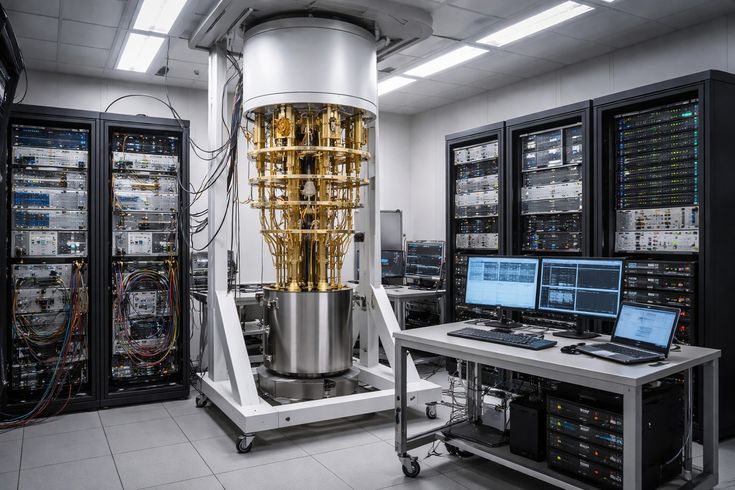
HKUST's technology transfer office has received immediate commercial interest following publication, with a spin-out company expected to be incorporated by year end.
Hong Kong's Position in Quantum Research
The HKUST breakthrough reinforces Hong Kong's credentials as a serious quantum research hub. The InnoHK research initiative, launched by the Hong Kong government in 2021 to attract world-class research talent and institutions to the city, includes a dedicated Quantum Computing Research Centre at HKUST that has attracted 340 million Hong Kong dollars in government and industry funding. Professor Zhang's team of 22 researchers includes postdoctoral fellows and PhD students recruited from 14 countries, demonstrating Hong Kong's attractiveness as a destination for top international quantum talent.
The Research Grants Council has announced an immediate additional grant of HK$120 million to Professor Zhang's group to pursue the next stage of development, targeting a 30-qubit logical quantum processor using the team's error correction methodology. This would represent the most powerful quantum system in the Asia-Pacific region and would position Hong Kong alongside the leading global quantum computing research facilities.