

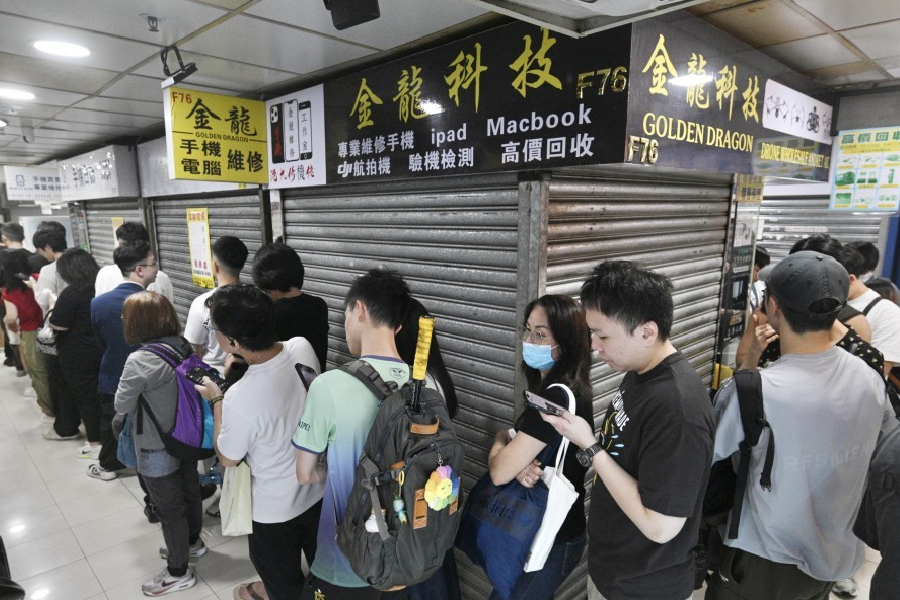
The launch of Apple’s iPhone 18 series turned the area outside Hysan Place in Causeway Bay into a busy resale market on Friday morning, with buyers barely leaving the store before being approached by traders offering immediate cash for newly purchased handsets.
Local buyers joined resellers from mainland China and Southeast Asia around the flagship store, where traders competed for models that could command higher prices in the secondary market. On site inquiries showed that the 512GB iPhone 18 Pro Max in burgundy red attracted the strongest demand, while interest in the smaller Pro model weakened as the morning progressed.
Burgundy red Pro Max leads resale market
The 512GB burgundy red iPhone 18 Pro Max emerged as the preferred model among traders seeking stock for immediate resale.
The handset carries an official retail price of HK$13,299, but buyers were offered as much as HK$15,600 by resellers. That created a potential launch day margin of HK$2,300 for customers willing to sell their newly purchased phones immediately.
The price gap showed how quickly demand for particular configurations can develop during an Apple launch. Rather than waiting for regular retail supply to settle, traders were prepared to pay above the official price for models they believed could be resold elsewhere at an even higher price.
The situation was different for the standard iPhone 18 Pro. Resale premiums for the smaller Pro model generally stood between HK$500 and HK$1,000, according to inquiries conducted at the scene.
By later in the morning, some traders had stopped buying the standard Pro altogether. Supply was beginning to exceed the level of demand they could find on the street, reducing the incentive to keep offering premiums.
That shift illustrates the narrow window faced by launch day resellers. Prices can change within hours when large numbers of buyers arrive with the same model and traders become less confident that they can move additional units at a profit.
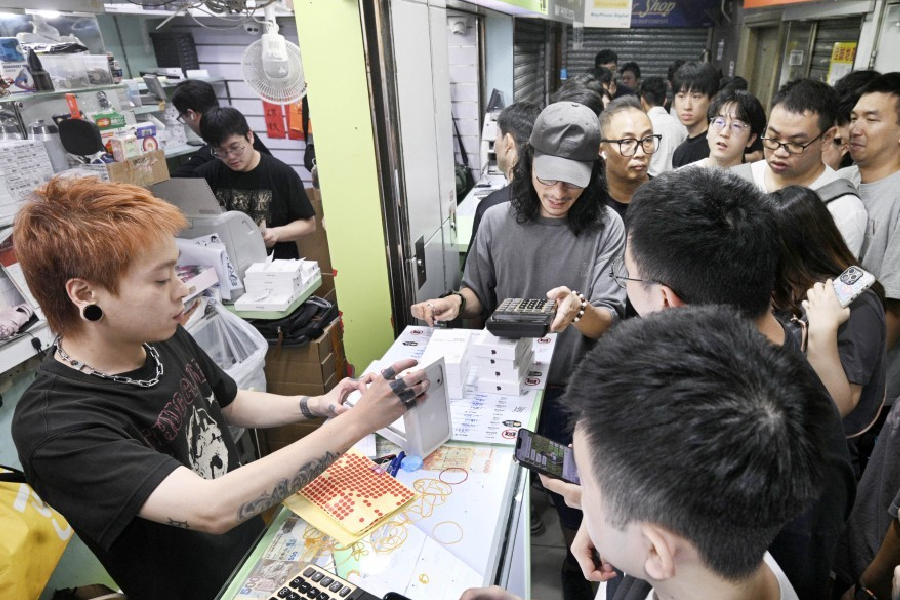
Sellers weigh immediate cash against higher offers
Not every buyer was willing to accept the first offer available.
One purchaser who secured a 512GB burgundy red iPhone 18 Pro Max was offered a markup of about HK$2,000, but decided to look elsewhere after setting a target gain of as much as HK$3,000.
For such buyers, timing matters. Holding the phone for a better offer could produce a larger return, but waiting also creates the risk that prices will fall as Apple and other retailers replenish supplies.
The buyer expected secondary market demand to remain relatively strong until official stock is replenished in mid October. Even so, he regarded launch day as an important opportunity to sell because early shortages can produce the widest gap between the retail price and the resale price.
Once official supply becomes easier to obtain, traders have less reason to pay substantial premiums to individuals who already have the devices in hand.
The resale market is also affected by changes in retail purchasing procedures. The buyer said major electronics chains are increasingly requiring customers to open their purchases inside stores.
That requirement can make reselling more difficult because an unopened Apple device generally offers greater appeal to downstream buyers. A phone that has already been unboxed may have less value to traders who are looking to move it on as new stock.
Rare models could attract larger premiums
The same buyer said he was considering targeting the rarer Duo variant in future transactions, with possible markups of up to HK$5,000.
His expectations are tied to demand from buyers outside Hong Kong, particularly in mainland China and the Middle East. Hong Kong has long attracted shoppers looking for Apple products because of pricing differences between markets, creating opportunities for traders willing to buy locally and sell elsewhere.
Such cross market price differences can make launch day particularly attractive to resellers. A product that has limited availability in one market may command a substantially higher price in another, allowing traders to profit from the gap.
But those opportunities also depend on availability, regional product specifications, taxes, warranty arrangements and the speed at which official retailers restore supply.
For individual buyers, the calculation is simpler but still carries risk. A handset bought for resale may generate a quick return if demand remains strong, but a fall in secondary market prices can quickly erase the expected profit.
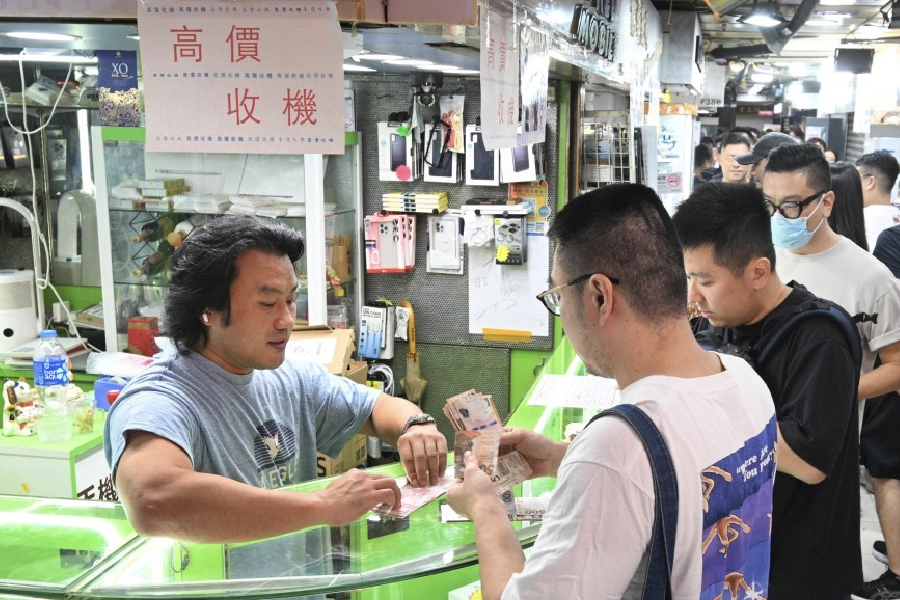
First time reseller makes HK$2,200
Among the buyers outside Hysan Place was a local office worker who made a profit on his first attempt at launch day resale.
He managed to sell a 256GB iPhone 18 Pro Max for HK$13,600 after buying it at the official price of HK$11,499. He said the transaction left him with a net gain of HK$2,200.
His launch morning did not begin smoothly.
An attempted online purchase using his Hang Seng credit card failed to go through, putting his original plan at risk. A friend who was with him, however, successfully purchased two handsets and agreed to share one of them.
That allowed the pair to take advantage of the strong demand around the launch site.
For a first time reseller, the result was enough to encourage further participation. He said the new lineup’s hardware improvements had helped strengthen consumer confidence and indicated that he would consider trying similar resale opportunities when future Apple products are launched.
Launch day creates a narrow trading window
The activity outside Hysan Place shows how the economics of a major smartphone launch can extend well beyond Apple’s official retail operation.
For ordinary customers, the purchase marks the arrival of a new device. For resellers, it can become a short term trading opportunity built around limited availability, model preferences and differences in pricing between markets.
The strongest returns on Friday were concentrated in particular configurations rather than spread evenly across the iPhone 18 range. The burgundy red 512GB Pro Max attracted the highest reported buyback offers, while the standard Pro generated smaller premiums and became harder to sell to traders as more supply reached the market.
That difference is important for anyone considering launch day resale. A high retail price alone does not guarantee a profitable secondary market. Demand for a particular colour, storage capacity and model can determine whether a buyer receives a premium or struggles to find a trader willing to purchase the phone.
The events in Causeway Bay also showed how quickly the market can move. Buyers who secured sought after models early in the morning had an opportunity to lock in profits before traders adjusted their offers. Those who waited faced a different calculation, balancing the possibility of a higher price against the risk of falling premiums.
As Apple’s new phones enter wider circulation and official retailers replenish stocks, the gap between retail and resale prices will face further pressure.
For customers considering a similar strategy at future launches, the lesson from Causeway Bay is concrete: check the actual buyback price before purchasing for resale, compare several offers and factor in the risk that the premium can disappear within hours.
Would you consider selling a newly purchased iPhone for an immediate profit, or would you hold it in the hope of securing a higher resale price later?