

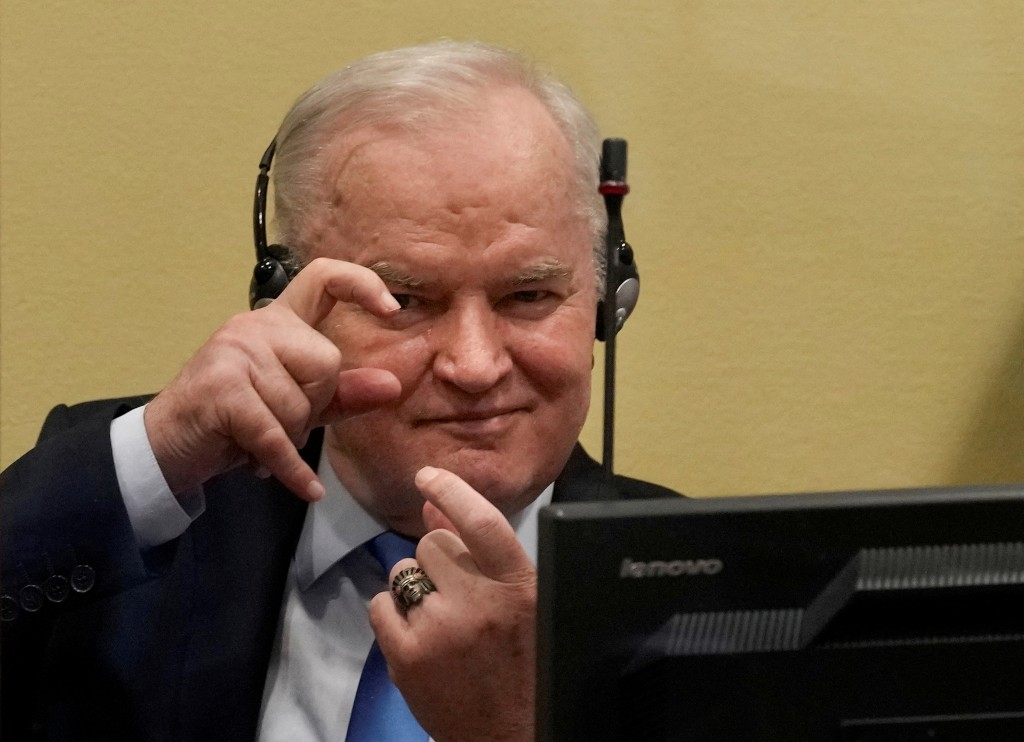
Ratko Mladic, the former Bosnian Serb military commander convicted of genocide and other crimes committed during the 1992 to 1995 Bosnian war, has died at the age of 84 while serving a life sentence in United Nations custody in The Hague.
Serbian state broadcaster RTS reported his death on Thursday, August 27, saying Mladic died in the detention unit in The Hague. His death marks the end of the life of one of the most notorious military commanders of the Balkan wars and closes one of the most significant war crimes cases to emerge from the breakup of Yugoslavia.
Mladic became widely known as the "Butcher of Bosnia" because of his role in some of the conflict's worst atrocities, most notably the 1995 Srebrenica massacre.
More than 8,000 Bosniak Muslim men and boys were killed after Bosnian Serb forces captured the United Nations designated safe area of Srebrenica in July 1995. The massacre was later recognised by international courts as genocide.
Mladic was also held responsible for his role in the prolonged siege of Sarajevo, where civilians were subjected to years of artillery and sniper attacks. Thousands of people were killed during the siege, which became one of the defining tragedies of the Bosnian war.
The International Criminal Tribunal for the former Yugoslavia found that Mladic played a central role in a campaign aimed at permanently removing Bosnian Muslims and Bosnian Croats from areas claimed by Bosnian Serb forces.
Srebrenica became the defining crime
The events at Srebrenica became the central focus of Mladic's international prosecution.
The eastern Bosnian town had been declared a United Nations safe area during the war, with civilians supposed to be protected from attack. Despite that designation, Bosnian Serb forces entered Srebrenica in July 1995.
Men and boys were separated from women and children. Thousands were subsequently killed in organised executions carried out at several locations.
The victims were initially buried in mass graves. Some graves were later disturbed, and bodies were moved to secondary locations in an effort to conceal evidence of the killings.
The scale of the massacre shocked the international community and became a symbol of the failure of international forces to protect civilians during the Bosnian conflict.
Mladic was filmed entering Srebrenica after the town fell. In footage that later became central to the historical record of the massacre, he presented the capture of the town as a victory for Bosnian Serbs and spoke of revenge against Muslims.
The following days brought the systematic separation, detention and killing of thousands of men and boys.
International judges later determined that the killings were part of a broader campaign to eliminate the Bosniak population from areas under Bosnian Serb control.
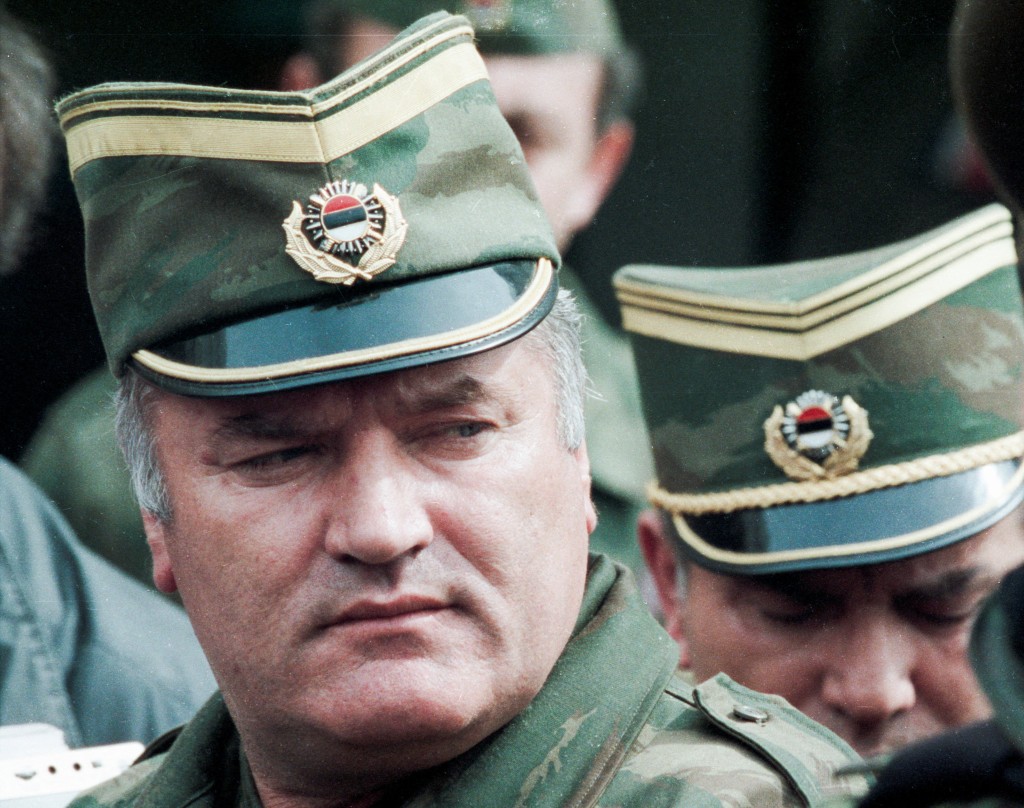
Siege of Sarajevo
Mladic's responsibility extended well beyond Srebrenica.
As commander of the Bosnian Serb Army, he oversaw military operations during the siege of Sarajevo, which lasted for almost four years.
Bosnian Serb forces surrounded the capital and subjected it to sustained shelling and sniper fire. Civilians were killed while shopping, walking through streets, collecting water and carrying out other ordinary activities.
The siege became one of the longest military blockades of a capital city in modern European history.
Mladic's forces used artillery, tanks, mortars and heavy machine guns against positions around the city. The campaign caused widespread destruction and contributed to the deaths of thousands of civilians.
The tribunal later convicted Mladic for crimes committed during the siege, including the unlawful attacks and terrorisation of civilians.
Rise of a Bosnian Serb commander
Mladic was born in Bosnia and Herzegovina in 1943 and began his military career in the Yugoslav People's Army.
His father had been a partisan fighter who died during the final stages of the Second World War. Mladic subsequently rose through the ranks of the communist Yugoslav military.
His career changed dramatically as Yugoslavia began to disintegrate in the early 1990s.
Bosnia and Herzegovina declared independence in 1992 after a referendum that was rejected by many Bosnian Serbs. Fighting soon spread across the republic as Bosnian Serb forces sought to seize and hold territory.
Mladic became commander of the newly established Bosnian Serb Army.
Under his leadership, the force rapidly captured large areas of Bosnia. Towns and villages were attacked, populations were displaced and detention camps were established.
The war became characterised by ethnic cleansing, mass killings, forced displacement, sexual violence and the destruction of communities.
Mladic became the dominant military figure among Bosnian Serbs, working closely with political leader Radovan Karadzic.
The international tribunal later found that Mladic, Karadzic and former Serbian President Slobodan Milosevic were connected to a broader criminal enterprise intended to create territory dominated by Serbs through the removal of non Serb populations.
International pressure grows
As evidence of atrocities mounted, Western governments increased pressure on the Bosnian Serb leadership.
In 1995, NATO launched air strikes against Bosnian Serb military positions. At the same time, Bosnian government and Croatian forces made significant military advances.
The combination changed the course of the war.
Mladic's forces had previously been able to maintain control over large areas of Bosnia, but by the second half of 1995 their position had weakened considerably.
The conflict eventually ended with the Dayton peace agreement, which was negotiated in the United States later that year.
Despite the end of the fighting, Mladic remained a wanted war crimes suspect.
Years in hiding
Mladic remained at large for more than 15 years after being indicted by the International Criminal Tribunal for the former Yugoslavia.
His continued freedom became a major source of tension between Serbia and Western governments.
Although international authorities repeatedly demanded his arrest, Mladic was able to avoid capture for years. He was believed to have received assistance from networks connected to former military and security institutions.
There were occasional reports that he had been seen in public places in Serbia, including sporting events.
His continued presence became a powerful symbol of the difficulties involved in bringing senior figures from the Bosnian war to justice.
That changed in May 2011, when Serbian authorities arrested him in the northern Serbian village of Lazarevo.
Mladic did not resist arrest.
He was transferred to The Hague to face trial before the United Nations tribunal.
By then, his health had deteriorated significantly. He had suffered serious medical problems and looked considerably frailer than the imposing military commander seen during the Bosnian war.
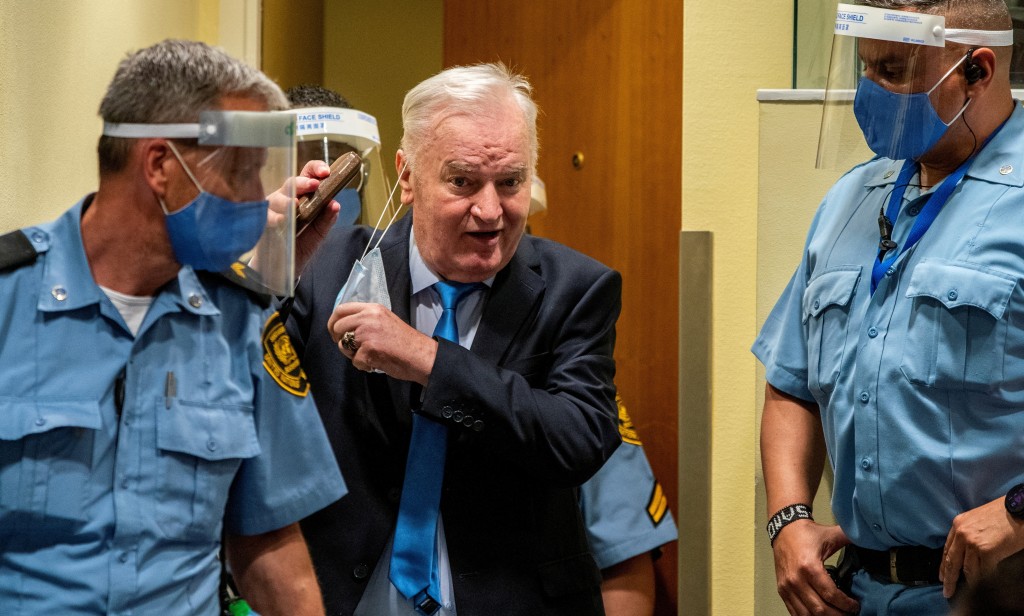
Trial and conviction
Mladic's trial began in 2012 and lasted several years.
Prosecutors presented extensive evidence covering the war's major campaigns, including the siege of Sarajevo, the Srebrenica massacre and the forced displacement of Bosnian civilians.
Hundreds of witnesses appeared before the court, while prosecutors submitted thousands of documents and other pieces of evidence.
Mladic repeatedly rejected the tribunal's authority and denied the allegations against him.
In November 2017, judges found him guilty of genocide, crimes against humanity and war crimes.
He was sentenced to life imprisonment.
Mladic reacted angrily to the judgment and continued to insist that the case against him was politically motivated.
His legal team appealed the conviction, arguing that the judgment was flawed and raising concerns about his deteriorating health.
In 2021, the appeals process confirmed his life sentence, bringing the main legal proceedings against him to an end.
Declining health
Mladic spent the final years of his life in United Nations custody in The Hague.
His health became increasingly fragile, and his family repeatedly sought permission for him to leave detention on medical or humanitarian grounds.
Those requests were rejected.
In August 2026, a United Nations doctor reportedly assessed his condition as extremely serious and warned that his death could occur at any time, potentially within weeks.
His family subsequently sought his release, arguing that he should be allowed to spend his final days outside prison custody.
The request was rejected on the grounds that releasing him was not considered to be in the interests of justice. Officials said he was receiving medical treatment and palliative care while in detention.
Mladic died days later.
A deeply divided legacy
News of Mladic's death was met with very different reactions across the former Yugoslavia.
For survivors and relatives of those killed at Srebrenica, his conviction represented an important recognition of the crimes inflicted on their families.
Many survivors had spent decades searching for missing relatives, identifying remains recovered from mass graves and seeking accountability for those responsible.
Mladic's conviction did not bring back those who were killed, but it established a legal record of his responsibility for some of the worst crimes committed during the conflict.
Among some Serbian nationalists, however, Mladic continued to be portrayed as a military hero who defended Serbs during the breakup of Yugoslavia.
That competing interpretation of his legacy has persisted despite the findings of international courts.
The divisions surrounding Mladic reflect the wider struggle over the historical memory of the Bosnian war. More than three decades after the conflict began, communities across Bosnia and Herzegovina and neighbouring countries continue to hold sharply different views about the causes of the war, the conduct of the various forces and the responsibilities of political and military leaders.
For victims of Srebrenica, Sarajevo and other communities devastated by the conflict, the suffering remains deeply personal.
End of a major war crimes case
Mladic's death brings an end to the life of a man whose military career became inseparable from the darkest chapter of the breakup of Yugoslavia.
The United Nations tribunal was established to prosecute those responsible for serious violations of international humanitarian law during the Balkan conflicts. Its proceedings created a substantial legal record documenting killings, forced displacement, persecution and other crimes.
Mladic was among the tribunal's most prominent defendants and one of its longest running fugitives.
His arrest in 2011 ended years of uncertainty over whether he would ever face trial.
His conviction six years later established his legal responsibility for genocide at Srebrenica and other crimes committed during the Bosnian war.
He spent his final years in prison, repeatedly challenging his conviction while his health deteriorated.
Ratko Mladic has now died at the age of 84.
His death cannot undo the killings at Srebrenica, the destruction caused by the siege of Sarajevo or the suffering experienced by thousands of families during the Bosnian war.
But the judgment against him remains part of the international legal record of the conflict.
For survivors and victims' families, the legacy of the war extends far beyond the lifetime of any one commander. The graves, displaced communities and unresolved memories left by the conflict continue to shape Bosnia and Herzegovina more than 30 years after the fighting began.
Mladic's death closes one chapter in the long pursuit of accountability for the Bosnian war, but the historical and human consequences of the conflict remain.