

At least 19 people were killed after severe flooding and landslides swept through areas near Nepal’s border with Tibet on Wednesday, while hundreds of tourists remained unaccounted for hours after the disaster, authorities said.
A torrent of muddy water, rocks and debris surged through river settlements, destroying homes, damaging infrastructure and cutting roads as rescue teams scrambled to reach affected communities.
Nepalese police said 384 tourists were still out of contact more than eight hours after the flooding began. The country’s tourism authorities said 291 of those missing were foreign nationals, including Americans, Indians, an Australian, Malaysians and Britons.
The disaster also affected the Chinese side of the border. Chinese state media reported what it described as “major casualties” following a mudslide at the Gyirong border trade hub in Tibet, while President Xi Jinping ordered authorities to mount an “all out” rescue operation.
The scale of the destruction remained unclear on Wednesday evening, with emergency teams still searching for missing people and assessing damage in remote, mountainous areas.
Homes swept away
Residents described scenes of devastation as floodwaters spilled beyond riverbanks and tore through settlements.
Raju Bhadel, 56, told AFP that his family had received an early morning call reporting that a relative’s home had been swept away.
“I got a call from my brother in law this morning, and they were crying and said their entire house had been swept away,” Bhadel said.
Three members of the family were rescued, he said, but another relative remained missing.
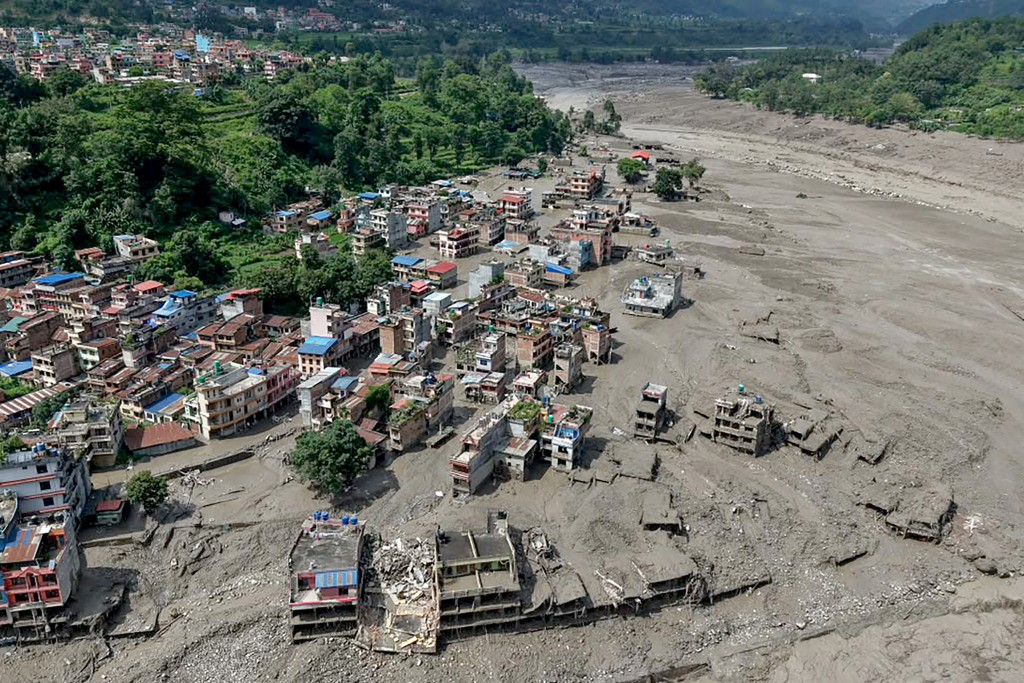
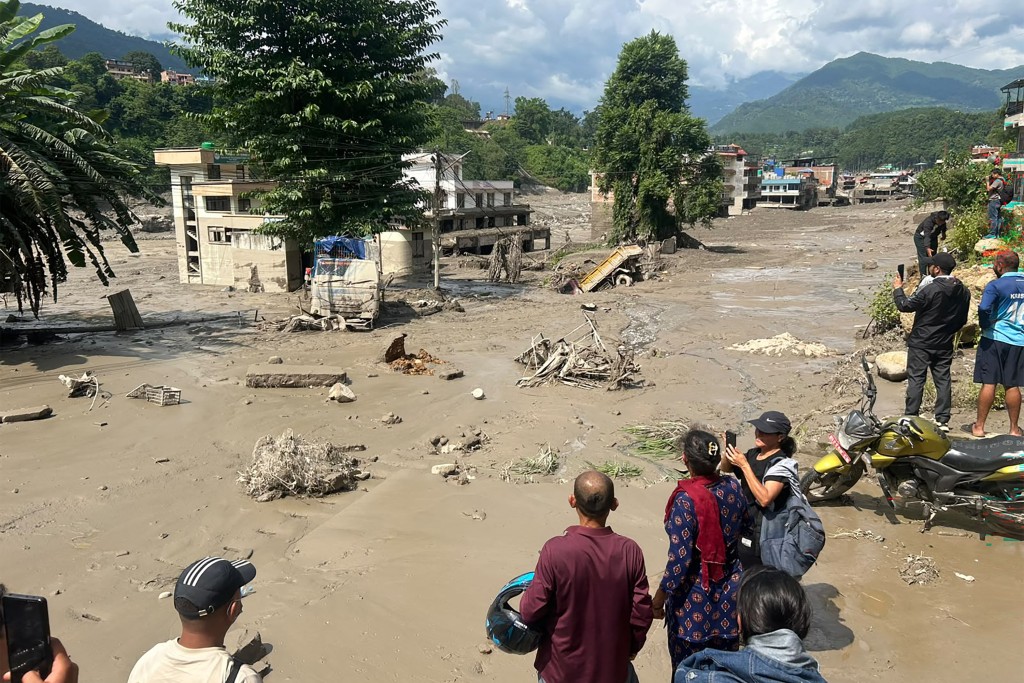
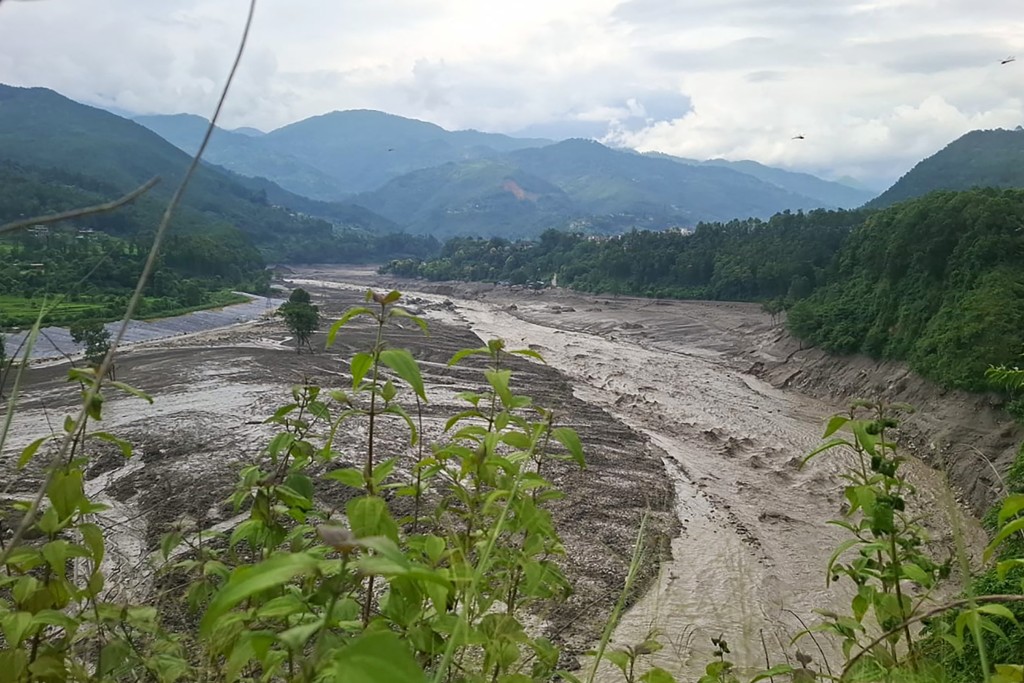
Images released by Nepali police showed powerful floodwaters rushing through the river channel, carrying debris and damaging structures along the banks. Photographs from the affected area showed homes partially submerged in thick mud, while in one scene only the upper floor of a building remained visible above the muddy ground.
Authorities urged residents living close to rivers to move to safer locations as the danger persisted.
A police spokesman said officials were still trying to determine the full extent of the damage and had warned people living near rivers to evacuate.
The Nepal Army deployed helicopters and disaster response personnel to assist with search and rescue operations, particularly in areas difficult to reach by road.
Tourists remain unaccounted for
The large number of tourists whose whereabouts were unknown added urgency to the rescue operation.
Nepal’s tourism board said 384 tourists could not initially be contacted, including 291 foreign visitors. Authorities were working to establish whether those reported missing were stranded, unable to communicate because of damaged infrastructure, or had been caught directly in the flooding.
The affected region is strategically important because it lies along a major route linking Nepal and Tibet. The Gyirong crossing is one of the principal overland trade and travel routes between the two sides of the Himalayas.
Flooding and landslides in the mountainous terrain can quickly isolate communities, block highways and sever communications, making it difficult for emergency teams to establish the whereabouts of people in remote areas.
Several highways were closed following the disaster, according to Nepali authorities.
Damage to electricity network
The floods also caused substantial damage to Nepal’s electricity infrastructure.
The Nepal Electricity Authority said approximately 430 megawatts of generation capacity had been affected, including facilities involving hydropower and solar energy. Transmission and distribution infrastructure was also damaged, disrupting electricity supplies in affected areas.
“The disaster has damaged the production, transmission and distribution facilities of the Authority,” the agency said, adding that the damage had resulted in interruptions to electricity supplies.
Nepal relies heavily on hydropower for its electricity generation, making damage to power facilities particularly disruptive during emergencies.
The destruction of roads and electricity infrastructure could also complicate rescue efforts if repairs cannot be carried out quickly.
Possible rock ice avalanche triggered flooding
Preliminary analysis suggested the flooding may have been caused by a geological event rather than simply heavy rainfall.
Sarthak Shrestha, a remote sensing and geoinformation analyst at the Kathmandu based International Centre for Integrated Mountain Development, said an initial assessment had found no apparent anomaly on the Chinese side of the border.
He said the evidence indicated that a rock ice avalanche may have occurred in Nepal, blocking the Lhende River and triggering a cascading flood event.
Such blockages can be particularly dangerous in mountainous regions. When landslides or avalanches obstruct a river, water can accumulate behind the debris before eventually breaking through with considerable force, sending a sudden surge downstream.
The precise sequence of events was still being investigated on Wednesday.
China orders emergency response
The disaster also caused disruption around the Gyirong border area in Tibet.
China’s state broadcaster CCTV reported that a mudslide disaster on the Nepalese side had resulted in major casualties and missing people at Gyirong Port.
Footage broadcast by CCTV, which could not immediately be independently verified, showed fast moving water carrying tree branches and other debris across roads.
Xi ordered authorities to make finding and rescuing missing people their most urgent priority, according to CCTV.
He also called for injured people to be treated quickly and for authorities to take every possible measure to reduce casualties.
Traffic authorities in Tibet’s Shigatse warned on social media that roads in the area were at risk from further mudslides and were unsafe for passage.
The warnings underscored the continuing threat in the mountainous border region, where saturated slopes can remain unstable after an initial landslide or flood.
The area has experienced similar disasters before. In July last year, 17 people were reported missing after a mudslide near Gyirong Port, according to China’s state news agency Xinhua.
Risk of another flood
Emergency officials and climate experts warned that the immediate danger may not be over.
Qianggong Zhang, head of climate and environmental risks at ICIMOD, said another flood could occur because a blockage remained upstream on the river along the Nepal China border.
“With a blockage still lodged upstream on the Nepal China border river, authorities warn a second flood may occur,” Zhang told AFP.
The possibility of another surge could make rescue operations more hazardous and force authorities to keep residents away from river channels and other vulnerable areas.
Mountain rivers can rise rapidly when upstream blockages suddenly fail, potentially sending another wave of water and debris downstream with little warning.

Monsoon season raises flood risks
The disaster occurred during South Asia’s annual monsoon season, which typically runs from June through September and regularly brings destructive flooding and landslides to Nepal and neighbouring countries.
Nepal’s steep terrain makes many communities particularly vulnerable. Heavy rainfall can destabilise slopes, while narrow valleys and fast flowing rivers can amplify the impact of floods and landslides.
Scientists have increasingly warned that climate change is contributing to more frequent and intense extreme weather events in many parts of the region, although the causes of any individual disaster require separate scientific assessment.
For authorities, the immediate priorities remained locating missing people, rescuing those trapped or stranded, restoring access to isolated communities and preventing further loss of life.
With hundreds of tourists still unaccounted for and the threat of additional flooding, rescue teams faced a race against time as they continued operations across the border region.