

By Staff Reporter
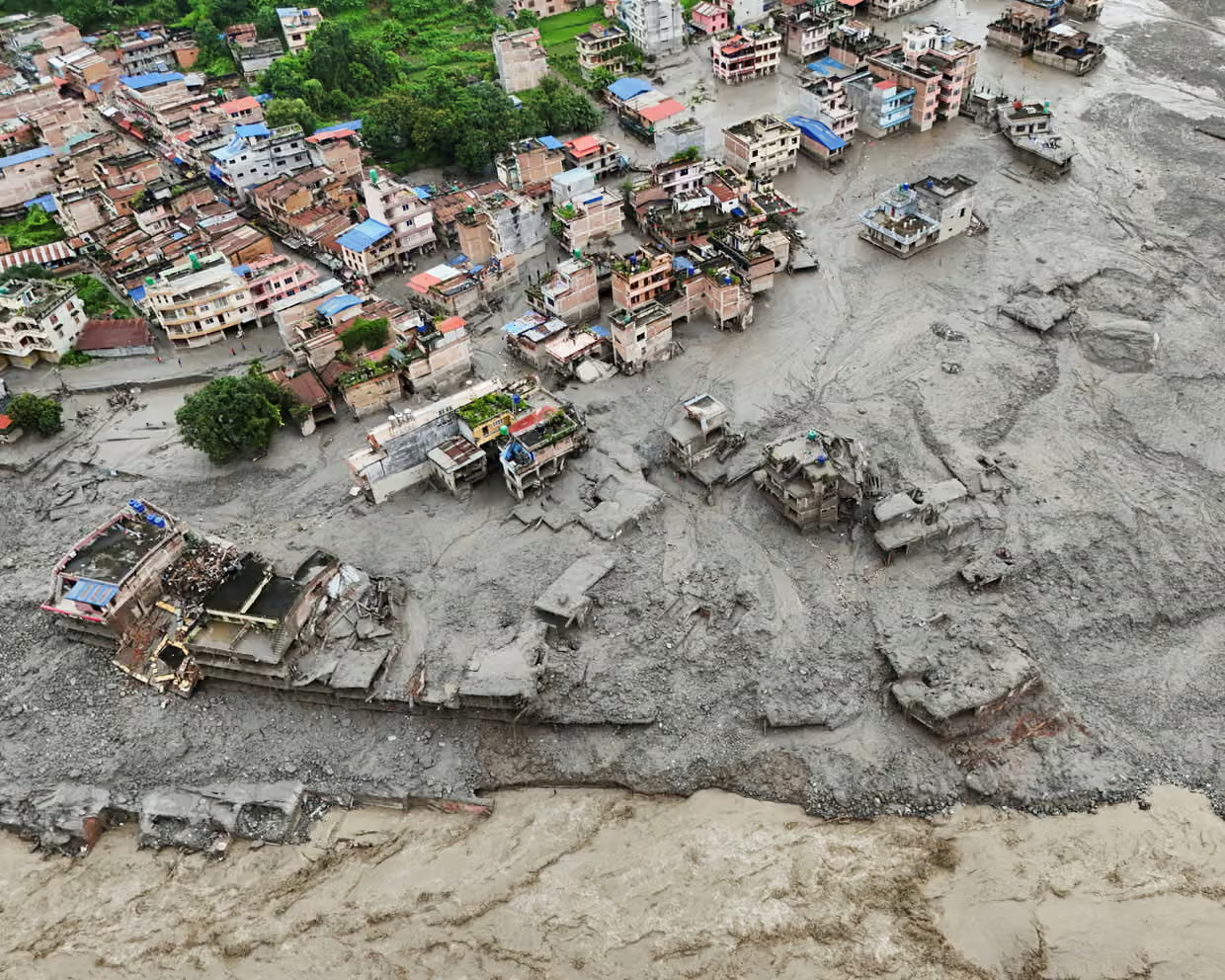
At least 392 people have died and more than 1,400 remain missing after severe mudslides struck areas along the China Nepal border, leaving communities on both sides facing a major rescue operation and growing concerns over the possible collapse of a large dammed lake.
The disaster has affected both Nepal and China, with hundreds of people reported missing and extensive disruption to roads, border facilities and local communities. Authorities are continuing search and rescue operations as heavy rainfall raises fears that conditions could deteriorate further.
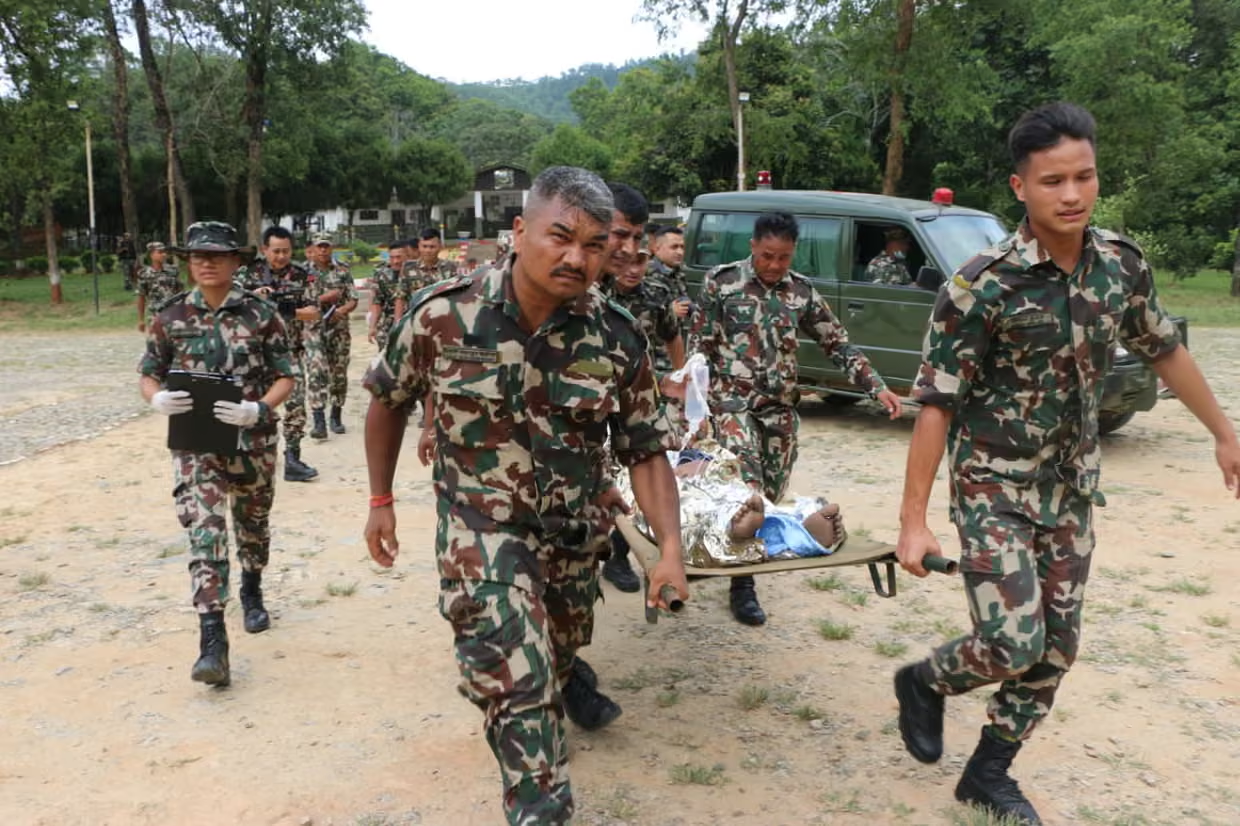
On the Nepalese side of the border, 389 people have been reported dead and another 910 are missing. More than 500 of those reported missing are believed to be foreign tourists, according to the figures provided by authorities.
In Gyirong, in China's Tibet Autonomous Region, three people were killed and 558 others were reported missing. The missing people include 260 foreigners, adding an international dimension to the rescue effort.
The scale of the disaster has prompted authorities in both countries to mobilise emergency personnel and equipment, while officials have warned that the threat has not ended.
Chinese experts from the Ministry of Natural Resources said the mudslide was triggered by the collapse of a high altitude glacier within Nepal. According to their assessment, the collapse released a large amount of material into the surrounding channel.
As the material moved rapidly downhill, it picked up glacier deposits and other debris from the channel. The flow then developed into a powerful debris flow, travelling along the existing channel before striking infrastructure and areas close to the border.
The explanation offers an indication of how quickly conditions can change in the mountainous region. A sudden release of ice, water and loose material at high altitude can gather additional sediment as it moves downhill, increasing both its speed and destructive force.
The immediate danger has also shifted towards a potentially unstable dammed lake that has formed in the area.
China's Ministry of Water Resources said a significant lake had appeared at the confluence of the Nizhong River. The estimated volume of water in the lake is about 2 million cubic metres, and officials said it is already in an overflow condition.
The situation is being closely monitored because continuing rainfall could significantly increase the amount of water entering the lake.
According to the ministry, another estimated 3 million cubic metres of water could flow into the lake over the next three days. Such an increase could raise pressure on the natural barrier holding the water back and increase the possibility of a sudden collapse.
If the dammed lake were to fail, water and debris could move rapidly downstream, creating another wave of danger for communities and infrastructure in the affected region.
One of the areas of particular concern is Gyirong Port, an important crossing and transport point in the border region. Officials are assessing the potential consequences of any further flooding or debris flow as rescue teams continue working in difficult conditions.
The threat posed by the lake has complicated an already challenging emergency response. Mountainous terrain, damaged routes and continuing rainfall can make it difficult for rescuers to reach isolated areas, while the possibility of additional landslides creates risks for emergency personnel themselves.
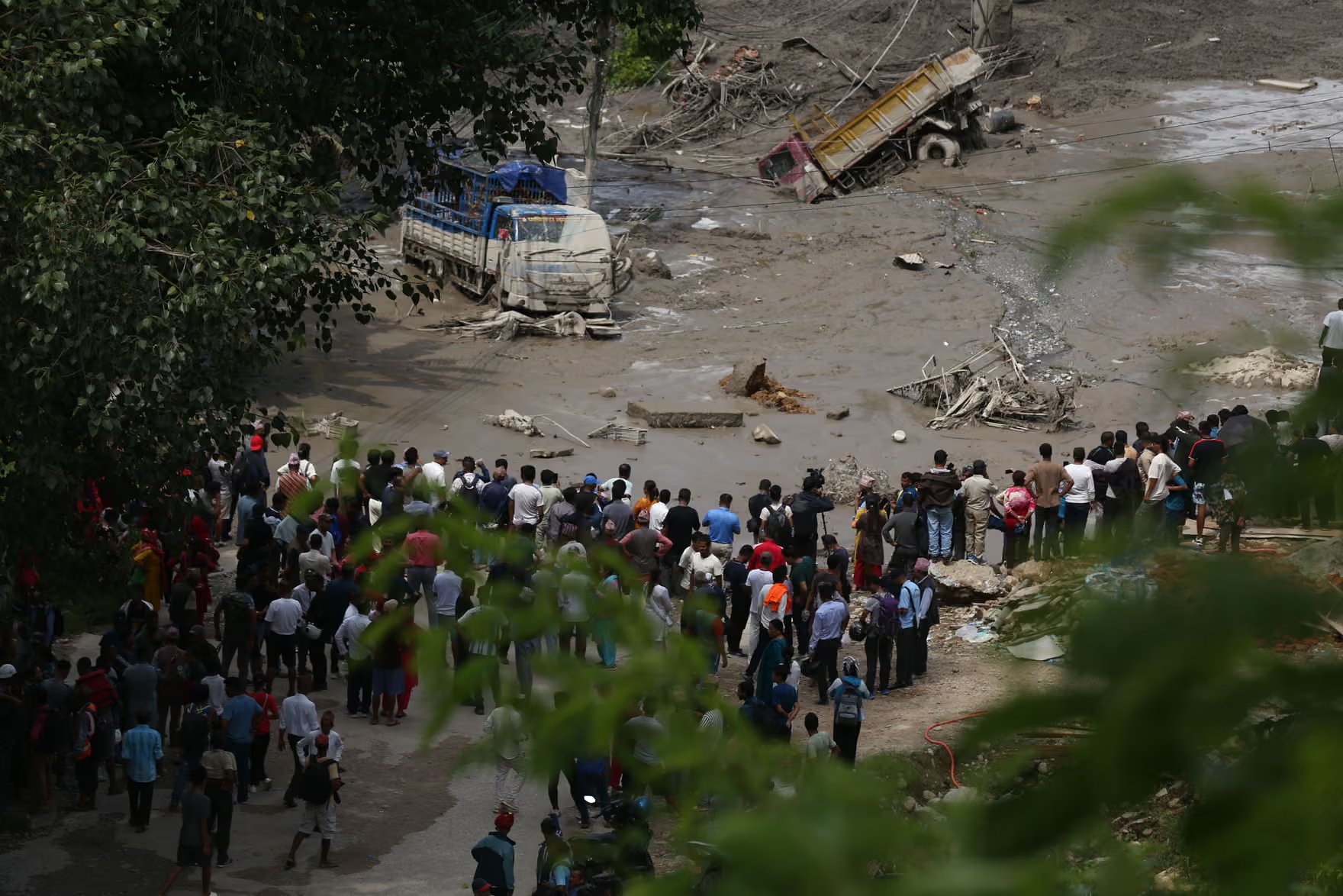
Multiple rescue teams have been sent to the disaster zone to assist with searches and emergency operations.
Chinese Premier Li Qiang travelled to Jilong County on Thursday afternoon to guide rescue and relief efforts. During his visit, he met rescue workers and people affected by the disaster as authorities sought to coordinate the response and assess the damage.
The deployment of senior officials underlines the seriousness of the situation, particularly as authorities remain concerned about the possibility of further flooding.
On the Nepalese side, authorities have deployed helicopters to search for missing people and deliver emergency supplies to thousands of residents who have been trapped or cut off by the disaster.
Helicopters have become particularly important in areas where roads have been blocked or damaged, preventing rescue teams and supplies from reaching communities by land.
The search for missing people remains a priority, although difficult terrain and the continuing threat of landslides are expected to make the operation challenging.
The humanitarian situation has also placed pressure on local facilities. Some local officials said hospitals in affected areas were unable to accommodate all the bodies recovered following the disaster.
Temporary tents therefore needed to be established to provide additional space for the placement of bodies, highlighting the strain placed on local emergency and medical services by the scale of the disaster.
The authorities are also facing the difficult task of supporting families whose relatives remain missing while rescue operations continue.
In Nepal, Prime Minister Shah visited the disaster area and directed local authorities to provide immediate assistance to families affected by the disaster. He also ordered officials to accelerate efforts to clear blocked roads, which are essential for the movement of emergency teams, food, medical supplies and other relief materials.
The disruption to transport routes has added another layer of difficulty to the response. In mountainous areas, roads can be critical lifelines for communities, and their blockage can leave residents isolated while also delaying the arrival of rescue equipment.
The latest disaster has therefore developed into a complex emergency involving multiple threats, including landslides, flooding, blocked transport routes and the potential failure of the newly formed dammed lake.
For families on both sides of the border, the search for missing relatives remains the most immediate concern. Rescue teams are continuing to work through affected areas in the hope of finding survivors, while authorities monitor weather conditions and water levels for signs of further danger.
The possibility of another major debris flow or sudden release of water means that the situation remains highly unstable. Officials are expected to continue monitoring the dammed lake and surrounding waterways while maintaining rescue and relief operations.
With hundreds of people still unaccounted for, the final human cost of the disaster remains uncertain. The reported death toll could also change as rescue teams gain access to areas that have been isolated by mud and debris.
For now, emergency authorities on both sides of the border are balancing two urgent priorities: finding those who remain missing and preventing the disaster from triggering another major wave of destruction.
The combination of continuing rainfall, unstable terrain and the rapidly developing lake means that the danger has not passed. Rescue workers must continue their operations under difficult conditions while authorities prepare for the possibility of further flooding downstream.
The coming days are expected to be critical as water levels are monitored and teams continue searching for missing people across the affected border region.