

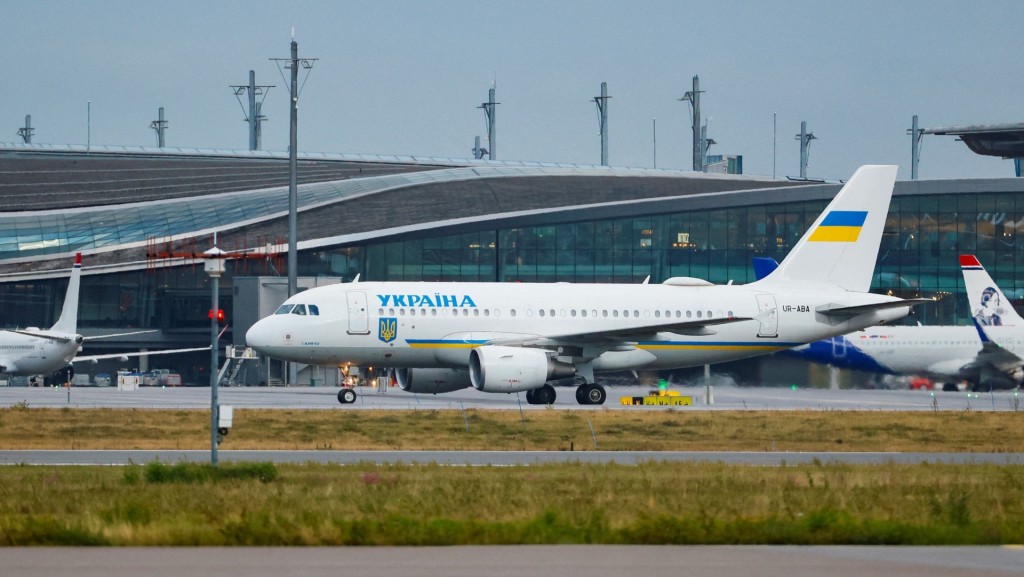
Ukrainian President Volodymyr Zelensky’s departure from Moldova was delayed after authorities temporarily closed the country’s airspace because of a drone alert, adding a fresh security concern to the Ukrainian leader’s wartime travel.
Zelensky was preparing to fly from Moldova to Norway on Tuesday when the airspace closure halted three departures and four arrivals. Moldovan authorities later cleared his aircraft for takeoff after establishing that a Russian drone had fallen on Moldovan territory, according to a written statement from a Moldovan government spokesperson.
The incident came as Russia’s war against Ukraine continued to create security risks beyond the battlefield. Two Russian drones entered Moldovan airspace on Tuesday, according to Moldovan officials. One came down in a field north of the capital, Chisinau, where it caused a fire. The other continued into neighbouring Romania.
The episode also raised questions about the risks faced by senior Ukrainian officials as they travel through countries close to the war zone.
Zelensky’s Plane Held on the Ground
Zelensky was travelling to Oslo to attend the funeral of Norway’s King Harald V. His aircraft was kept on the ground while Moldovan authorities responded to the drone alert and assessed the situation.
The Moldovan government spokesperson said the president’s aircraft was cleared to leave once officials determined that a Russian drone had crashed on Moldovan territory.
The temporary closure affected civilian aviation as well. Three departing flights and four arriving flights were delayed while the airspace remained closed.
For Moldova, which borders Ukraine and has long faced concerns over the spillover effects of Russia’s war, the incident presented a serious security challenge. Airspace authorities must determine whether an unidentified or hostile drone poses an immediate threat before allowing normal flight operations to resume.
The fact that Zelensky was among those affected added an additional layer of security pressure because of his position as Ukraine’s wartime president and one of the most prominent targets of Russian military activity.
Two Russian Drones Enter Moldovan Airspace
Moldovan authorities said two Russian drones entered the country’s airspace on Tuesday.
One drone crashed in a field north of Chisinau. The impact sparked a fire, but the incident did not result in the same level of casualties reported elsewhere along Moldova’s border with Ukraine.
The second drone continued across Moldova and entered Romanian airspace, extending the security incident into another NATO member state.
The movement of drones across national borders has become an increasingly familiar problem for countries surrounding Ukraine. Airspace violations can force governments to make rapid decisions about civilian aviation, military surveillance and public safety.
Moldova has remained outside NATO and has sought to maintain its security while dealing with the consequences of the war next door. The latest drone incursions showed how quickly the conflict can affect countries that are not directly involved in the fighting.
Moldovan President Maia Sandu condemned the incursions, describing them as a serious threat to people's lives.
She also condemned a separate Russian drone attack on a border crossing with Ukraine that killed two people.
Moldovan Authorities Respond to Security Threat
The temporary closure of Moldovan airspace demonstrated how drone activity can disrupt normal life even when no direct attack occurs inside a major city.
Air travel depends on constant monitoring of aircraft movements and potential hazards. When authorities detect a suspected military drone, flights can be delayed or suspended until officials establish that civilian aircraft can operate safely.
For Zelensky’s delegation, the delay was particularly significant because the Ukrainian president was travelling under tight security arrangements and had a scheduled international engagement in Norway.
The decision to keep the aircraft on the ground allowed Moldovan authorities to investigate the drone activity before permitting the flight to continue.
The incident also exposed the wider complications created by the war for neighbouring states. Moldova has had to deal with repeated concerns about Russian drones crossing into its airspace, while Romania has also reported incidents involving drones linked to Russia’s military campaign against Ukraine.

Norway Says Zelensky’s Plane Nearly Hit by Drone
Norwegian Prime Minister Jonas Gahr Stoere gave a more alarming account of the incident on Wednesday.
Speaking to Norway’s public broadcaster NRK, Stoere said Zelensky’s aircraft had nearly been struck by a drone as it was preparing to leave Moldova.
“His plane was almost hit by a drone as it was about to take off from Moldova,” Stoere said, adding that this was the reality Zelensky faced.
Stoere did not explain the source of his information or provide details about how close the drone came to the aircraft.
His comments nevertheless drew attention to the danger surrounding Zelensky’s international travel. Since Russia launched its full scale invasion of Ukraine, the Ukrainian president has travelled frequently to meet foreign leaders and seek military, financial and political support for his country.
Such journeys require extensive security planning, particularly when Zelensky travels through countries close to Ukraine.
The Moldovan account confirmed that the aircraft was delayed because of the drone alert, but the government spokesperson did not say that the aircraft itself had been nearly struck.
Zelensky Attends King Harald’s Funeral
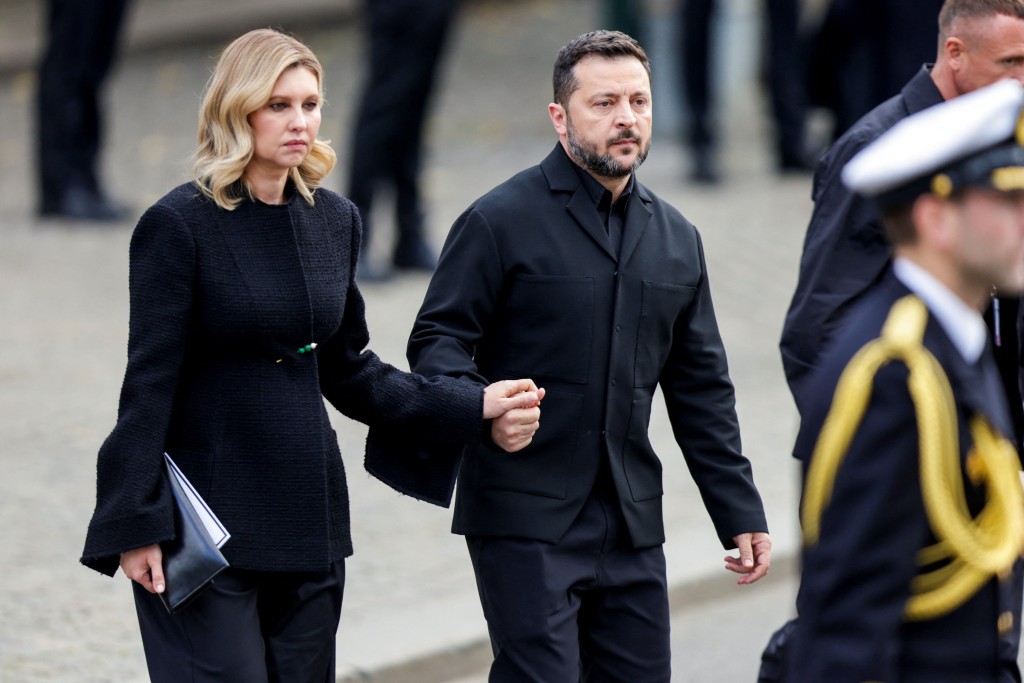
Despite the disruption in Moldova, Zelensky reached Oslo and attended the funeral of King Harald V on Wednesday.
The Ukrainian president joined other heads of state and dignitaries in central Oslo as the king’s coffin was carried through the city.
Zelensky left Norway shortly after the funeral.
His presence at the ceremony reflected the close diplomatic relationship between Ukraine and Norway. Oslo has been a strong supporter of Kyiv since Russia launched its full scale invasion, providing military assistance and political backing while also working with European partners on measures aimed at supporting Ukraine.
The visit also came at a time when Zelensky continued to use international travel to maintain support for Ukraine and reinforce ties with European governments.
Drone Threats Spread Beyond Ukraine
The Moldovan incident is part of a wider pattern in which Russia’s war in Ukraine has created security concerns across the region.
Drones used in the conflict can travel considerable distances, and incidents involving unmanned aircraft have increasingly affected countries bordering Ukraine.
For civilian aviation authorities, the challenge is immediate. A drone entering restricted or controlled airspace can force flights to stop while officials determine its origin, direction and potential threat.
For governments, the incidents also carry political consequences.
Moldova has repeatedly condemned Russian military activity connected to the war and has warned about the dangers posed by violations of its territory. Romania, meanwhile, has had to monitor similar incidents along its border with Ukraine.
The latest event involving Zelensky’s aircraft brought those regional concerns into sharp focus because it affected a sitting head of state travelling on an official mission.
Security Risks Follow Zelensky Abroad
Zelensky has become accustomed to travelling under extraordinary security conditions.
His international visits are intended to secure continued political and military support for Ukraine, but every journey carries potential risks. Airspace restrictions, missile threats, drone activity and intelligence concerns can all affect presidential travel plans.
The Moldova incident demonstrated how quickly those risks can interrupt even a carefully organised journey.
For ordinary passengers, an airspace closure may mean a delayed departure or a missed connection. For a presidential aircraft carrying a leader involved in an ongoing war, the same disruption can become a matter of national security.
Moldovan authorities ultimately allowed Zelensky’s aircraft to depart after determining that the Russian drone had crashed on Moldovan territory. The Ukrainian president then continued his journey to Norway and attended the royal funeral as planned.
But the episode left a clear operational question for governments across the region: how should civilian airspace be managed when military drones can cross borders with little warning and senior political leaders are travelling through the same skies?
As Russia’s war continues, Moldova and other neighbouring countries will have to keep their airspace under close watch while protecting civilian flights and responding quickly to new drone incursions.