

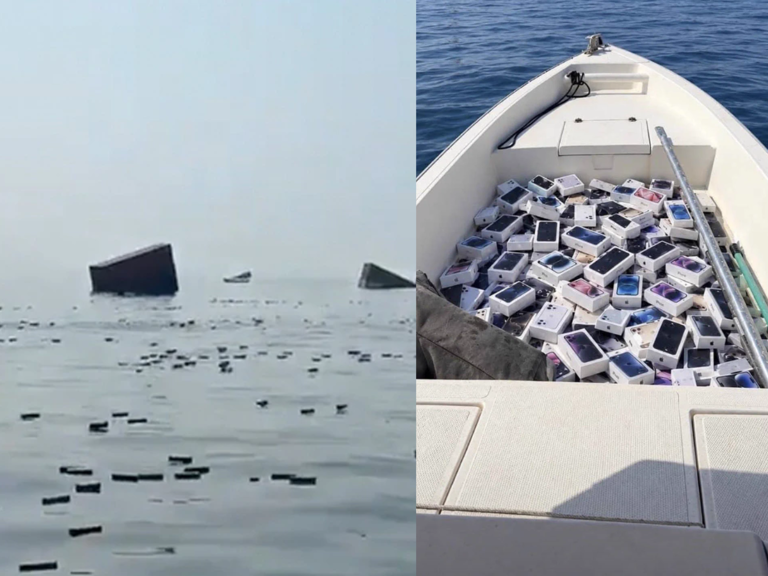
Images appearing to show iPhone boxes, luxury perfume bottles and other consumer goods floating among shipping containers in the Strait of Hormuz have drawn widespread attention after the cargo ship GFS Pride sank in the region. The Singapore flagged vessel went down after suffering damage and catching fire, leaving questions about its cargo and the origin of the goods shown in footage circulating online.
Singapore’s Maritime and Port Authority confirmed that all 21 crew members were evacuated safely and that no injuries were reported. However, claims that the floating packages contained Apple’s latest iPhone 18 models have not been independently verified. The footage also does not establish that every item shown came from the GFS Pride.
The incident occurred as attacks on commercial shipping increased amid the conflict involving Iran, the United States and Israel. The sinking has added to concerns about the safety of vessels passing through one of the world’s most closely watched maritime routes.
Floating Boxes and Perfume Bottles Draw Attention Online
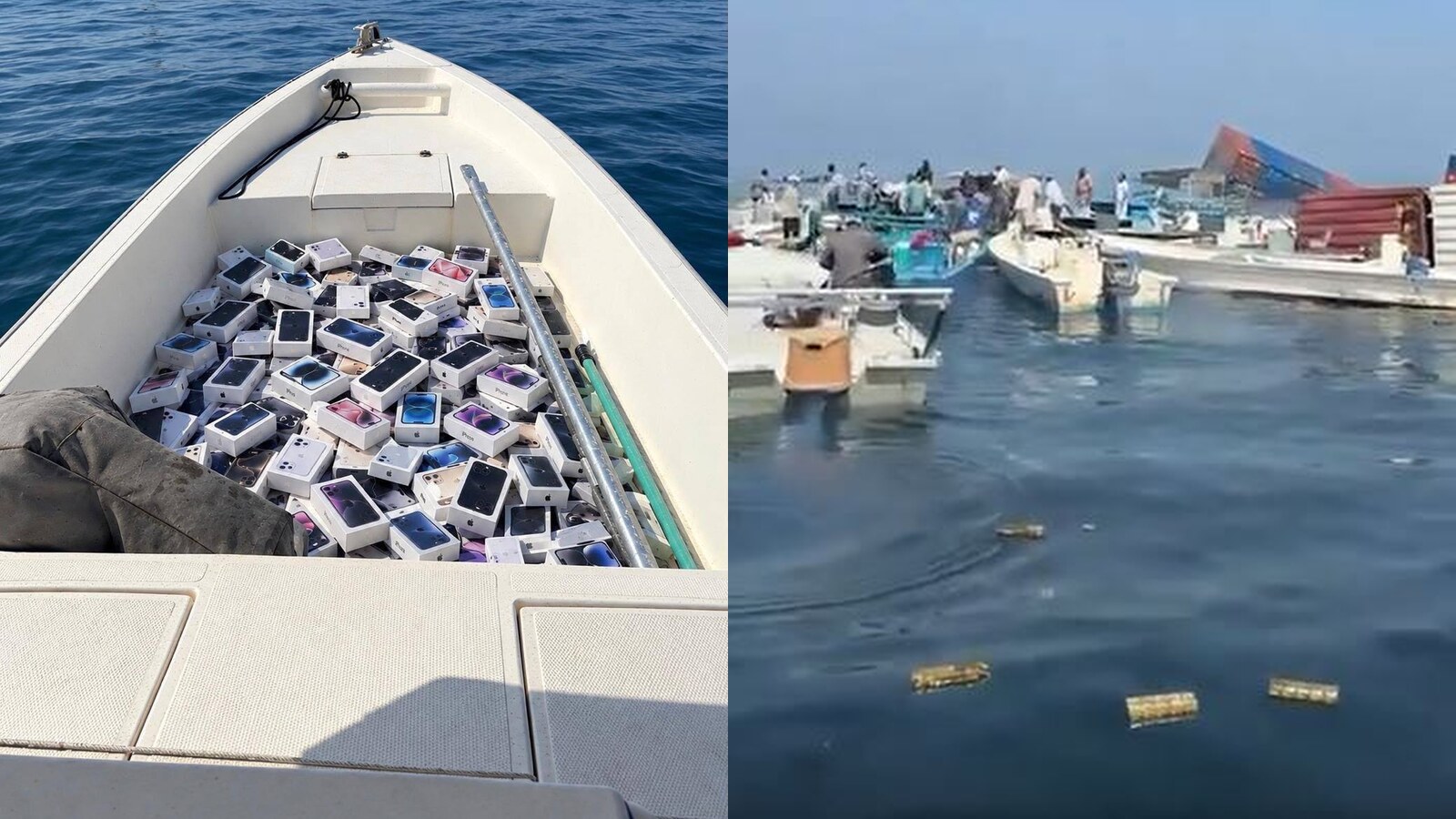
Videos shared by media outlets and social media accounts appear to show objects and packages scattered across the water near shipping containers. Some footage has been described as showing people in small boats collecting goods from the sea. Certain boxes appear to carry iPhone branding, while other items have been identified in online posts as luxury perfumes.
The images have prompted speculation about the value and type of cargo lost when the ship sank. Yet a visual resemblance to a retail package does not confirm its contents, manufacturer, model or shipping origin. Without verified labels, cargo records or other supporting evidence, it is not possible to determine whether the boxes contained genuine Apple products or which devices they might have held.
Claims about the iPhone 18 models have spread alongside reports linking the floating goods to the GFS Pride. Neither the footage nor the information made public so far establishes that connection conclusively.
The distinction matters because the images are emerging during a military conflict, when incomplete information can circulate rapidly and online accounts may repeat claims before investigators establish the facts. The footage offers a glimpse of goods floating in the water, but it cannot by itself explain how they arrived there.
What Happened to the GFS Pride?
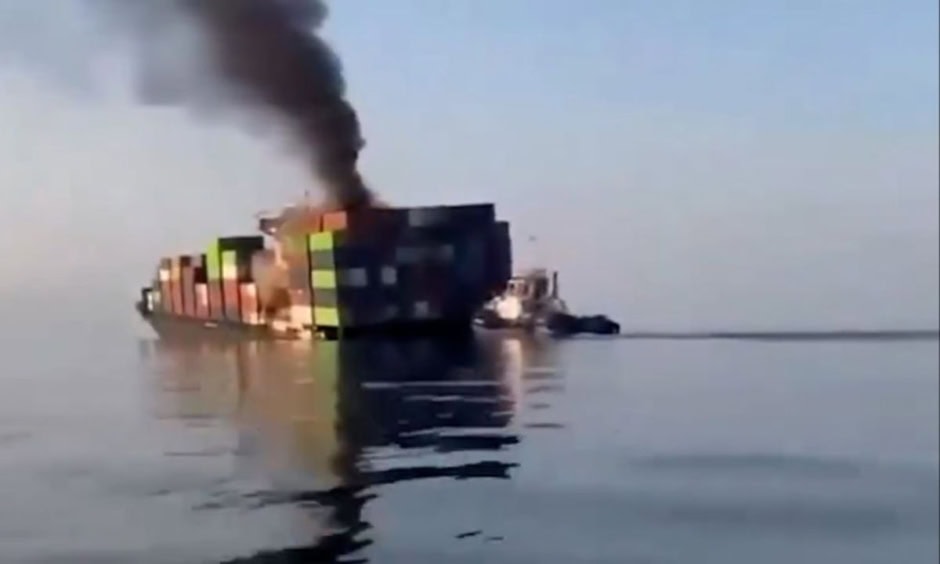
The GFS Pride, a Singapore flagged container ship, was damaged while transiting the Strait of Hormuz on October 13 and subsequently caught fire and sank, according to Singapore’s Maritime and Port Authority. Maritime security sources reported that an unidentified projectile struck the vessel before it went down. Reuters reported on October 14 that the ship had sunk after the incident. <Cite refs={["turn694782news21","turn694782search5"]}/>
The vessel had a capacity of 2,824 twenty foot equivalent units, or TEU, a standard measurement used in container shipping. This figure describes its carrying capacity in equivalent container units; it does not establish that the ship was carrying exactly 2,824 containers at the time of the incident. Nor does it confirm how many containers were lost or what products they held. <Cite refs={["turn694782search0","turn694782search4"]}/>
Singapore’s maritime authority said the entire crew had been evacuated safely. The absence of reported injuries was welcome news amid the wider danger facing merchant seafarers in the Gulf region.
The precise circumstances of the sinking remain contested. Iran’s Islamic Revolutionary Guard Corps said the vessel struck a naval mine while travelling along what it described as an unauthorised and dangerous route. Maritime reports, by contrast, attributed the sinking to damage from an unidentified projectile. The available accounts do not provide a definitive, independently established explanation that resolves the difference.
The cause of the sinking and the ship’s cargo are separate questions. Even if investigators establish what damaged the vessel, they will still need reliable shipping records and other evidence to confirm whether the goods in the circulating videos belonged to it.
Conflicting Accounts Leave Questions Unanswered
Iran’s account of a naval mine strike differs from reporting that the GFS Pride was hit by a projectile. That discrepancy has made it difficult to establish a complete sequence of events from public information alone.
The circulating footage adds another layer of uncertainty. Images of floating containers are consistent with a ship losing cargo at sea, but they do not independently identify the vessel involved. The appearance of branded boxes also does not prove that they contain the products attributed to them online.
A verified cargo manifest could help establish what the ship was carrying. Investigators would also need to assess the circumstances of the sinking and determine whether the footage was recorded at the reported location and time. Until those details are established, claims about specific brands, luxury goods and the latest iPhone models should be treated cautiously.
The story has nevertheless gained traction because it brings together familiar consumer products and a serious international security incident. Images of expensive electronics or perfumes floating in the sea are striking, but they should not distract from the larger questions about the attack, the safety of the crew and the risks facing other commercial vessels.
Strait of Hormuz Faces Growing Shipping Risks
The GFS Pride sank during a period of heightened maritime insecurity in and around the Strait of Hormuz. The narrow passage connects the Persian Gulf with the Gulf of Oman and provides a major route for international energy shipments and other commercial cargo.
Recent attacks have affected vessels beyond oil tankers. Container ships and bulk carriers are also exposed to the risks associated with transiting the region, raising concerns for ship operators, cargo owners, insurers and seafarers.
The sinking of the GFS Pride came amid another serious incident involving the Antigua and Barbuda flagged bulk carrier Cape Dao. Reuters reported that the vessel had been damaged in an earlier projectile strike and was also reported to be sinking. One crew member died in the Cape Dao incident, while the rest of its crew were evacuated. <Cite refs={["turn694782news21","turn694782news24"]}/>
These incidents demonstrate that the danger extends beyond lost merchandise. An attack can threaten lives, damage vessels and leave containers or other debris in navigable waters. Such hazards can complicate the movement of other ships, while security concerns may lead operators to reconsider schedules or routes.
The wider consequences can reach well beyond the Gulf. Disruptions may delay deliveries, increase insurance premiums and raise the cost of transporting goods. Businesses that depend on reliable shipping can face uncertainty even when their own cargo is nowhere near the conflict zone.
Energy markets are particularly sensitive to developments around Hormuz because of the waterway’s role in transporting oil and liquefied natural gas. Any prolonged interruption could affect supply expectations and shipping costs, with potential consequences for importers and consumers.
US Military Action Adds to Regional Tensions
The maritime dispute has unfolded alongside military measures intended to restrict Iranian shipping. On October 11, the US military said it disabled a commercial cargo vessel that attempted to breach its naval blockade of Iran after ignoring warnings. US Central Command said a US fighter jet struck the vessel’s propulsion system and that the crew was not harmed.
That incident formed part of a broader confrontation over maritime movement and the pressure Washington is applying to Tehran. Iran, meanwhile, has accused vessels of using prohibited routes and has cited security concerns to justify its actions.
These competing positions make independent reporting and verification especially important. Statements from military authorities and maritime agencies can establish what each side claims, but they do not necessarily settle disputed questions about responsibility or the precise circumstances of an attack.
For commercial operators, the immediate issue is practical: whether ships and crews can pass through the area without being struck, caught in a fire or exposed to other hazards. The sinking of the GFS Pride shows how quickly a voyage can end in the loss of a vessel and its cargo.
What Investigators Still Need to Establish
Three questions remain central to the GFS Pride incident: what caused the ship to sink, what cargo it was carrying, and whether the products shown in the online footage came from the vessel.
The conflicting accounts of a mine strike and a projectile impact have not been conclusively reconciled in the information available publicly. The reported carrying capacity of the ship should not be confused with a confirmed inventory of the cargo on board. And the claims about iPhones and luxury perfumes remain unverified.
Until reliable evidence becomes available, reports should avoid identifying the floating devices as iPhone 18 models or presenting the alleged cargo as confirmed fact. Clear distinctions between official statements, eyewitness footage and independently established information are necessary to report the incident accurately.
The immediate priority is to establish what happened to the vessel and assess any remaining hazards from floating containers and debris. For readers following the story, the most useful next step is to rely on verified updates from maritime authorities and reputable news organisations rather than treating viral footage or unconfirmed social media claims as proof.
Have you seen the footage circulating online? What evidence would you want to see before accepting claims about the cargo?