

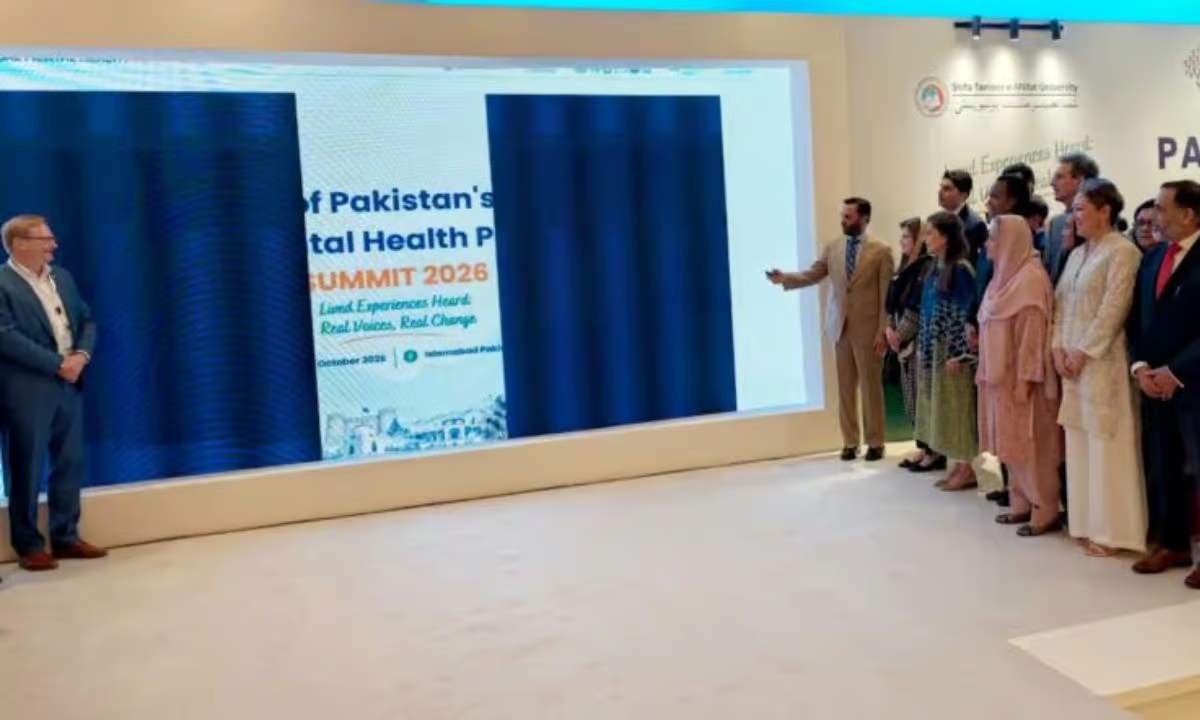
Pakistan has launched its National Mental Health Policy 2026–2035, setting out a decade-long plan to expand mental health services, strengthen community-based care and improve access for millions of people across the country.
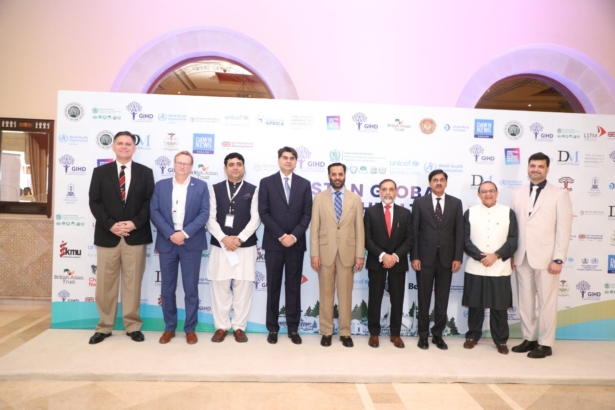
Federal Health Minister Syed Mustafa Kamal launched the policy on October 1 at the Pakistan Global Mental Health Summit in Islamabad, where policymakers, healthcare professionals, academics and international development organisations gathered to discuss the future of mental healthcare in Pakistan.
The launch comes as the country faces a wide gap between the number of people who need mental health support and those who can access professional care. According to figures presented at the summit, an estimated 32.4 million people in Pakistan require mental health care, while only around 5% of the population currently has access to such services.
That leaves an estimated treatment gap of about 95%.
The new policy aims to address that gap by moving mental healthcare closer to people through primary healthcare centres, schools and communities, rather than relying primarily on specialist psychiatric services.
Pakistan’s mental health treatment gap
Access remains one of the biggest challenges facing mental healthcare in Pakistan.
The country has approximately 0.19 psychiatrists per 100,000 people, compared with about seven psychiatrists per 100,000 in high-income countries, according to figures cited at the policy launch.
The shortage is particularly significant because specialist mental health services are concentrated in larger cities, leaving many people in smaller towns and rural communities with limited options for professional support.
Speaking at the summit, Kamal also referred to estimates that around 24 million people require psychiatric assistance and said Pakistan has fewer than one psychiatrist for every 500,000 people.
The two figures describe different aspects of the mental health burden, but both point to the same problem: the demand for mental healthcare is far greater than the country's current capacity to provide it.
For many people, the first barrier is not necessarily the absence of a mental health condition. It can be the absence of an affordable, nearby and qualified service.
The National Mental Health Policy 2026–2035 is intended to begin addressing that problem at the level where most people already receive healthcare.
New policy focuses on primary healthcare and communities
One of the central ideas behind the policy is to integrate mental health into existing health and community systems.
Instead of treating mental healthcare as a service available only through psychiatric hospitals or specialist clinics, the government plans to strengthen support through primary healthcare, schools and community-based programmes.
Minister of State for Health Dr Malik Mukhtar Ahmad Bharath said the government would work with provincial authorities to turn the policy into practical measures that bring mental health support closer to families.
This approach could allow people to receive support earlier and closer to home.
Primary healthcare facilities could become an important entry point for people experiencing common mental health conditions, while schools could help identify emotional and behavioural difficulties among children and adolescents at an earlier stage.
Community-based services could also provide support to people who may otherwise avoid formal psychiatric facilities because of distance, cost or stigma.
The policy was developed under the Ministry of National Health Services, Regulations and Coordination, in collaboration with the World Health Organization (WHO), UNICEF and the Global Institute of Human Development (GIHD) at Shifa Tameer-e-Millat University.
Around 800 participants attended the two-day Pakistan Global Mental Health Summit, which was held on October 1 and 2.
WHO stresses investment in mental healthcare
WHO Director-General Dr Tedros Adhanom Ghebreyesus used the summit to emphasise the wider benefits of investing in mental health.
According to Tedros, every dollar invested in addressing conditions such as depression and anxiety can generate four dollars in returns through better health and improved productivity.
His message places mental healthcare beyond the boundaries of hospitals and medical treatment. Mental health can affect a person's ability to study, work, maintain relationships and participate fully in everyday life.
Tedros also called for greater acceptance of people seeking mental health support.
Stigma remains a major barrier in many communities, where people may hesitate to discuss depression, anxiety or other mental health conditions or seek professional help.
Reducing that stigma is therefore closely linked to improving access. A service cannot help people who are afraid to use it.
Children and adolescents are a major focus
Children and young people received particular attention during the Islamabad summit.
UNICEF Representative in Pakistan Pernille Ironside called for children and adolescents to remain at the centre of mental health initiatives, with greater emphasis on prevention, early identification and access to care.
The policy discussions also considered how changing environmental and digital conditions are affecting younger generations.
Climate change was one area of concern. Pakistan has experienced repeated floods, extreme weather and other climate-related disruptions, all of which can affect communities beyond the immediate physical consequences.
Digital environments were another focus, reflecting the increasing role of technology and online spaces in the lives of children and young people.
The summit therefore examined mental health not only as a medical issue but also as an issue connected with education, communities, climate resilience and changing patterns of everyday life.
Pakistan seeks stronger community mental health services
Dr Syed Usman Hamdani, director of the Global Institute of Human Development, said Pakistan was changing its approach to mental healthcare through greater investment in research, implementation science, policy development and community-based programmes.
The emphasis on evidence-based services is significant for a country facing a large treatment gap and a limited number of specialist professionals.
Expanding the workforce will remain important, but Pakistan can also increase access by training and supporting healthcare workers who can identify mental health concerns, provide basic support and refer patients to specialists when necessary.
This would create a broader system in which psychiatrists and psychologists are not the only point of contact for people experiencing mental health difficulties.
The government has also said it wants to establish the Global Mental Health Summit as Pakistan's flagship international platform for mental health policy, research, innovation and partnerships.
What the National Mental Health Policy means for Pakistan
The National Mental Health Policy 2026–2035 provides Pakistan with a national framework, but its impact will ultimately depend on implementation.
The government will need sustained coordination between federal and provincial authorities, adequate financing, trained mental health professionals and reliable referral systems.
Services will also need to reach areas outside Pakistan's major urban centres.
For a policy targeting millions of people, expanding access cannot depend solely on specialist hospitals in large cities. Mental healthcare must become available through the places people already use, including primary healthcare facilities, schools and community services.
The government's stated goal is to make mental health support more accessible while addressing prevention, early intervention and treatment.
The scale of the challenge is clear. An estimated 32.4 million people need mental health care, yet only a small proportion currently have access to services, while the country has one of the world's lowest psychiatrist-to-population ratios.
The next decade will therefore be measured not simply by the existence of the policy, but by whether it leads to more trained professionals, more community services and earlier access to care.
Can Pakistan turn its National Mental Health Policy 2026–2035 into mental health services that ordinary families can actually access?