

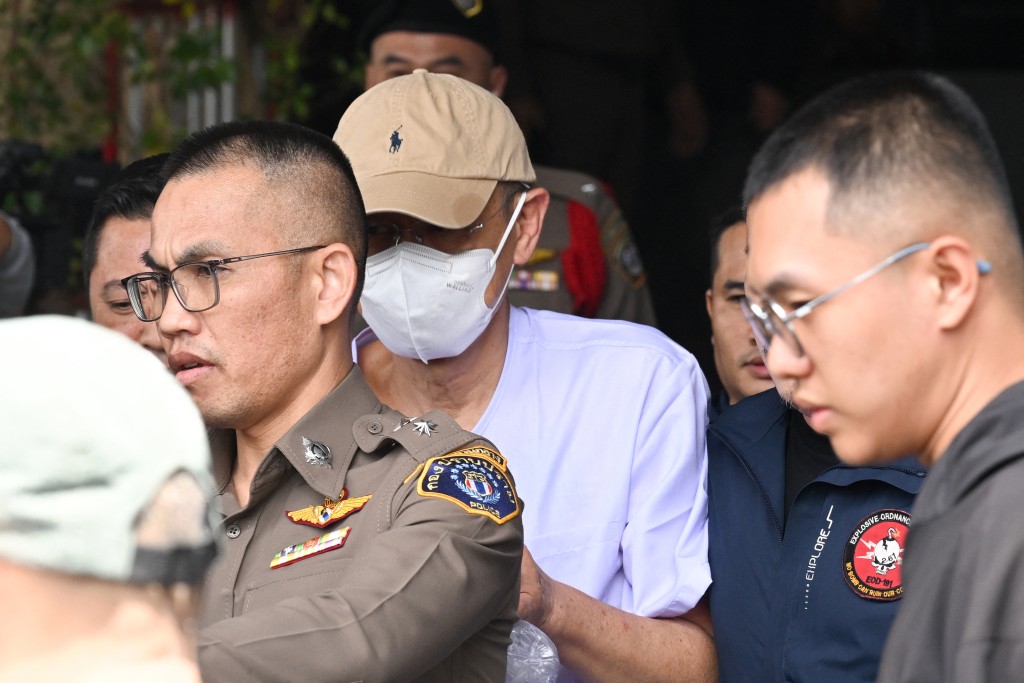
A senior Buddhist monk in Thailand has been arrested on suspicion of diverting millions of dollars donated to his historic monastery, while police also accused him of maintaining a sexual relationship with a woman allegedly involved in concealing the funds.
Phra Wachirayan Wi, the 66 year old abbot of Wat Phutthaisawan in the ancient city of Ayutthaya, was arrested on Thursday on allegations including embezzlement and money laundering, according to Pattanasak Bupphasuwan, the lead investigator in the case. A 47 year old woman accused of helping convert and conceal the money was arrested alongside him.
The investigation has drawn widespread attention in Thailand, where Buddhist monks are expected to observe strict rules on celibacy and renunciation of material possessions. The case has also raised fresh questions about financial controls at temples and the handling of large sums collected through donations and religious activities.
Millions of Baht Allegedly Bypassed Temple Account
Police began investigating Phra Wachirayan in mid July after receiving an anonymous tip alleging misconduct and the misuse of temple funds.
Investigators subsequently identified two separate streams of money connected to receipts issued in the name of Wat Phutthaisawan, Pattanasak said.
One stream involved around 89 million baht, equivalent to about $2.69 million, which had been donated for renovation work at the temple. A second stream involved approximately 2.8 million baht in payments for Buddhist amulets and other sacred objects.
According to Pattanasak, neither source of money was deposited into the monastery's official account.
"But the money from both streams did not enter the temple's account, not a single baht," he told reporters at a news conference on Friday.
The statement has placed the financial allegations at the centre of the investigation. Police are now examining where the money went, how it was handled and whether other people helped move or conceal the funds.
Authorities have also seized assets valued at about 215 million baht. The seized property reportedly includes 16 kilogrammes of gold bars and jewellery, as well as 28 land title deeds.
Investigators are working to determine which of those assets were personally owned and which may have belonged to the temple.

Sex Allegations Add to Growing Scandal
The financial investigation has been accompanied by a separate and highly embarrassing allegation involving the abbot's private life.
Thai media widely broadcast leaked closed circuit television footage that allegedly showed Phra Wachirayan and the woman arrested with him having sex on a table inside the monk's residence.
The footage has intensified public interest in the case because Buddhist monks in Thailand are bound by religious rules requiring celibacy. Monks also formally renounce personal possessions and are expected to live according to religious principles that place limits on material wealth.
The alleged sexual relationship therefore forms part of a wider dispute surrounding the conduct expected from senior members of the clergy.
Police have accused the 47 year old woman of helping convert and conceal money connected to the investigation. Authorities have not suggested that the sexual allegations alone form the basis of the financial charges.
The case will now depend on evidence gathered by investigators, including financial records, property documents and material concerning the alleged movement of funds.
Historic Monastery Has Powerful Following
Wat Phutthaisawan is a prominent royal monastery in Ayutthaya, a city known for its historic Buddhist temples and former role as the capital of the Kingdom of Siam.
The monastery attracts a broad following that reportedly includes government officials, businesspeople, police officers and members of the military. That connection has added to public interest in the investigation and placed greater attention on the financial dealings of the temple.
Phra Wachirayan was also known for producing Buddhist amulets, religious objects that have a major following in Thailand and can command substantial prices depending on their origin, rarity and perceived spiritual significance.
The former abbot, also known as Luang Pho Atichot, was reported to have a number of prominent followers. Prime Minister Anutin Charnvirakul was among those reported to wear amulets associated with him.
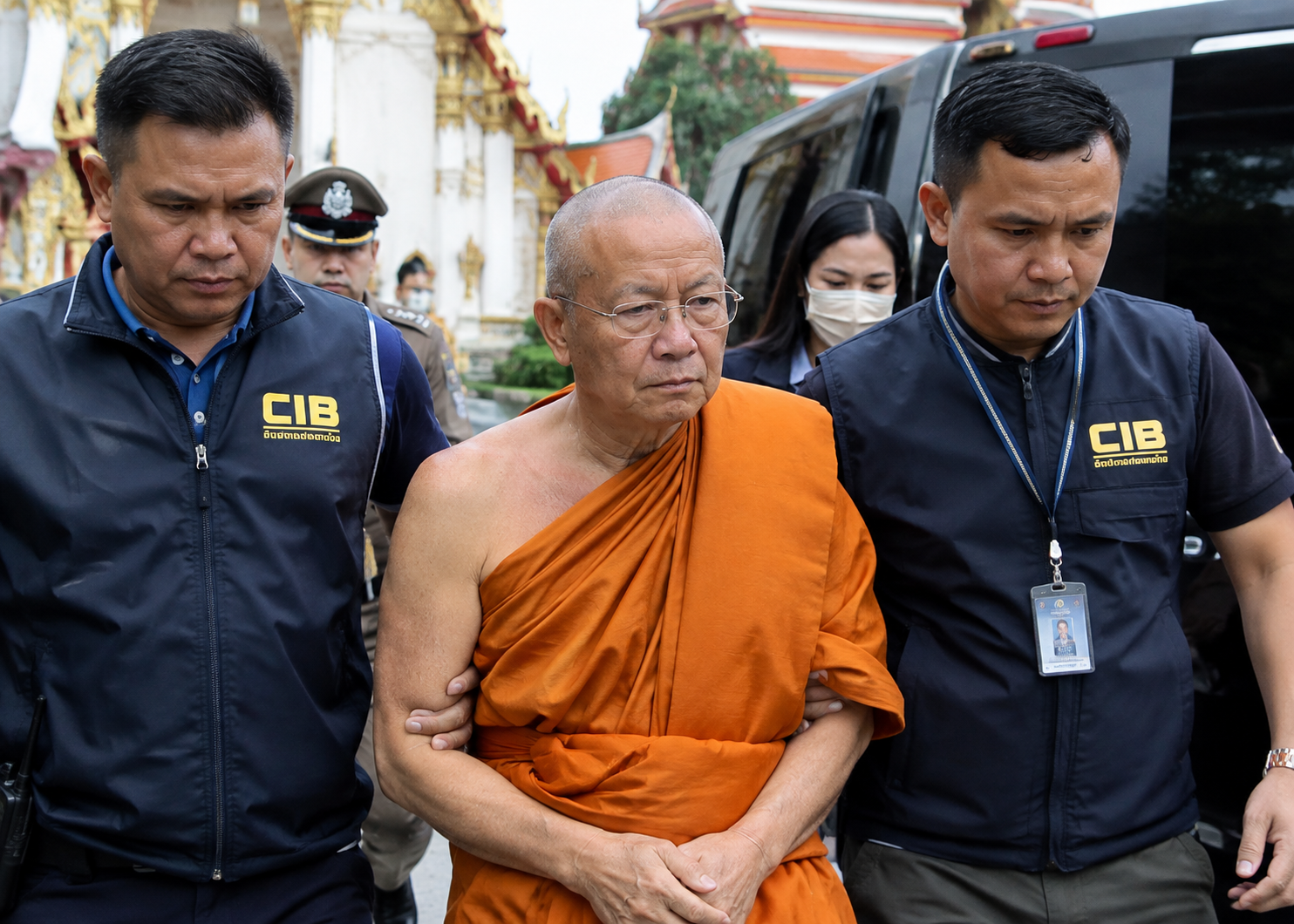
Following his arrest, Phra Wachirayan was defrocked, removing his status as a Buddhist monk.
The move came as investigators continued examining the allegations surrounding the temple's finances and the people who may have been connected to the suspected scheme.
Police Widen Investigation
Nattasak Chaowanasai, commissioner of the Central Investigation Bureau, said investigators would continue looking for other people who may have played a role.
"We will expand the investigation to identify other people involved and restore public confidence in Buddhism," he said.
The statement signals that authorities are not treating the case as an isolated dispute involving one abbot and one alleged accomplice.
Investigators are expected to examine the ownership of the seized gold, jewellery and land, as well as the source of funds used to acquire them. They will also need to establish whether the assets were connected to temple donations, amulet sales or other sources of income.
The investigation could therefore extend beyond the two people already arrested if police uncover evidence linking additional individuals to the alleged handling or concealment of funds.
Case Follows Major Monk Scandal
The arrest comes after another major scandal involving Thailand's Buddhist clergy shook the country last year.
Police arrested a woman accused of blackmailing at least 11 monks with whom she allegedly had sexual relationships. Authorities said she extorted nearly $12 million in monastery funds from them.
That case generated widespread public anger and prompted renewed demands for closer scrutiny of temple finances and the conduct of senior monks.
Thailand is overwhelmingly Buddhist, and temples occupy an important position in communities across the country. Many receive donations from worshippers, supporters and wealthy patrons, while popular monks can attract large numbers of followers.
The latest investigation has brought those financial arrangements back into public discussion. The amounts involved are substantial, and the alleged diversion of renovation donations raises questions about how temples record, manage and account for money entrusted to them.
The presence of valuable religious objects and large donations can also create opportunities for financial misconduct if internal controls are weak. Police will now have to establish whether the money allegedly diverted from Wat Phutthaisawan was handled for personal benefit, transferred to others or used to acquire assets later seized by investigators.
Defrocking Marks First Major Consequence
The former abbot's defrocking represents the immediate institutional consequence of the arrest, but the criminal investigation will require a separate assessment of the evidence.
An arrest and accusation do not establish guilt. Prosecutors and the courts will ultimately determine whether the allegations can be proved under Thai law.
For investigators, the next steps will include tracing the suspected funds, establishing ownership of the seized assets and determining whether additional people participated in the alleged financial arrangements.
The case has already placed one of Ayutthaya's best known monasteries under intense scrutiny. It has also revived a question that has become increasingly difficult for Thailand's Buddhist institutions to avoid: how should temples account for large donations and other religious income when public trust depends heavily on the integrity of those managing it?
With more than 200 million baht worth of assets seized and millions of baht in alleged temple funds under investigation, the authorities now face a clear task: follow the money, establish ownership of the assets and determine who, if anyone, was responsible for the alleged diversion of funds.