

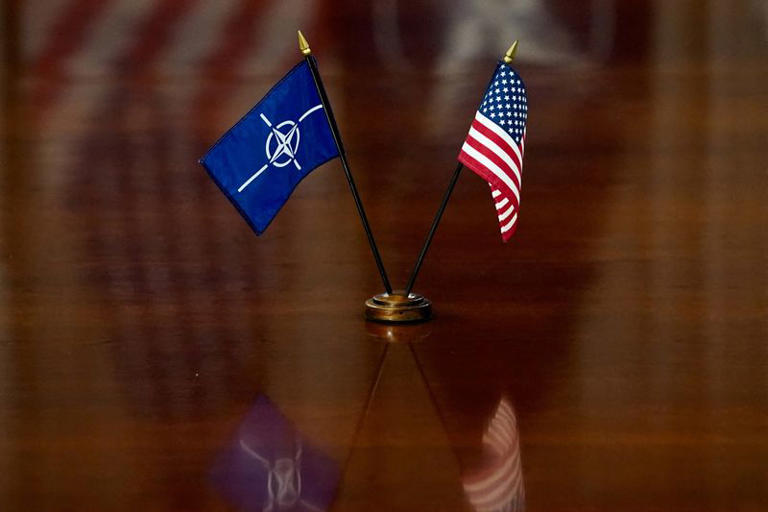
WASHINGTON — US President Donald Trump said on Thursday that Russian President Vladimir Putin would not attack a NATO member, while playing down reports that CIA Director John Ratcliffe travelled to Moscow earlier this week to deliver a warning to Russian officials.
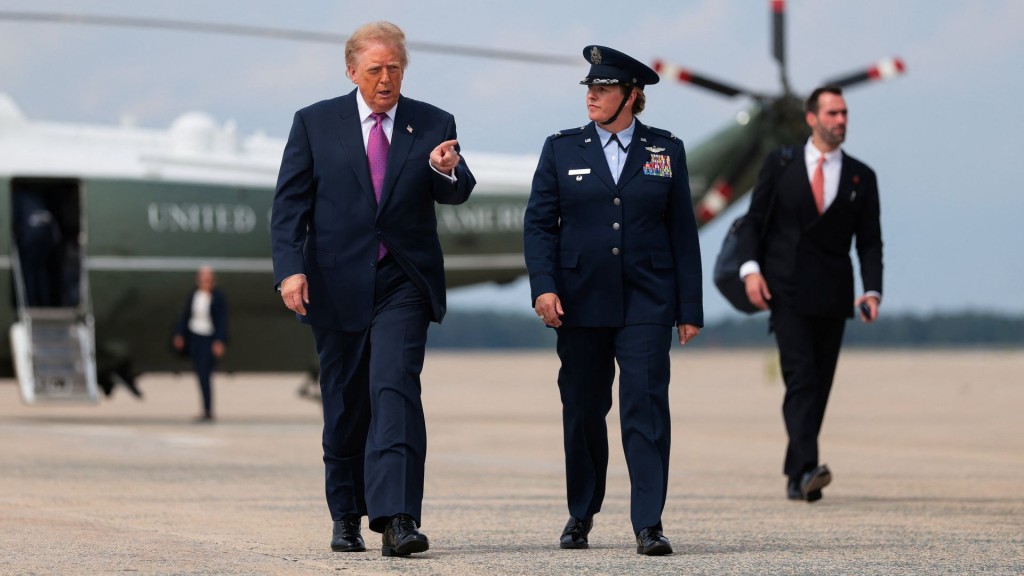
Speaking to reporters in the Oval Office, Trump was categorical when asked about the possibility of Russia attacking NATO territory.
“He’s not going to attack a NATO territory,” Trump said of Putin.
Trump made a similar assurance earlier in the day during a telephone interview with Axios, saying there would be no Russian attack on a NATO member.
The president also rejected reports that Ratcliffe’s visit to Moscow was prompted by a specific concern about Russian intentions toward the Western military alliance.
According to Trump, Ratcliffe’s meeting with his Russian intelligence counterpart was part of a regular channel of communication between the two countries.
“Ratcliffe sees his Russian counterpart once every six months or once every year,” Trump told Axios, describing the two officials as having “a very good relationship”.
“There was no message and there was nothing unusual,” he said.
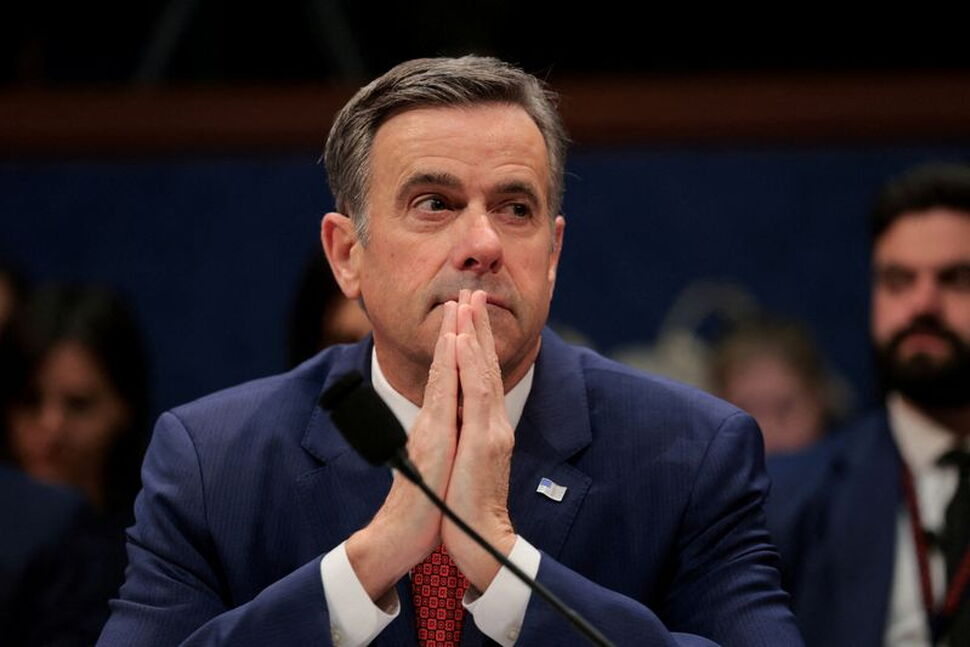
Trump’s comments came a day after The Wall Street Journal reported that Ratcliffe had travelled to Moscow and warned Russian officials against launching an attack on a NATO member.
The reported visit has attracted particular attention because relations between Russia and the United States remain deeply strained and European governments have increasingly warned about Moscow’s willingness to use covert operations against countries supporting Ukraine.
Two people familiar with the matter told Reuters that Ratcliffe did raise the possibility of a Russian operation against a NATO member during his meeting with Russian intelligence officials.
It was not immediately clear whether that issue was the principal purpose of Ratcliffe’s trip.
One of the sources said the officials discussed several subjects, including Russia’s support for Iran, which has been a source of concern for Washington.
The sources spoke on condition of anonymity because they were discussing sensitive US intelligence matters.
Trump rejects warning narrative
Trump’s comments appear to draw a distinction between what was discussed during Ratcliffe’s meeting and the purpose of the trip itself.
While the president said Ratcliffe was not sent to deliver a particular warning, the Reuters sources said the possibility of Russian action against a NATO member was nevertheless raised.
The two accounts are not necessarily incompatible. A subject can be discussed during an intelligence meeting without being the sole reason for a visit.
But the disagreement over how the meeting should be characterised highlights the sensitivity surrounding contacts between US and Russian intelligence officials.
Ratcliffe’s reported visit comes at a time when Washington and Moscow remain engaged in a difficult relationship shaped by Russia’s war in Ukraine, US sanctions and disputes over security in Europe.
The possibility of a direct confrontation between Russia and NATO has been one of the most serious concerns for European governments since Moscow launched its full scale invasion of Ukraine in 2022.
NATO has repeatedly said it is committed to defending every member of the alliance, while Russia has warned against further NATO involvement in the conflict.
A direct Russian military attack on a NATO member would carry the risk of triggering the alliance’s collective defence commitments and creating a much wider confrontation between Russia and Western countries.
Trump nevertheless sought to reassure the public that such a scenario was not imminent.
His remarks also come as US and European intelligence agencies continue to monitor Russian activities across Europe that do not amount to conventional military attacks but are intended to pressure governments, disrupt infrastructure or undermine support for Ukraine.
Western officials monitor Russian sabotage
European and US intelligence officials have for years tracked what they describe as Russian sabotage and other so called gray zone operations across Europe.
These activities operate below the threshold of conventional warfare and can include cyber operations, espionage, disinformation campaigns, disruption of infrastructure and acts of sabotage.
Western officials have repeatedly warned that such operations are designed in part to test the limits of the alliance while avoiding a response that could lead to open conflict.
The concern is particularly acute in countries close to Russia or those with strong military and political support for Ukraine.
Intelligence officials have also monitored scenarios in which Russia could attempt to disguise its involvement in an attack, making it more difficult for governments to determine who was responsible.
Among the potential scenarios discussed by Western intelligence officials is the possibility of Russia using a Ukrainian drone in an attack on a country in eastern or northeastern Europe.
Such an operation could be designed as a false flag attack, in which evidence is manipulated to make another actor appear responsible.
The objective, according to the officials monitoring such threats, could be to create confusion within NATO and weaken public and political support for Ukraine.
A successful operation of that kind could also complicate decisions over whether and how the alliance should respond.
There is no indication in the material available that such an attack has occurred or that Russia has decided to carry out such a plan.
Rather, the scenario is among the possibilities Western intelligence agencies have been watching as they assess the risks posed by Moscow.
NATO remains central to European security
The concern over possible Russian attacks on NATO members reflects the wider security environment created by the war in Ukraine.
NATO has expanded its presence in eastern Europe since Russia’s invasion, while member states have increased military spending and strengthened their forces along the alliance’s eastern flank.
Countries in northeastern Europe, including those bordering Russia, have been particularly focused on the possibility that Moscow could use military pressure, sabotage or other unconventional tactics to test the alliance.
The Baltic states have repeatedly warned about Russian activity in the region, while Poland and other eastern European NATO members have strengthened their defences.
For Western governments, the challenge is not limited to the possibility of a conventional invasion.
Russian activities that remain below the threshold of war can create difficult questions about attribution and response.
If infrastructure is damaged or a cyberattack occurs, for example, governments may need to determine whether the incident is criminal, politically motivated or part of a state directed operation.
The uncertainty can make it harder for NATO members to agree on a collective response.
That is why intelligence sharing and communication between US and European agencies have become increasingly important.
Ratcliffe meeting highlights intelligence channel
Against this backdrop, Ratcliffe’s meeting with his Russian counterpart is significant even if, as Trump said, it was part of an established channel.
Intelligence contacts can provide governments with a way to communicate even when broader diplomatic relations are strained.
Such meetings can be used to exchange warnings, clarify intentions and discuss security concerns that governments may not want to address publicly.
The reported discussion about a potential Russian operation against a NATO country would therefore be notable regardless of whether it was the primary reason for Ratcliffe’s trip.
Trump’s description of the meeting as routine, however, suggests that the administration does not want the visit to be interpreted as evidence of an immediate crisis.
The president has repeatedly argued that he can maintain communication with Russia while pursuing broader US foreign policy objectives.
His latest comments are also consistent with his effort to avoid publicly suggesting that Russia is preparing for a direct confrontation with NATO.
A delicate balance for Washington
The US administration faces a difficult balancing act.
Washington must reassure NATO allies that the United States remains committed to their security while avoiding unnecessary escalation with Moscow.
At the same time, US intelligence agencies must continue monitoring Russian military and covert activities and communicate potential threats to policymakers.
Trump’s statement that Putin will not attack NATO territory provides a strong public assurance, but intelligence assessments can involve a range of possible scenarios and are not necessarily expressed as predictions that an attack will occur.
The disagreement over Ratcliffe’s trip illustrates that distinction.
The president says there was no specific warning mission and that the meeting was routine.
US intelligence sources, meanwhile, say the possibility of a Russian operation against a NATO member was discussed.
For European governments watching Moscow closely, the substance of that discussion may matter more than how the White House publicly characterises the trip.
The immediate concern remains whether Russia intends to challenge NATO directly or continue using actions below the threshold of open conflict to test the alliance.
For now, Trump says a Russian attack on NATO territory will not happen.
But the continued monitoring of Russian sabotage, covert activity and potential false flag operations suggests Western intelligence agencies are not taking the possibility of confrontation lightly.