

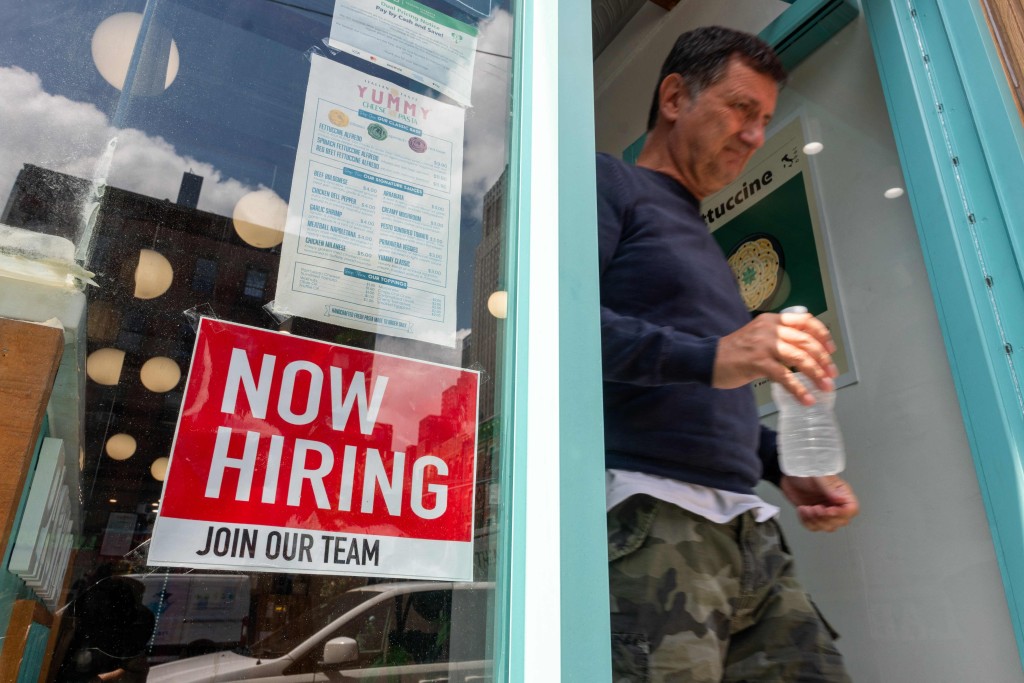
US employers are laying off very few workers, but they are also reluctant to hire, leaving the American labor market in an unusual holding pattern. New applications for unemployment benefits fell to 197,000 last week, keeping weekly jobless claims near a 57-year low for the fourth consecutive week.
The latest figures from the US Labor Department showed that initial claims for state unemployment benefits dropped by 2,000 in the week ending October 3. Economists surveyed by Reuters had expected 200,000 claims.
The number has remained below 200,000 since the second week of September, reinforcing signs that companies continue to hold on to existing employees even as hiring loses momentum.
For workers who already have jobs, that stability offers some protection. For people who have recently lost work, however, the picture is less reassuring.
"It's still a 'low-hire, low-fire' job market," said Heather Long, chief economist at Navy Federal Credit Union. "That's great for anyone who has a job and wants to keep it, but it's tough for job seekers."
Jobless Claims Remain Below 200,000
The four-week moving average, which economists use to get a clearer view of employment trends by smoothing out weekly swings, fell by 2,500 to 198,000.
That was the lowest level since early October 2022.
The four-week measure is closely watched because individual weekly claims can be affected by temporary factors. The sustained level below 200,000 suggests layoffs remain historically limited despite the broader slowdown in the US labor market.
California and Illinois were the only states to report increases of more than 1,000 in unadjusted new unemployment applications last week.
The overall claims data therefore continue to point to a labor market where employers are not cutting large numbers of jobs. The problem is occurring elsewhere: companies are not creating enough new positions to absorb workers looking for opportunities.
That distinction has become increasingly important as US job growth has weakened.
September Hiring Slowed Sharply
The Labor Department reported last week that US nonfarm payrolls increased by just 29,000 jobs in September.
That was a sharp slowdown in employment growth and added to concerns that the labor market is losing momentum even though layoffs remain low.
Economists have pointed to several factors behind the weak hiring figures. Retirements are reducing the available workforce, while tighter immigration policies are also contributing to a smaller pool of workers.
At the same time, businesses have faced uncertainty over trade policy and broader economic conditions.
Employers have been reluctant to expand their payrolls despite strong corporate profits and stock market performance. Many companies appear more interested in retaining workers they already have than making significant new commitments to hiring.
That creates a difficult situation for unemployed Americans. Fewer layoffs mean fewer people are entering unemployment, but fewer new hires mean those who do lose their jobs may spend longer searching for another position.

Hiring Slowdown Could Keep Unemployment Elevated
The claims figures also showed a rise in the number of Americans continuing to receive unemployment benefits.
Continued claims increased by 17,000 to a seasonally adjusted 1.716 million for the week ending September 26. The measure had fallen to a three-and-a-half-year low during the previous week.
Continued claims are watched as an indication of how quickly unemployed workers are finding new jobs. A rise can suggest that people are taking longer to move from unemployment back into work.
Some economists believe the continued-claims figure may not fully capture the extent of the weakness.
Recent college graduates and other new entrants to the labor market may not qualify for unemployment benefits because they have little or no employment history. Some people who have been unemployed for an extended period may also have used up their eligibility.
In most states, unemployment benefits generally last for up to 26 weeks.
That means official benefit figures can understate the number of people struggling to find work, particularly when hiring is weak.
Median Unemployment Duration Near Four-Year High
Another sign of pressure on job seekers came from the length of time people remained unemployed.
The median duration of unemployment reached 11.5 weeks in September, putting it near a four-and-a-half-year high.
The unemployment rate stood at 4.2% last month.
Samuel Tombs, chief US economist at Pantheon Macroeconomics, said the combination of weak hiring and rising unemployment among people entering or returning to the workforce could put further upward pressure on the unemployment rate.
"An ongoing rise in unemployment among new entrants and re-entrants to the labor market, amid weak hiring, will put some further gentle upward pressure on the unemployment rate over the next few quarters," Tombs said.
The distinction between layoffs and hiring is becoming central to the US employment story. The economy has not entered a period of widespread job cuts, but workers who need to find new positions are facing a thinner market.
Economic Uncertainty Keeps Employers Cautious
Businesses have also had to contend with uncertainty surrounding tariffs and geopolitical tensions.
Economists cited uncertainty over tariffs as one factor weighing on hiring decisions. The US-Israeli war with Iran has also contributed to higher energy and commodity prices, with diesel prices reaching record highs.
Higher input and transportation costs can make businesses more cautious about expanding their workforce. Companies may choose to wait for clearer economic conditions before adding permanent staff.
That caution helps explain why the labor market can produce two seemingly contradictory signals at the same time: unemployment claims remain exceptionally low while job creation has slowed dramatically.
The companies that have workers are largely keeping them. The companies considering expansion are taking longer to commit.
Fed Watches Labor Market Closely
The Federal Reserve is also monitoring the changing employment picture as it weighs interest-rate decisions.
Minutes from the central bank's September 15-16 policy meeting showed officials viewed labor market conditions as stable and generally considered the economy to be close to maximum employment. Policymakers also judged that the risks to the labor market were broadly balanced.
The Federal Reserve last month raised its overnight benchmark interest rate by 25 basis points, bringing the target range to 3.75%-4.00%. It was the first rate increase in three years, and officials signalled that borrowing costs could rise further.
However, the weak September payroll report has reduced expectations for another increase this month. Cooler-than-expected inflation readings for July and August have also influenced the outlook.
Economists expect the Fed to raise rates again in December.
For now, the unemployment claims data provide the central bank with a mixed picture. Layoffs remain low, suggesting employers are still reluctant to cut staff, but hiring has weakened and unemployed workers are taking longer to find new jobs.
A Labor Market Stuck Between Stability and Weak Growth
The latest figures suggest the US labor market has not suffered the broad wave of layoffs that would normally accompany a major downturn. But the lack of strong hiring is creating a different kind of pressure.
The 197,000 new claims reported last week remain historically low, and the four-week average of 198,000 is at its lowest level since 2022. Yet the September payroll gain of only 29,000 jobs shows how difficult the market has become for people trying to enter, re-enter or move within the workforce.
That leaves the US economy in a fragile middle ground: workers who have jobs may enjoy unusual stability, while unemployed Americans face a much narrower path back into employment.
Will the US labor market maintain its low-layoff stability, or will weak hiring begin pushing unemployment higher in the months ahead?