

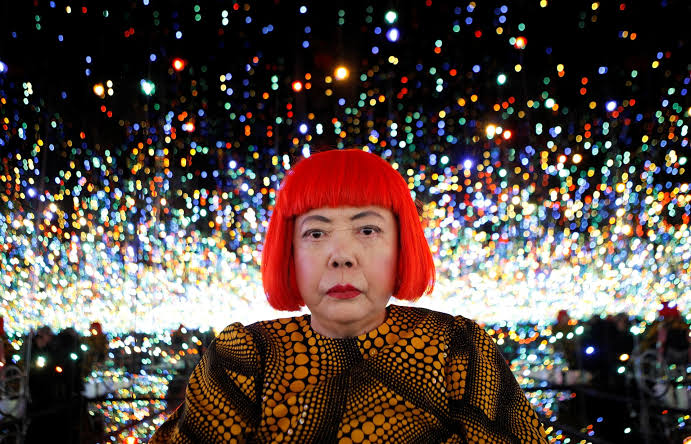
Japanese avant garde artist Yayoi Kusama, whose obsessive polka dots, immersive installations and instantly recognisable pumpkin motifs made her one of the world’s most celebrated contemporary artists, has died at the age of 97.
Kusama died on August 14, according to an announcement published on her official website. No cause of death was disclosed.
Her death marks the end of an extraordinary career spanning more than seven decades, during which Kusama transformed deeply personal experiences, including recurring hallucinations and severe psychological distress, into a visual language that crossed borders, generations and artistic movements.
A Life Shaped by Visions and Repetition
At a time when contemporary art increasingly embraced spectacle and mass appeal, Kusama’s work stood apart for its strange combination of vulnerability and repetition.
Dots multiplied across canvases, mirrors appeared to stretch space into infinity, and pumpkins became symbols of both comfort and obsession. What began as a private attempt to make sense of the visions that had accompanied her since childhood eventually became one of the most recognisable artistic signatures in the world.
“I still see hallucinations even now,” Kusama said in 2017.
“Dots come flying everywhere, on my dress, the floor, things I’m carrying, throughout the house, the ceiling. And I paint them.”
Born in Matsumoto, Japan, Kusama grew up in a conservative society whose expectations often clashed with her ambitions and increasingly unconventional artistic instincts.
From an early age, she described experiencing visions involving flashing lights, flowers and repeating patterns. Rather than suppressing those experiences, she began translating them into drawings and paintings.
The result was an artistic vocabulary that would remain with her throughout her life: repetition, accumulation, obliteration and the unsettling sensation of the self disappearing into an endless visual field.
From Matsumoto to New York
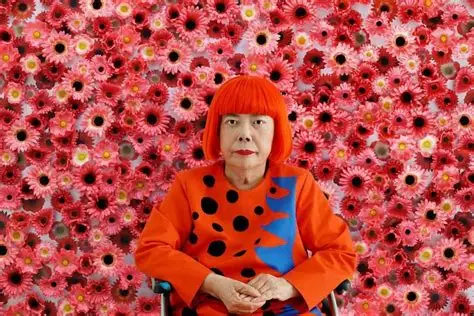
Frustrated by what she regarded as the restrictive nature of postwar Japanese society, Kusama left Japan for the United States at the age of 27.
She arrived in New York at a moment when the city was becoming a global centre of experimental art. It was there that she quickly established herself as a distinctive and fiercely ambitious figure.
Her early work, including the vast “Infinity Net” paintings, consisted of painstakingly repeated patterns that seemed capable of expanding beyond the limits of the canvas.
The paintings attracted attention for their intensity and originality, while Kusama herself became increasingly involved in the radical artistic and political culture of the 1960s.
Breaking Into the Avant Garde Art World
Kusama produced sculptures, installations, performances and experimental films, pushing beyond the conventional boundaries of painting.
Her happenings became associated with the counterculture of the era and often carried antiwar messages, particularly during the height of American involvement in Vietnam.
Kusama also developed a public persona that was as carefully constructed as her art. She appeared in striking costumes and used repetition not only as an artistic technique but also as a way of challenging conventional ideas about identity, sexuality and the body.
During this period, she moved in the same broad artistic circles as some of the most influential figures of the era.
Her work has often been discussed in relation to the development of Pop Art and other experimental movements, and she has been credited with influencing artists including Andy Warhol, although the extent and nature of those influences have long been debated by art historians.
Art, Activism and Personal Struggle
For Kusama, however, artistic innovation was inseparable from personal struggle.
She spoke openly throughout her life about her mental health and about the visions that continued to shape her work.
Her descriptions of those experiences were not presented merely as biographical details but as central to her artistic process.
The dots that later became a global trademark, she explained, were connected to her attempts to understand and contain the overwhelming patterns she saw around her.
“Polka dots can’t stay alone,” she once suggested in describing her artistic philosophy.
For Kusama, repetition was not simply decorative. It was a way of dissolving boundaries, between objects, between people and between the individual and the wider universe.
Yet the pressures of life and work in New York took a heavy toll.
Kusama later said that the city had intensified her neuroses.
A Return to Japan and Life in a Psychiatric Hospital
After returning to Japan in the 1970s, Kusama experienced a period of serious psychological difficulty.
Around 1977, she voluntarily entered a psychiatric hospital, where she would remain by choice for decades.
The decision did not bring an end to her career.
Instead, Kusama established a highly unusual routine that allowed her to continue working.
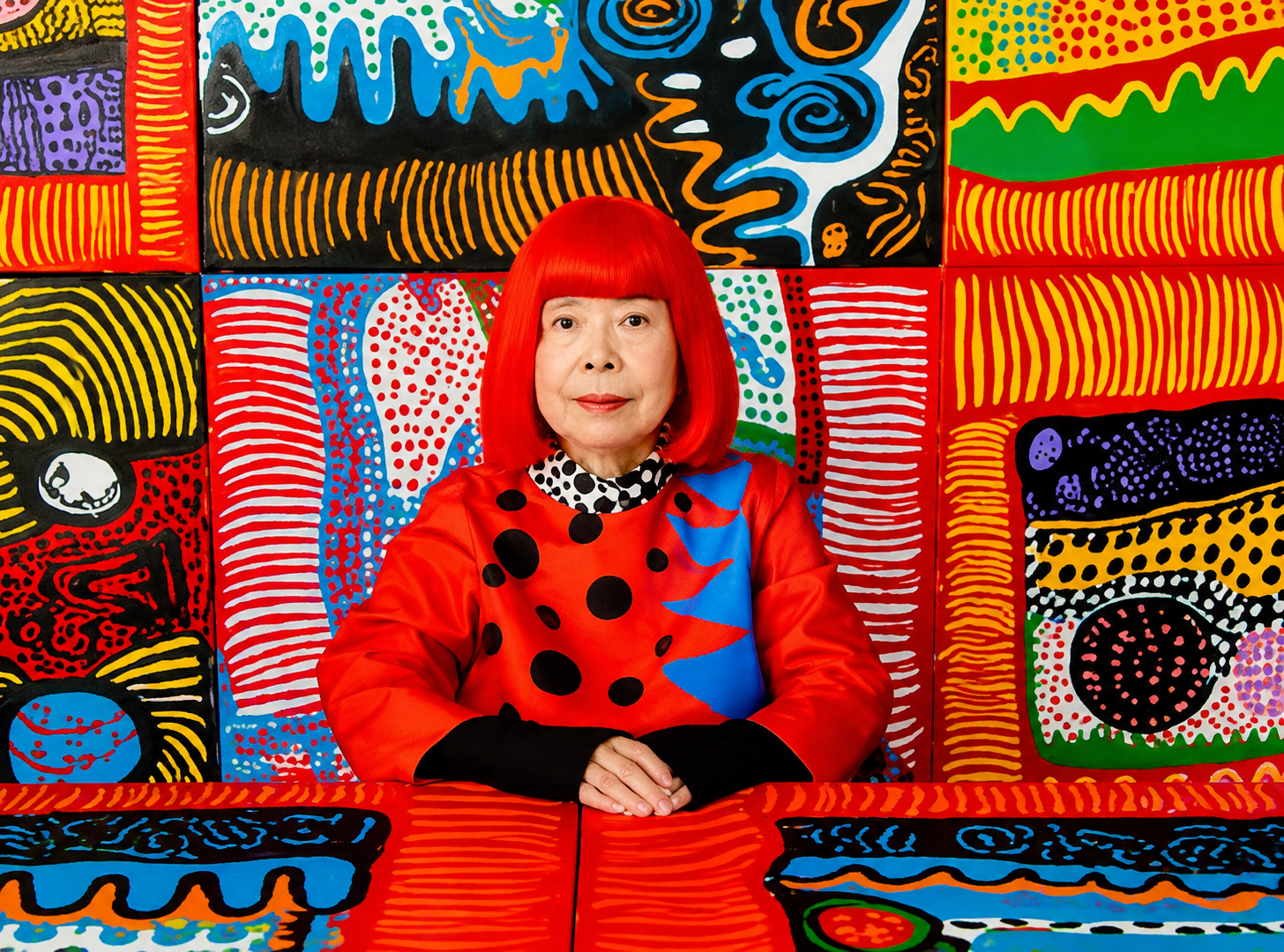
Living at the hospital, she travelled regularly to a nearby studio, where she continued to paint and create new works.
The arrangement became an enduring part of her life and, in many ways, reinforced the public perception of Kusama as an artist whose creative output could not be separated from the internal world that drove it.
For years, her international reputation was uneven.
Although she had achieved significant recognition during her time in New York, she was at times overlooked as other artists associated with the movements of the 1960s gained greater prominence.
The Rise of the Infinity Mirror Rooms
Her return to international attention accelerated in the late 20th and early 21st centuries.
Major exhibitions introduced her work to new audiences, while her mirror rooms and large scale installations proved particularly powerful in an age shaped by digital images and social media.
Her “Infinity Mirror Rooms” became among the most sought after experiences in contemporary art.
Visitors entered enclosed spaces filled with mirrors and lights, creating the illusion of endless repetition.
The installations turned viewers into part of the artwork, surrounding them with reflections that appeared to extend indefinitely.
They were also highly photogenic, helping transform Kusama into a cultural phenomenon far beyond the traditional art world.
Pumpkins, Polka Dots and Global Fame
Her pumpkins achieved a similarly iconic status.
Covered in dots and rendered in vivid colours, the forms appeared in paintings, sculptures and installations.
Kusama associated pumpkins with childhood memories and with a sense of warmth and stability.
Over time, however, they became as closely identified with her as the polka dot itself.
Commercial collaborations and major museum exhibitions expanded her audience even further.
By the later years of her life, Kusama had become one of the most popular living artists in the world, attracting enormous crowds and commanding global attention.
Her rise was particularly striking because it came after decades in which she had struggled for recognition, financial stability and control over her own artistic legacy.
An Artist Who Turned Pain Into Creativity
Kusama’s story also challenged conventional assumptions about artistic success.
She was a Japanese woman working in a predominantly male international art world, an artist who openly discussed psychological suffering, and a creator whose work refused to fit neatly into a single movement.
She was a painter, sculptor, installation artist, writer and performer.
She published fiction and poetry, participated in political activism and repeatedly reinvented her practice.
What remained constant was the world of repetition she had begun exploring as a child.
To some viewers, her dots suggested joy, playfulness and infinity.
To others, they conveyed anxiety, obsession or the loss of individuality.
Kusama embraced those contradictions.
Her art could be colourful and exuberant while emerging from experiences she described as frightening and overwhelming.
It could attract huge crowds while reflecting a profound sense of isolation.
That tension became central to her legacy.
A Lasting Legacy
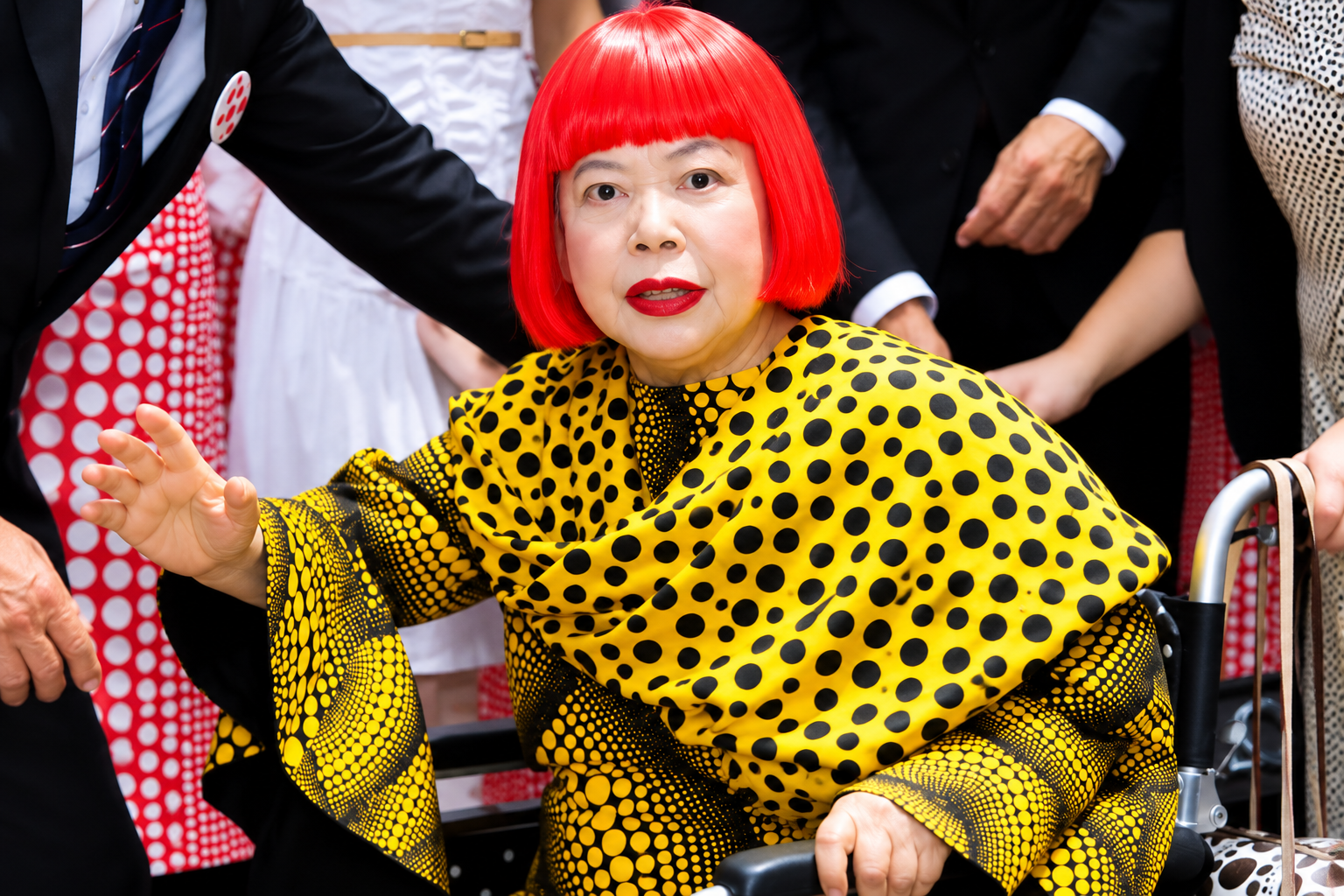
Kusama did not simply depict her hallucinations; she built an artistic universe around them.
Through repetition, she turned private visions into public experiences.
A pattern that might have remained a source of fear became a canvas. A recurring image became a sculpture. A sense of being overwhelmed by the world became an immersive environment in which millions of people could briefly lose themselves.
Even into her later years, Kusama continued to work with remarkable discipline, producing paintings and new projects from the studio she maintained near the psychiatric hospital where she lived.
Her death closes a chapter in the history of modern and contemporary art, but the visual world she created remains unmistakably alive: endless dots, glowing rooms, mirrored reflections and pumpkins stretching toward infinity.
For Kusama, art was never simply a profession or a means of achieving fame.
It was, by her own account, a way of surviving.
The visions never entirely disappeared.
Instead, she spent a lifetime painting them.